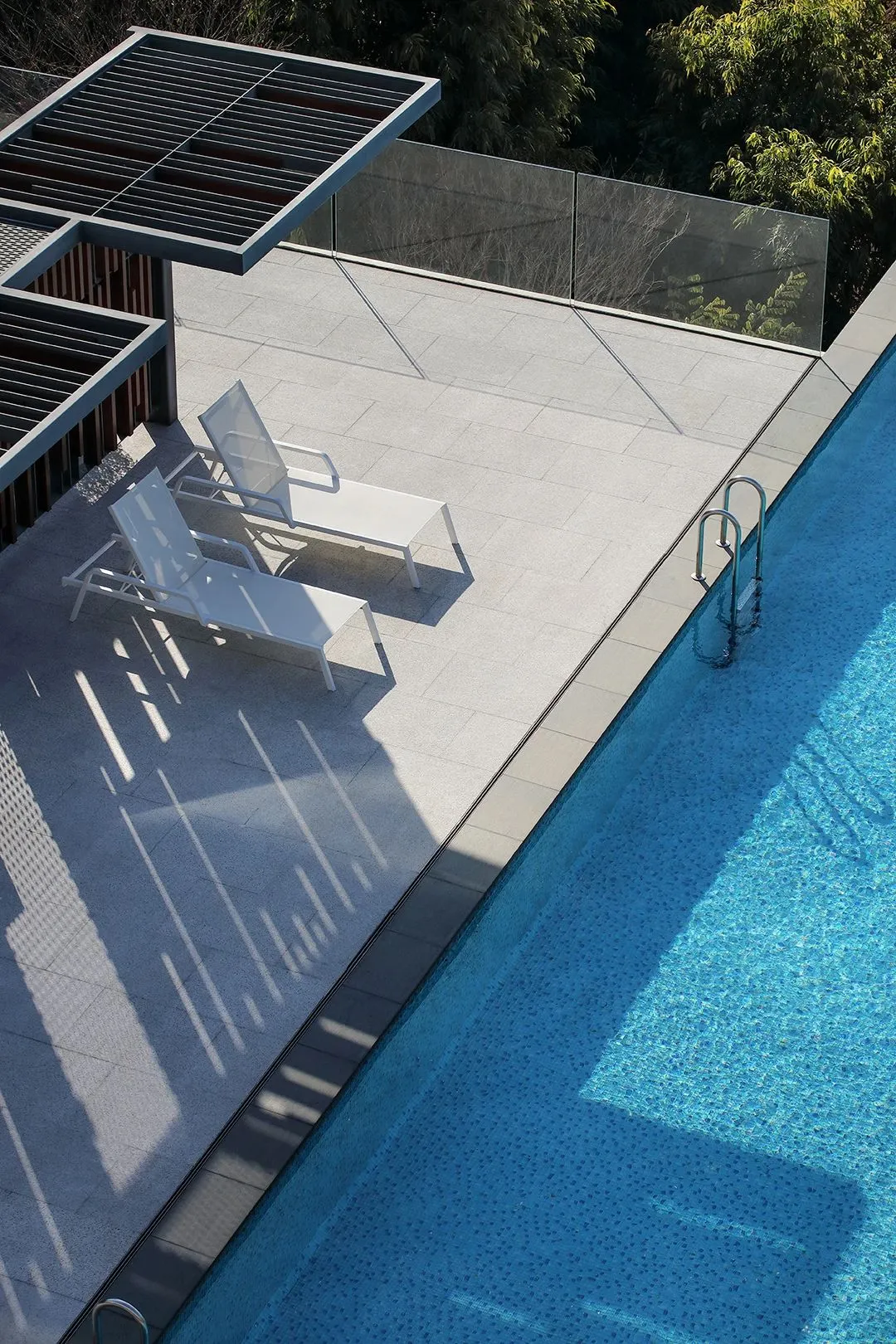
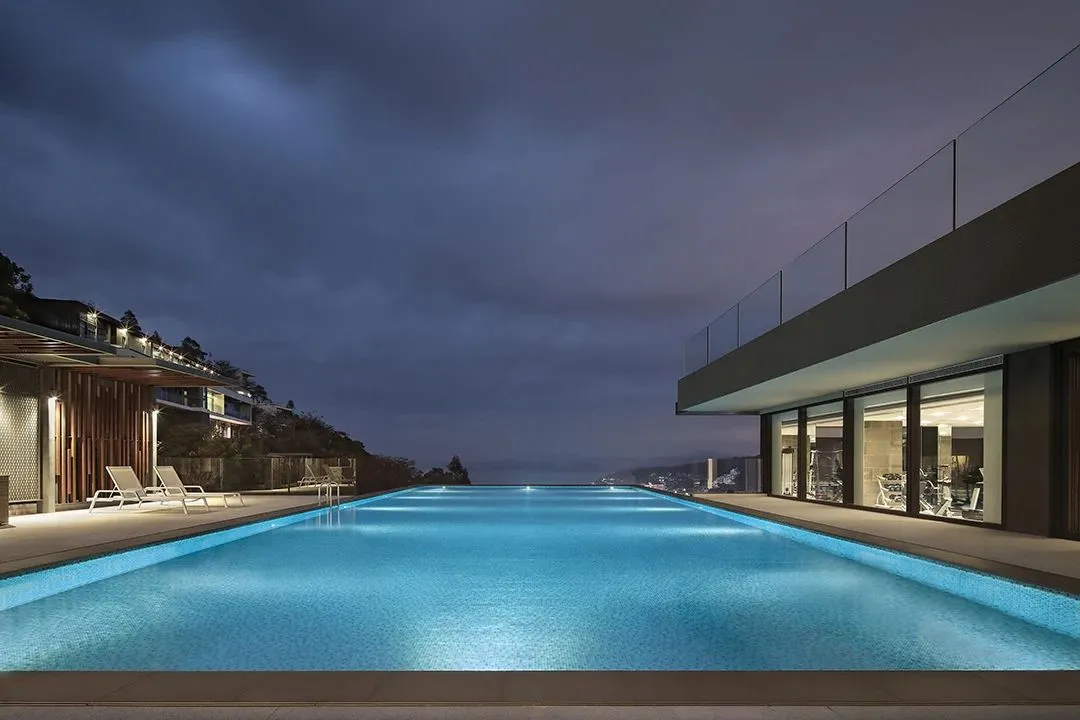
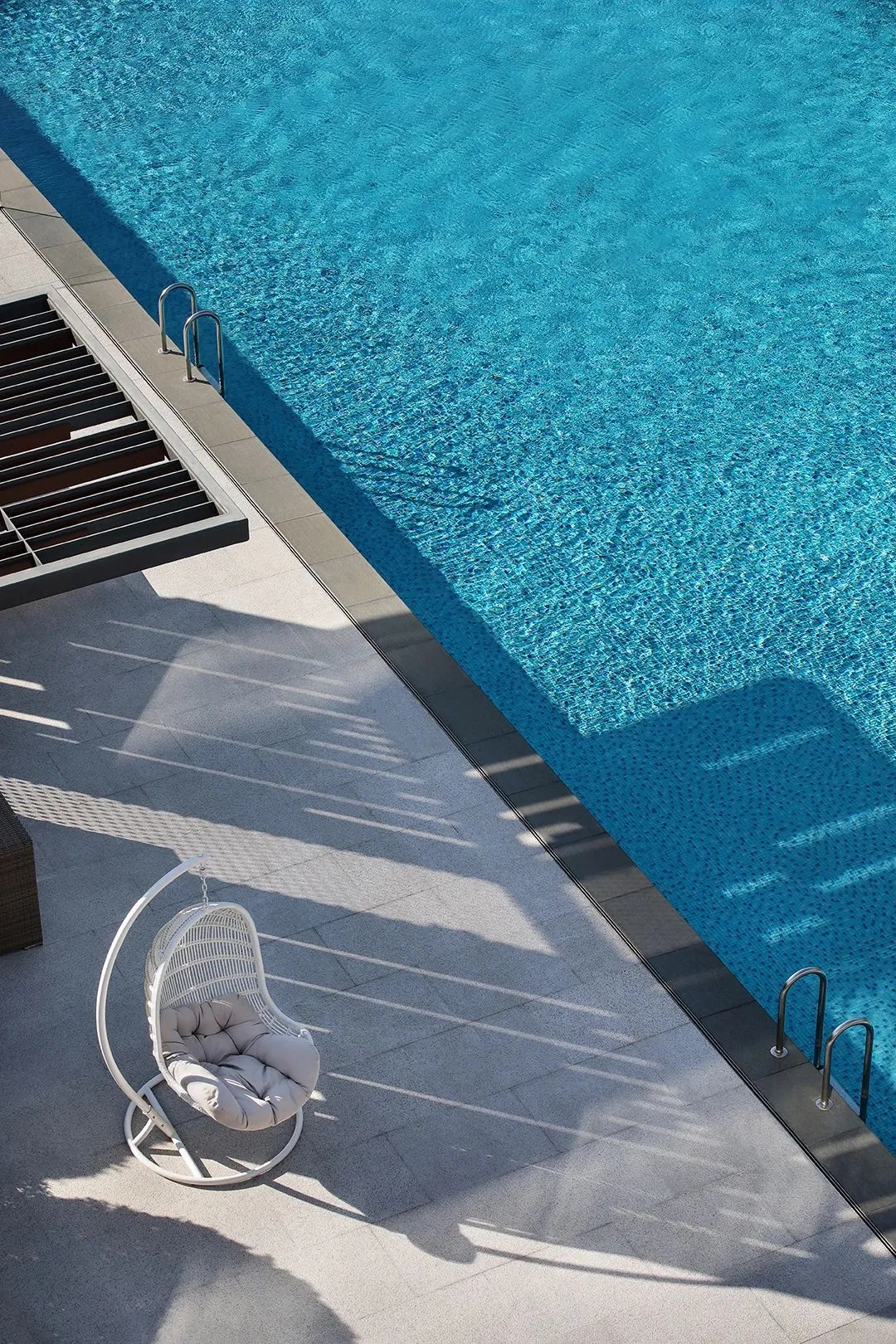
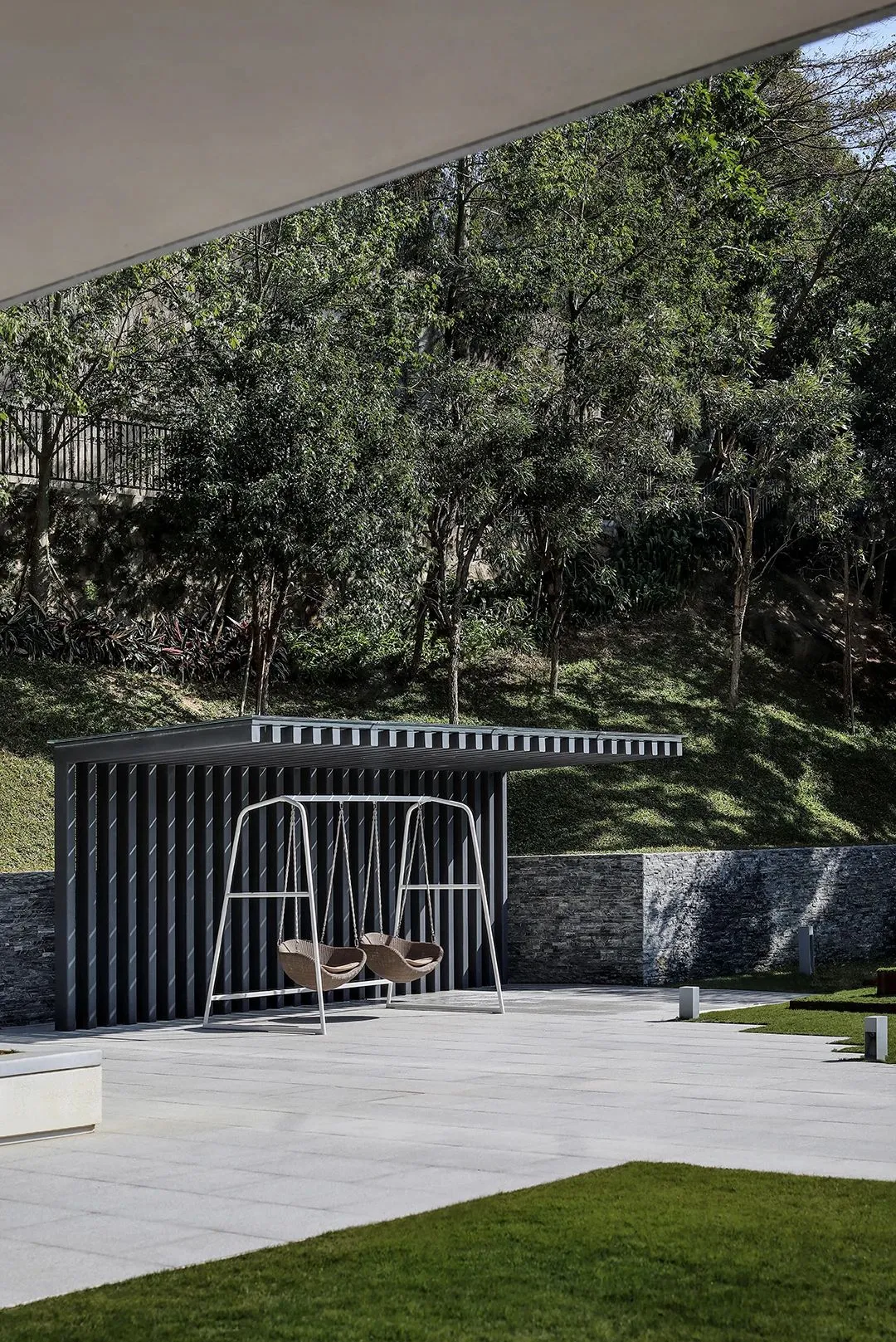
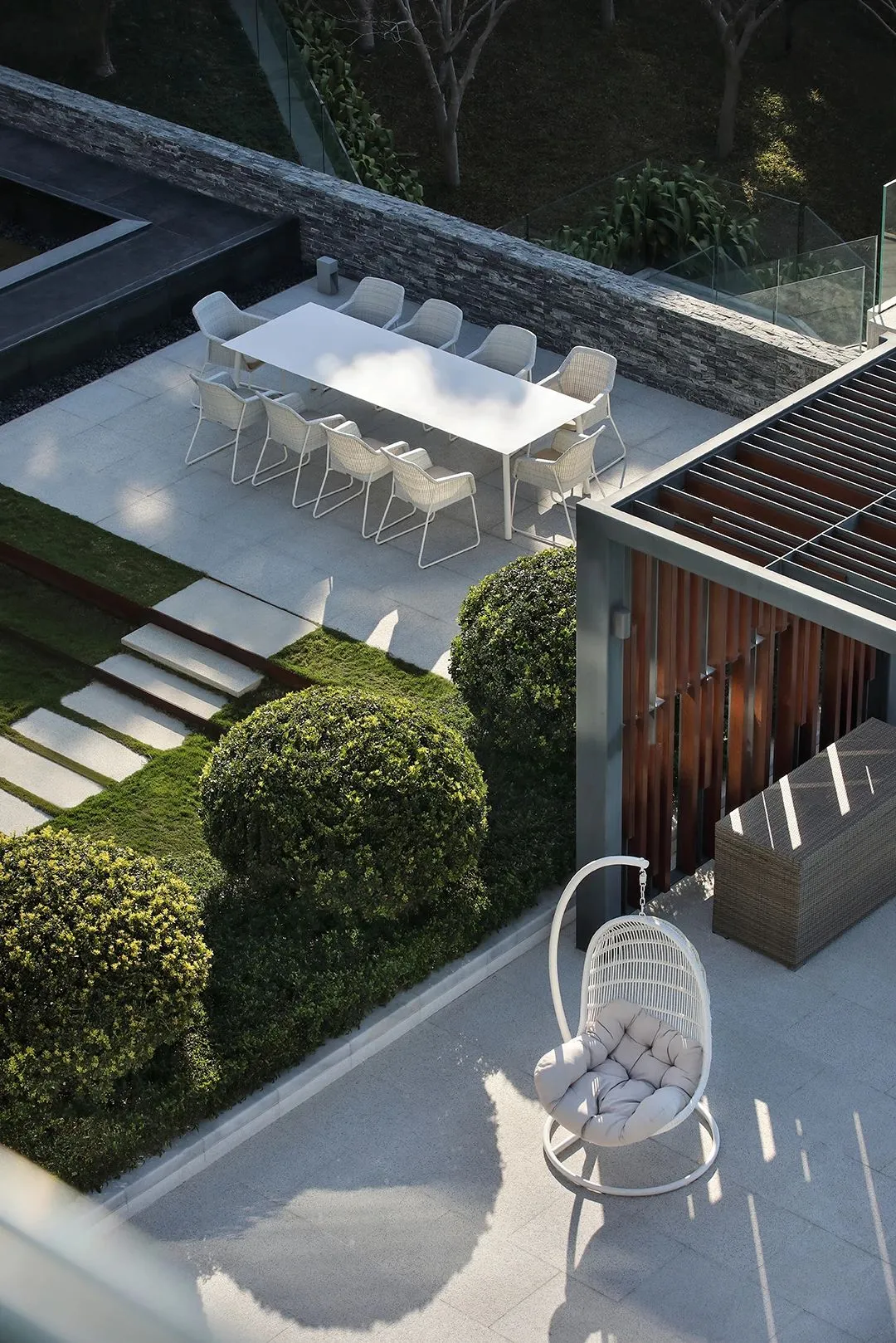
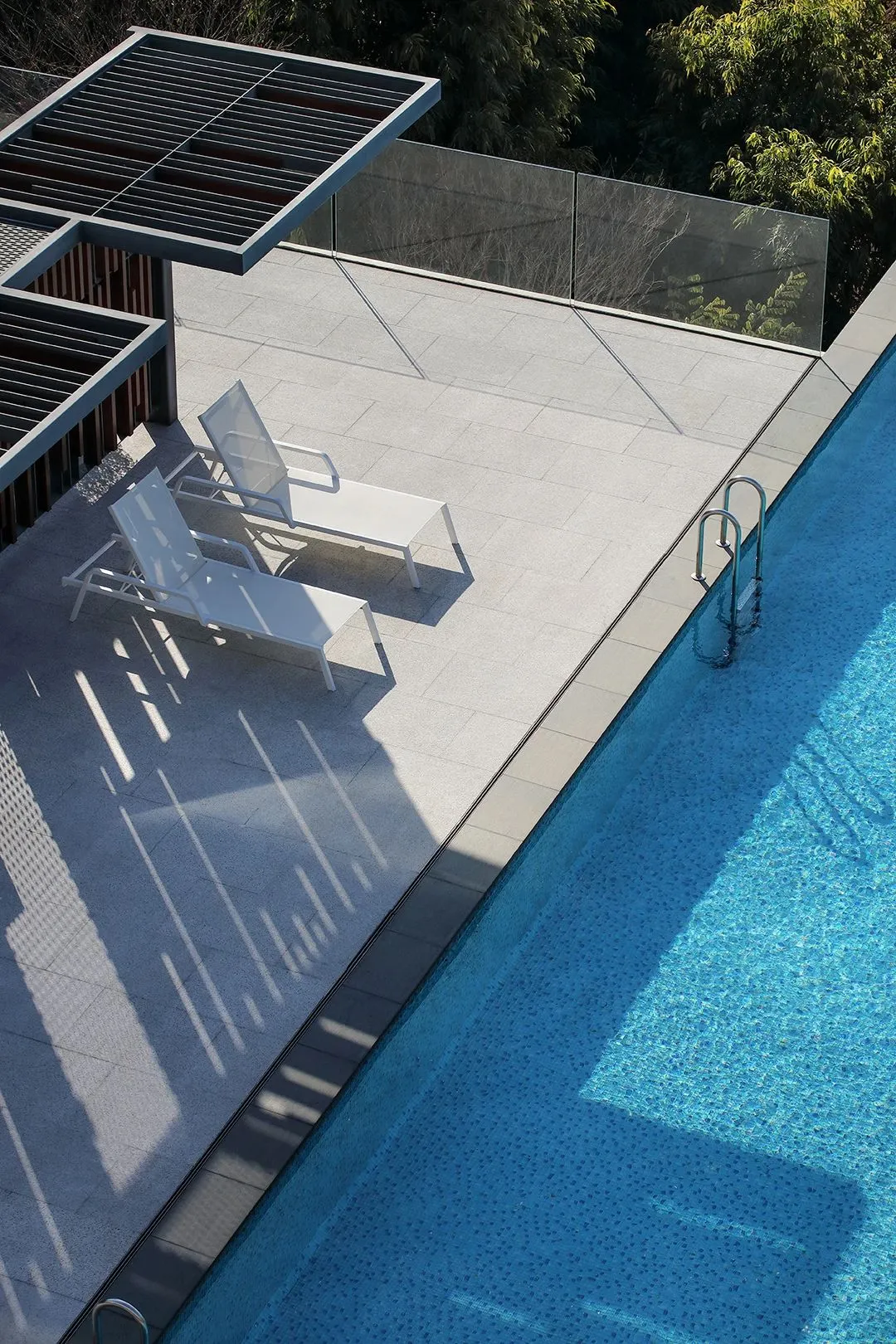
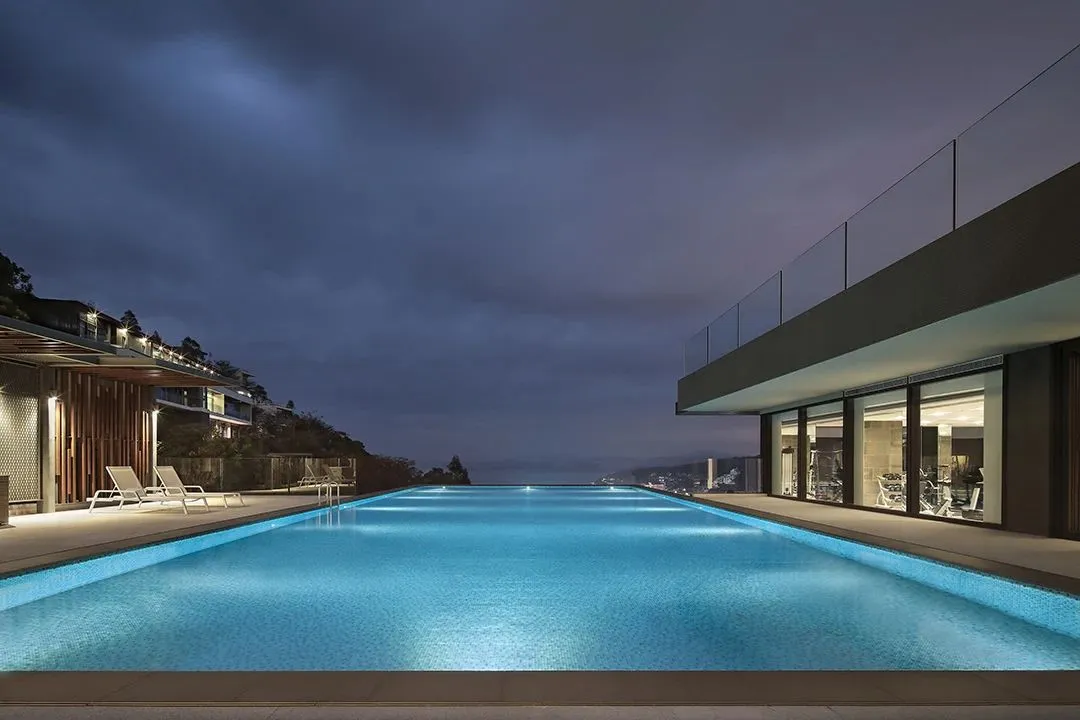
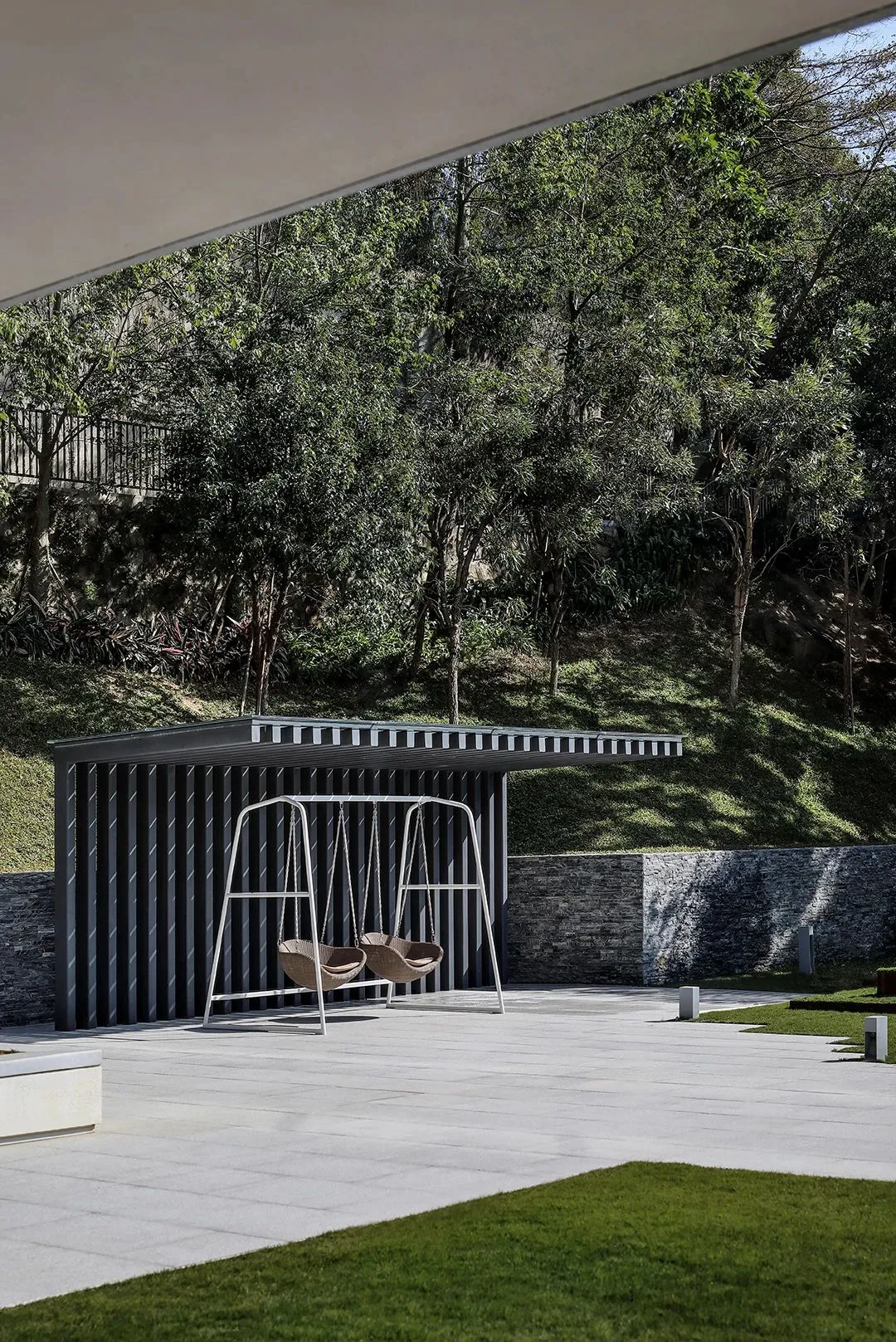
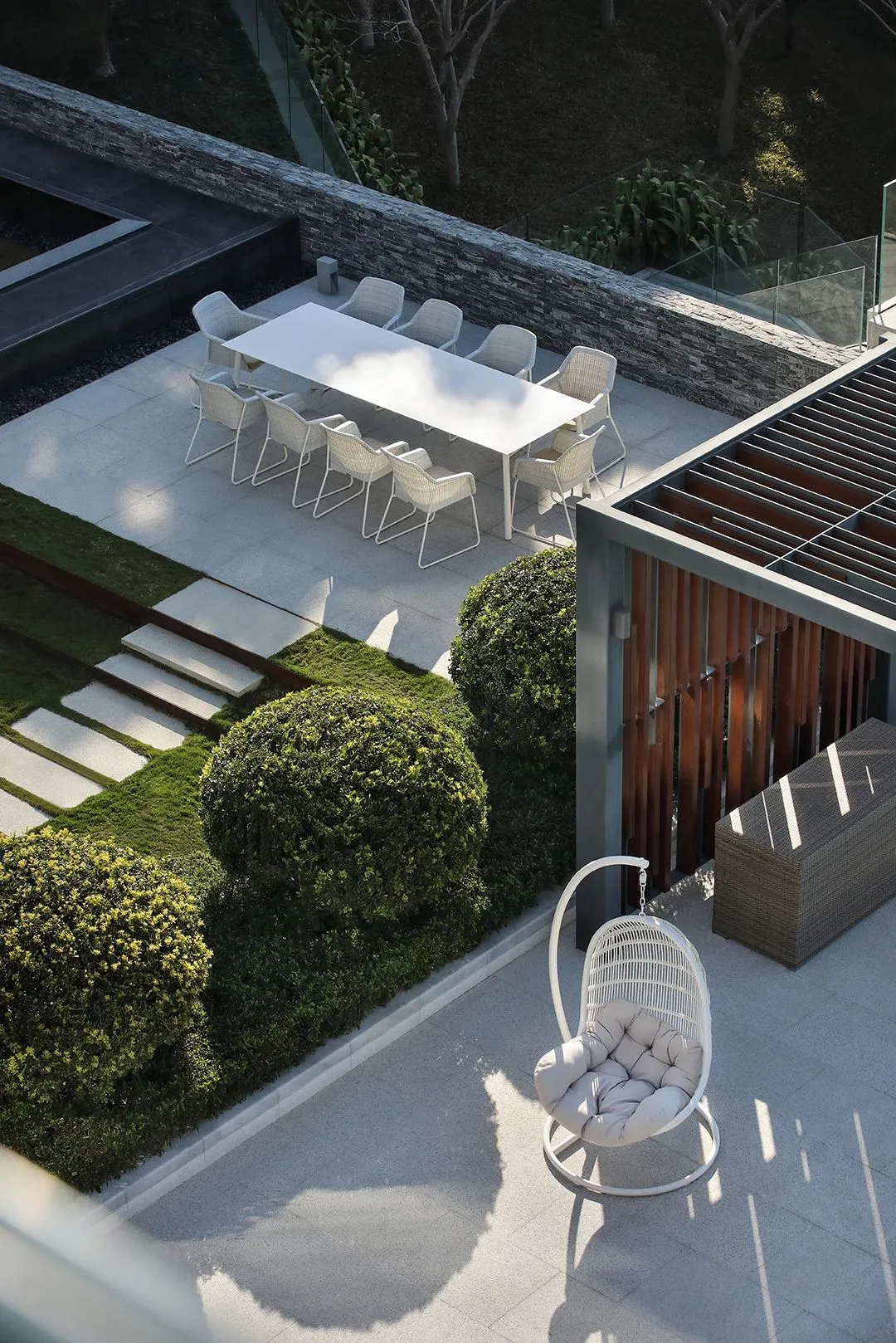
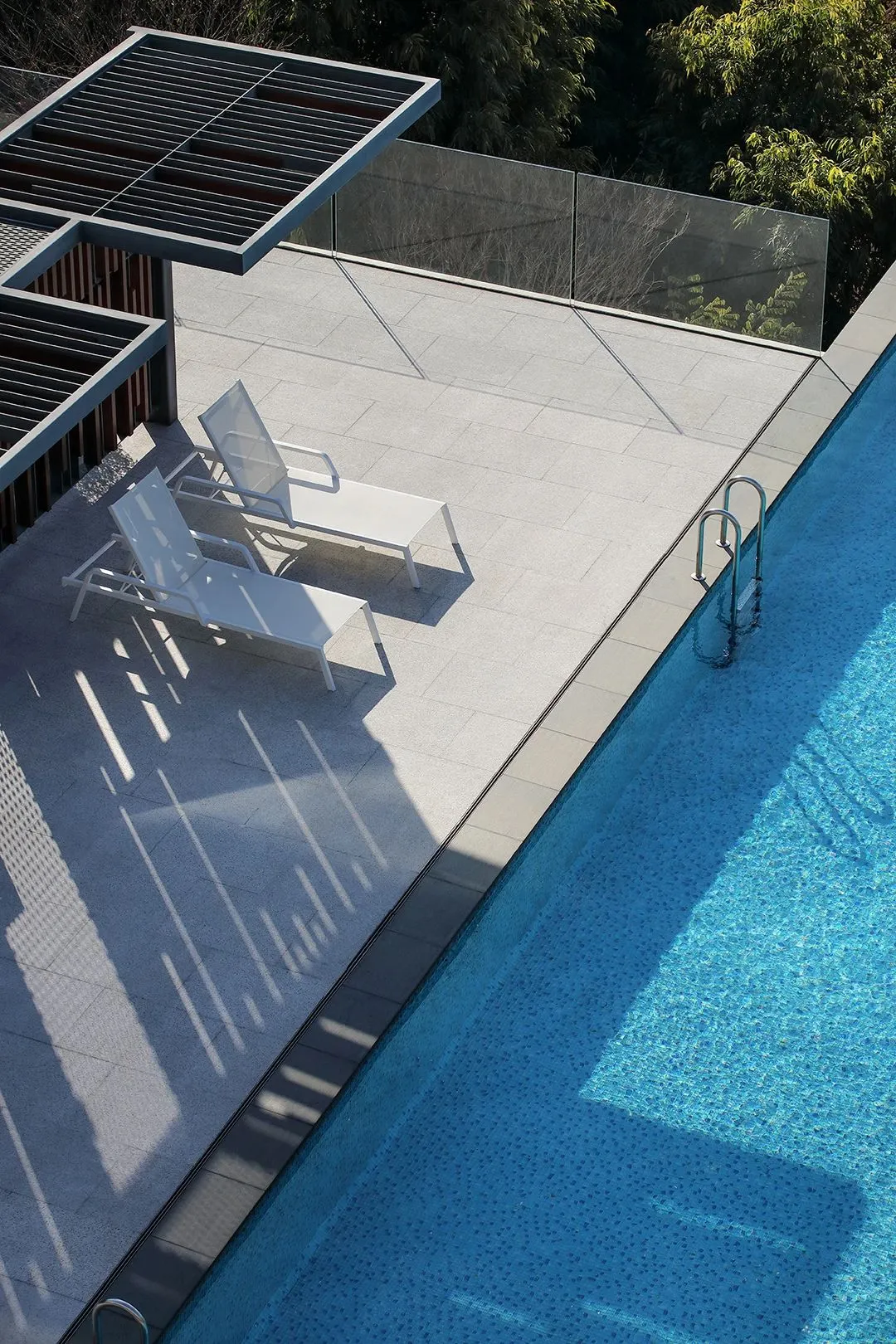
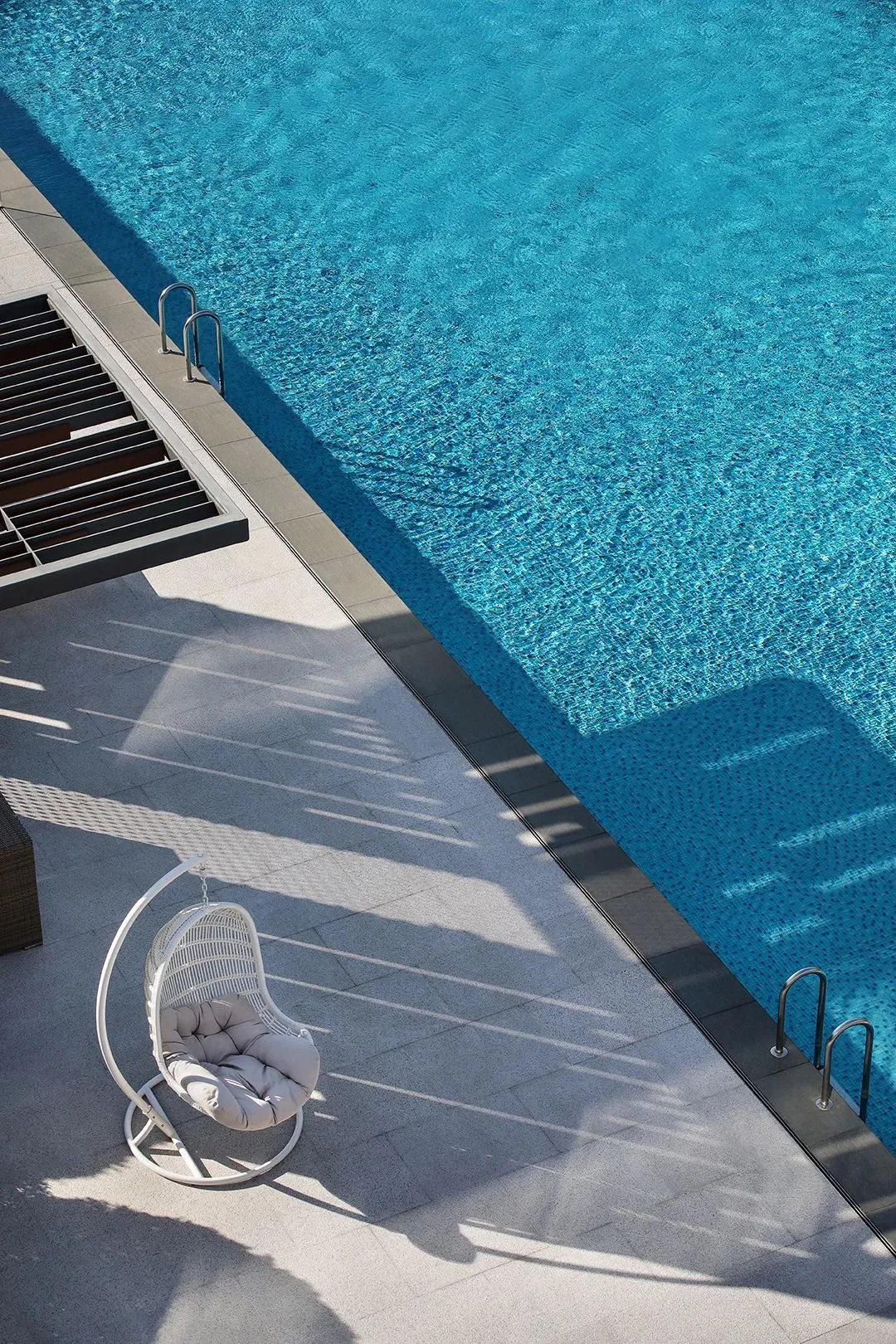
在深圳东部华侨城的天麓地块,建筑依山势而筑,面朝大鹏湾,海拔与地形的双重条件赋予了这处居所近乎特权般的景观资源。然而,设计面临的第一个判断并非如何“享用”这片山海,而是如何处理建筑与自然之间已然存在的关系。3000平方米的体量,在半山之上若处理不当,极易沦为自我膨胀的符号堆砌。设计者选择了一条更为克制的路径:以景观为绝对主导,室内空间退居为观看的容器。这一决策从根本上决定了后续所有设计动作的边界——任何过于喧嚣的造型或色彩,都会破坏建筑与自然之间已经建立的平衡。这是一场关于权力让渡的设计策略:将表现欲让位于环境,将形式语言压缩为背景。
At Shenzhen’s OCT Tianlu, the residence is built into the mountain slope facing Dapeng Bay. The dual conditions of altitude and topography grant this dwelling an almost privileged access to landscape resources. Yet the first design judgment was not how to “enjoy” the mountain and sea, but how to negotiate the relationship already established between architecture and nature. At 3,000 square meters, a mountainside dwelling of this scale could easily descend into self-aggrandizing symbolic accumulation. The designer chose a more restrained path: landscape as absolute priority, interior space receding as a viewing vessel. This decision fundamentally determined the boundaries for all subsequent design actions—any overly assertive form or color would disrupt the existing balance between architecture and nature. This is a design strategy of power relinquishment: subordinating expressive ambition to environment, compressing formal language into background.
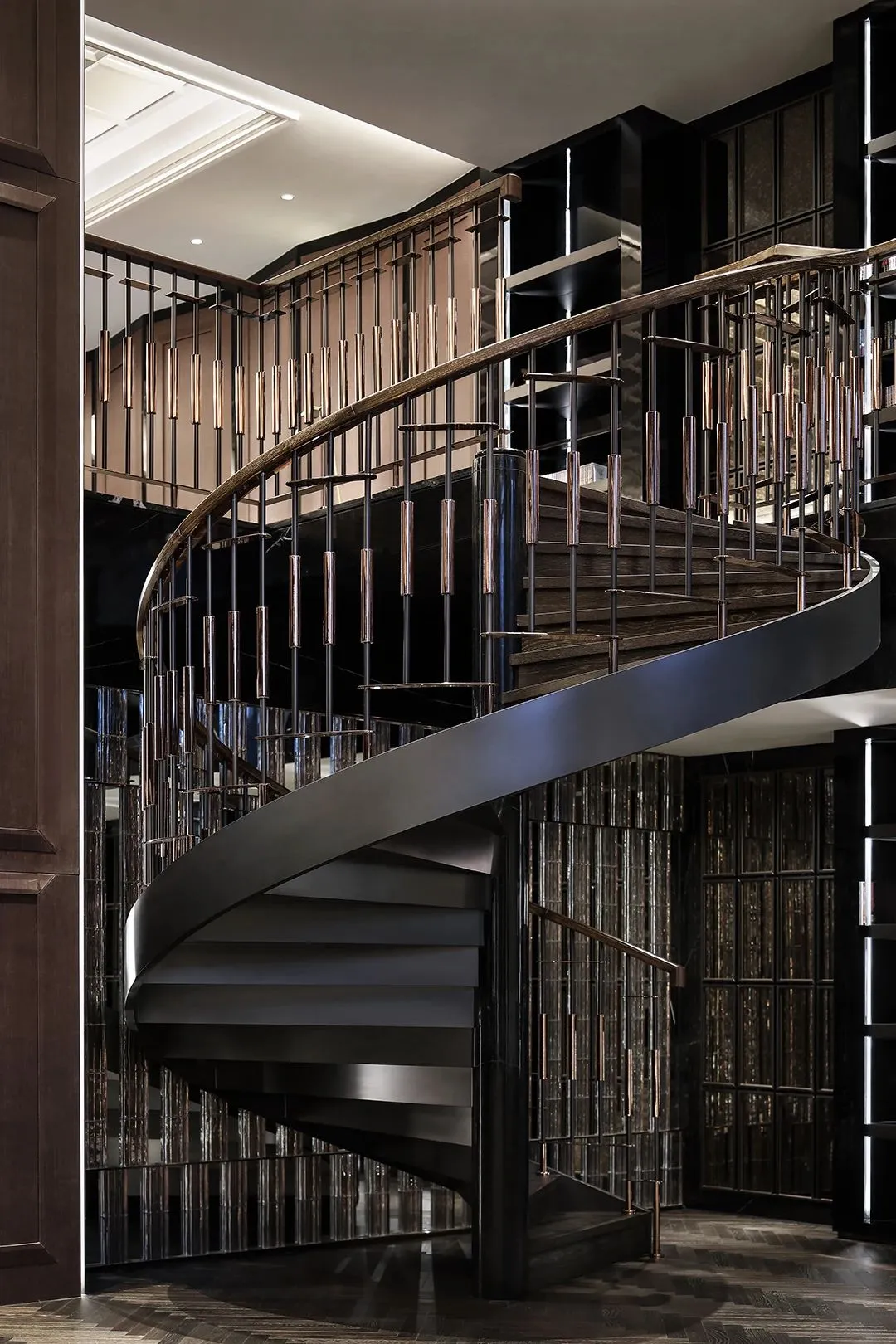
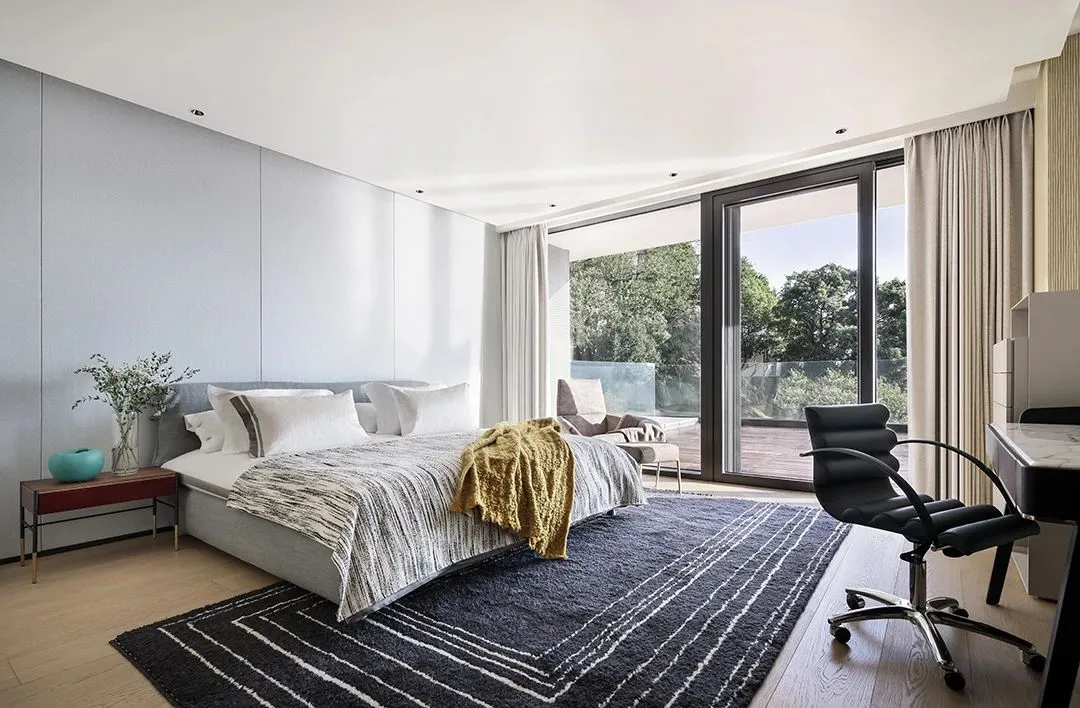
功能组织呈现出清晰的层级结构。公共区域被部署在景观面最为开阔的楼层,以大尺度落地窗作为空间与自然之间的唯一中介。这里没有采用常见的“观景台”式处理——即刻意框取特定景致——而是让玻璃面连续展开,使山海成为空间的延展而非装饰。私密区域则退居内侧或次要朝向,通过动线的转折形成视觉与听觉上的缓冲。值得注意的还有垂直动线的处理:楼梯与电梯并置,既满足日常效率,也照顾到不同身体状况的使用者。这种功能布局的背后,是对居住者行为模式的精确推演——这对年轻夫妇既有社交需求,也需要私密庇护,而3000平方米的体量恰恰为这种二分提供了物理条件。
The functional organization reveals a clear hierarchical structure. Public areas are positioned on floors with the most expansive landscape views, with large-scale floor-to-ceiling windows serving as the sole intermediary between space and nature. Rather than adopting a typical “viewing platform” approach—deliberately framing specific vistas—the glazed surfaces unfold continuously, allowing mountain and sea to become extensions of space rather than mere decorations. Private areas retreat to interior sides or secondary orientations, with circulation shifts creating visual and auditory buffers. Also noteworthy is the vertical circulation strategy: stairs and elevator coexist, serving both daily efficiency and users with different physical needs. Behind this functional layout lies precise deduction of occupant behavior patterns—this young couple requires both social engagement and private sanctuary, and the 3,000-square-meter volume precisely provides the physical conditions for this duality.
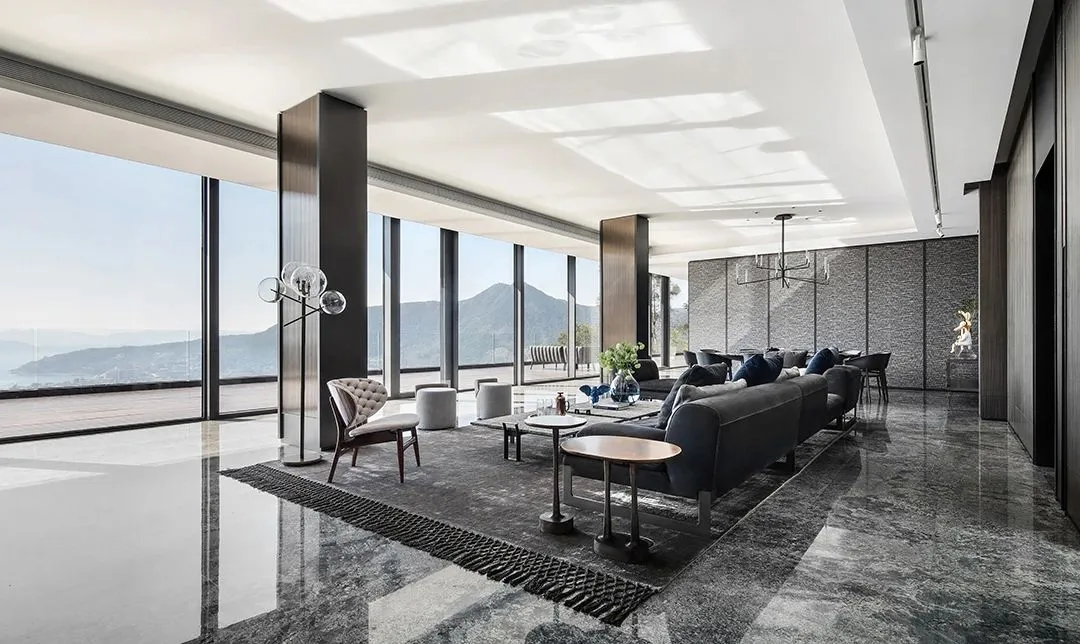
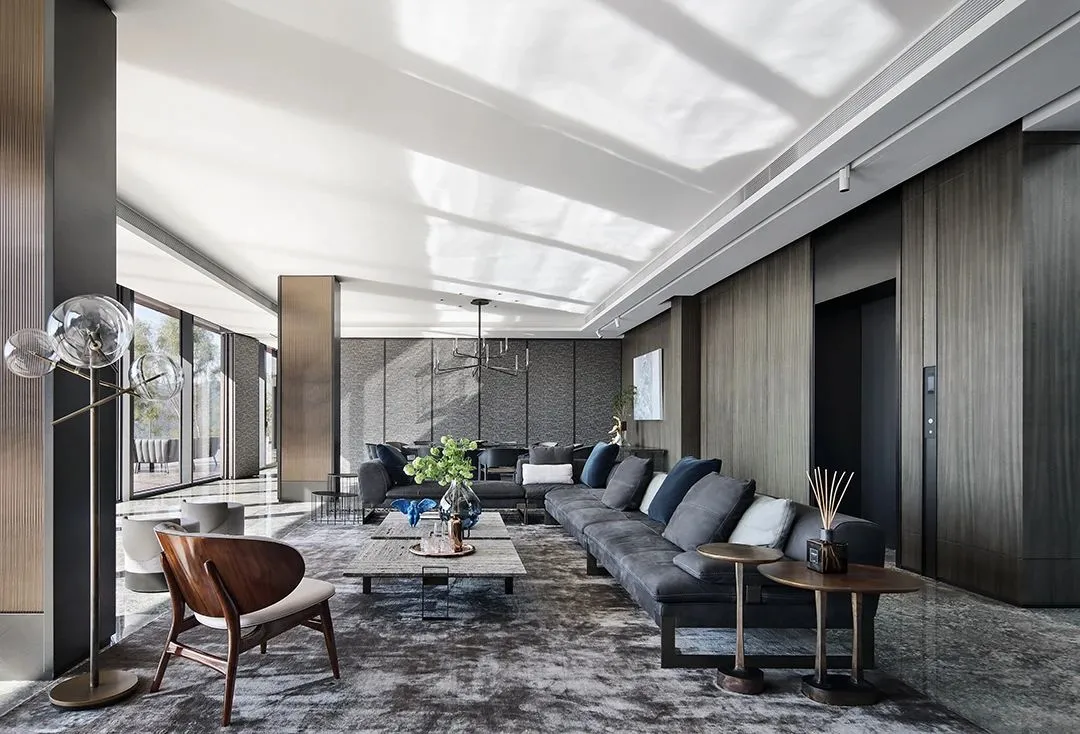
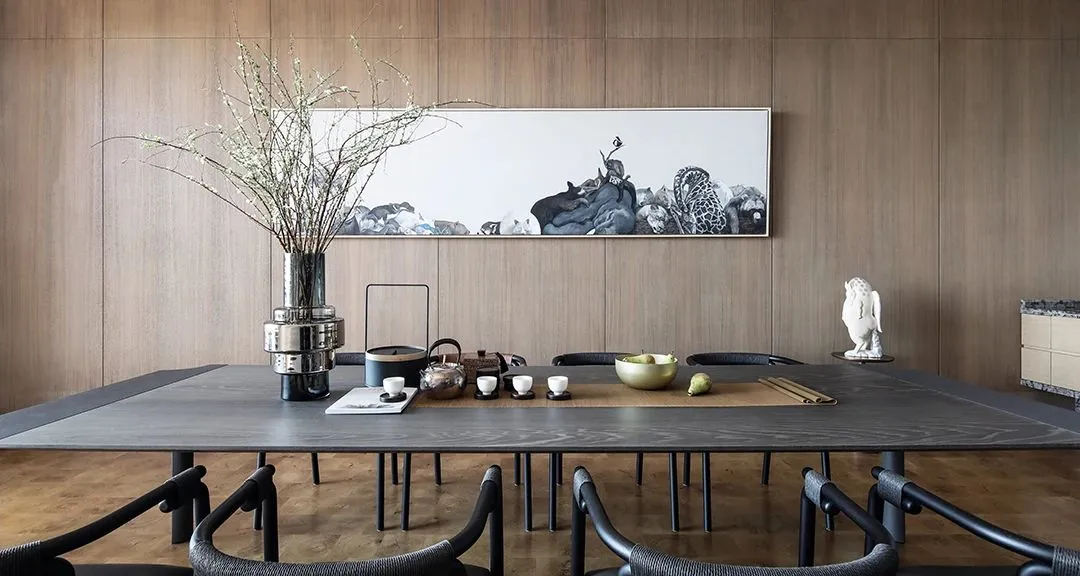
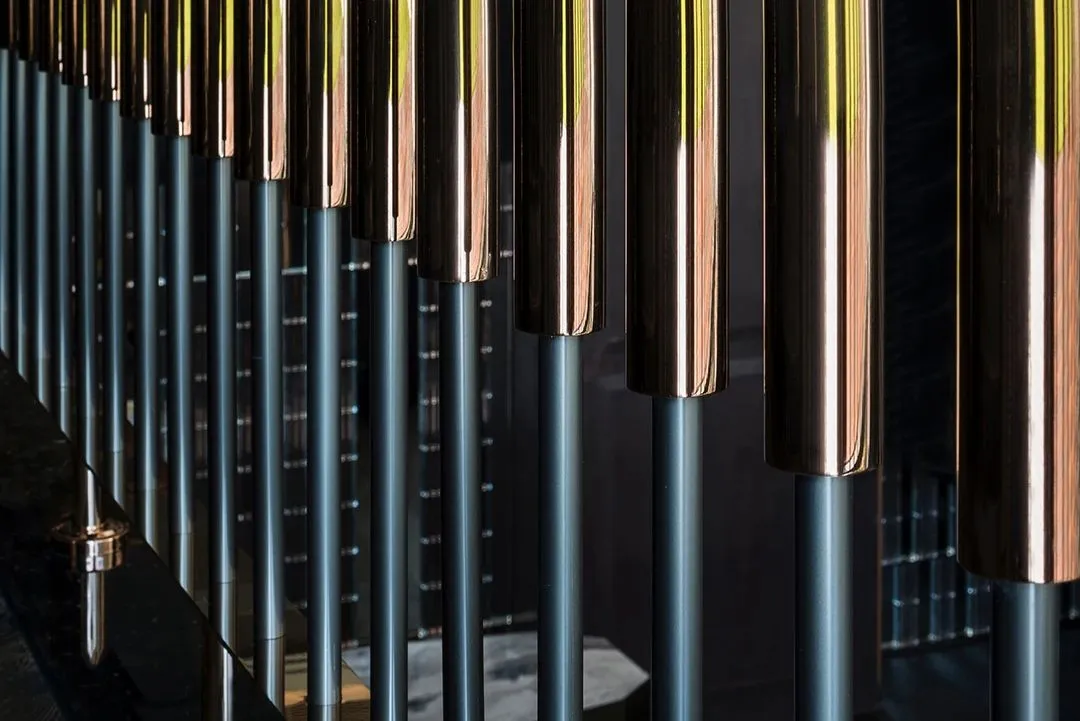
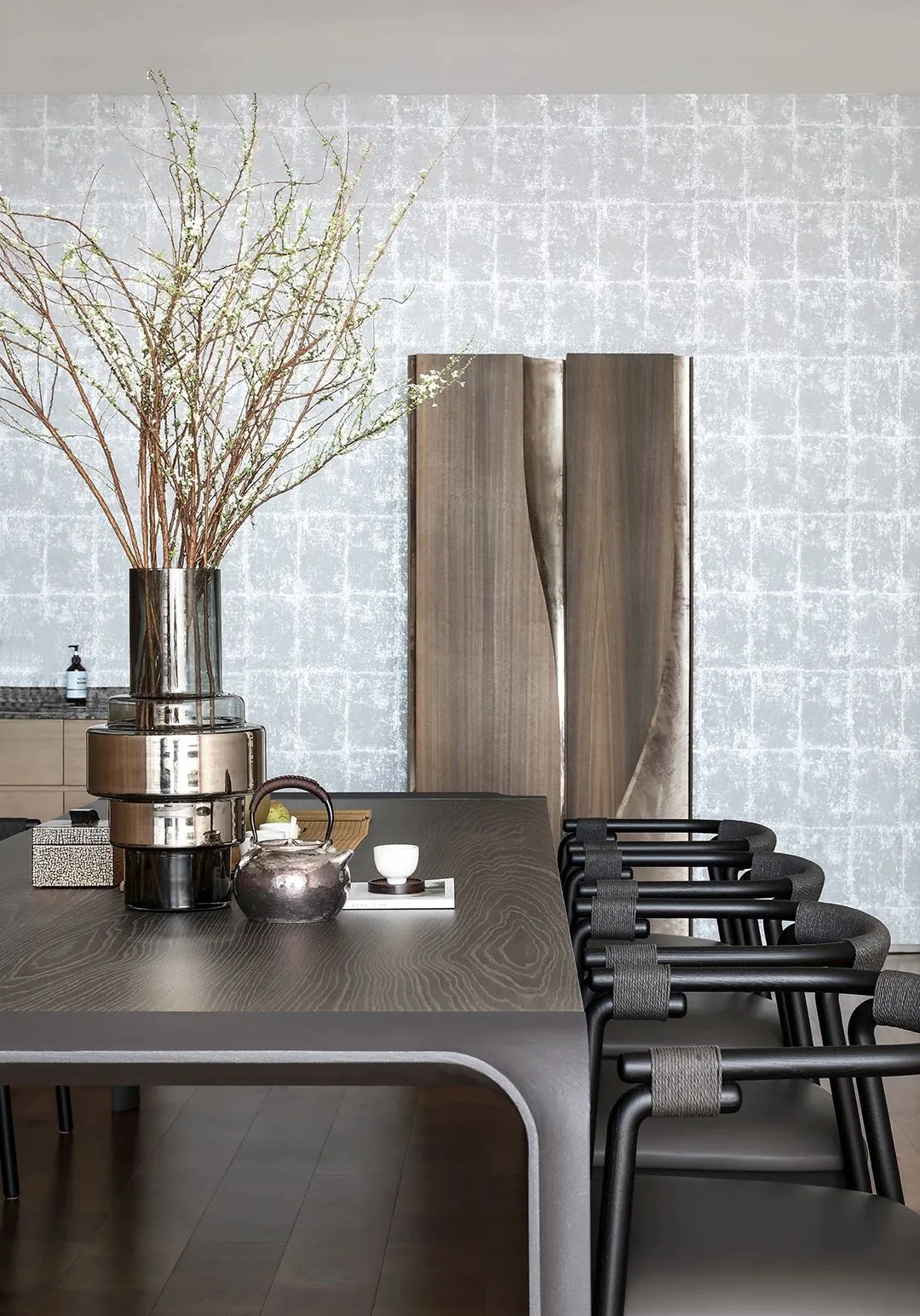
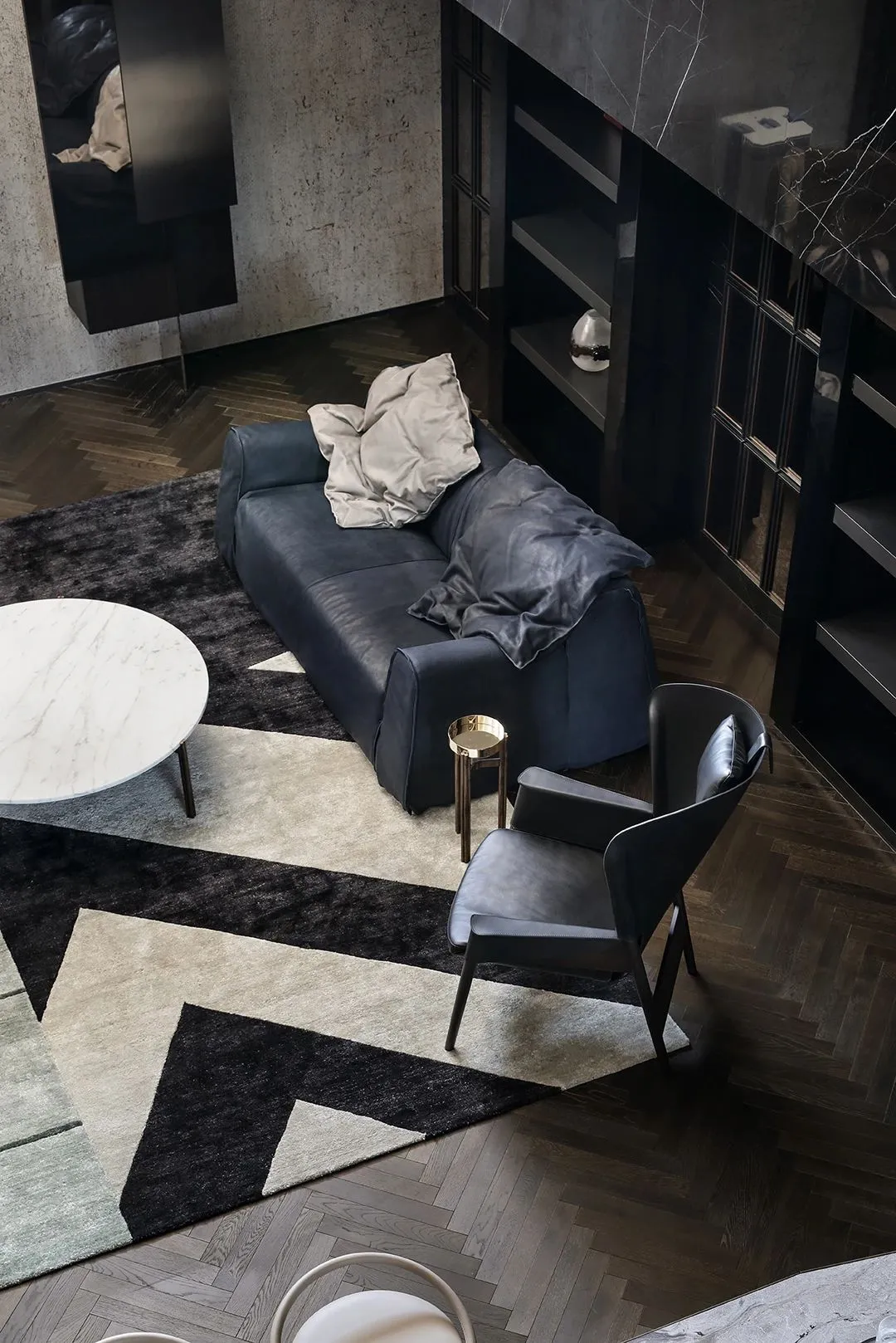
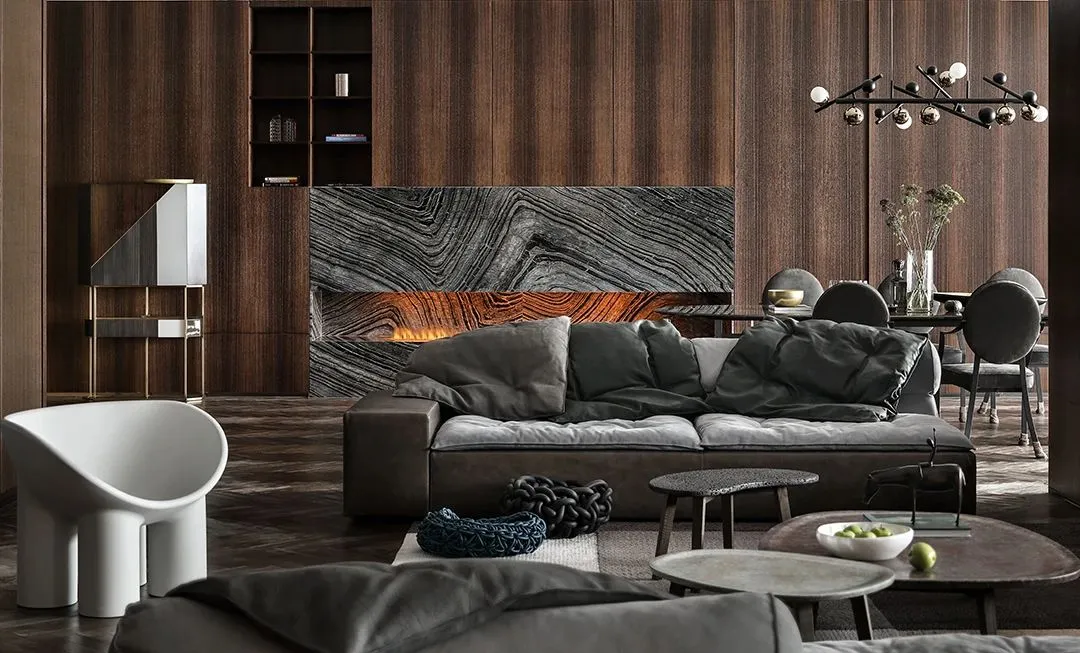
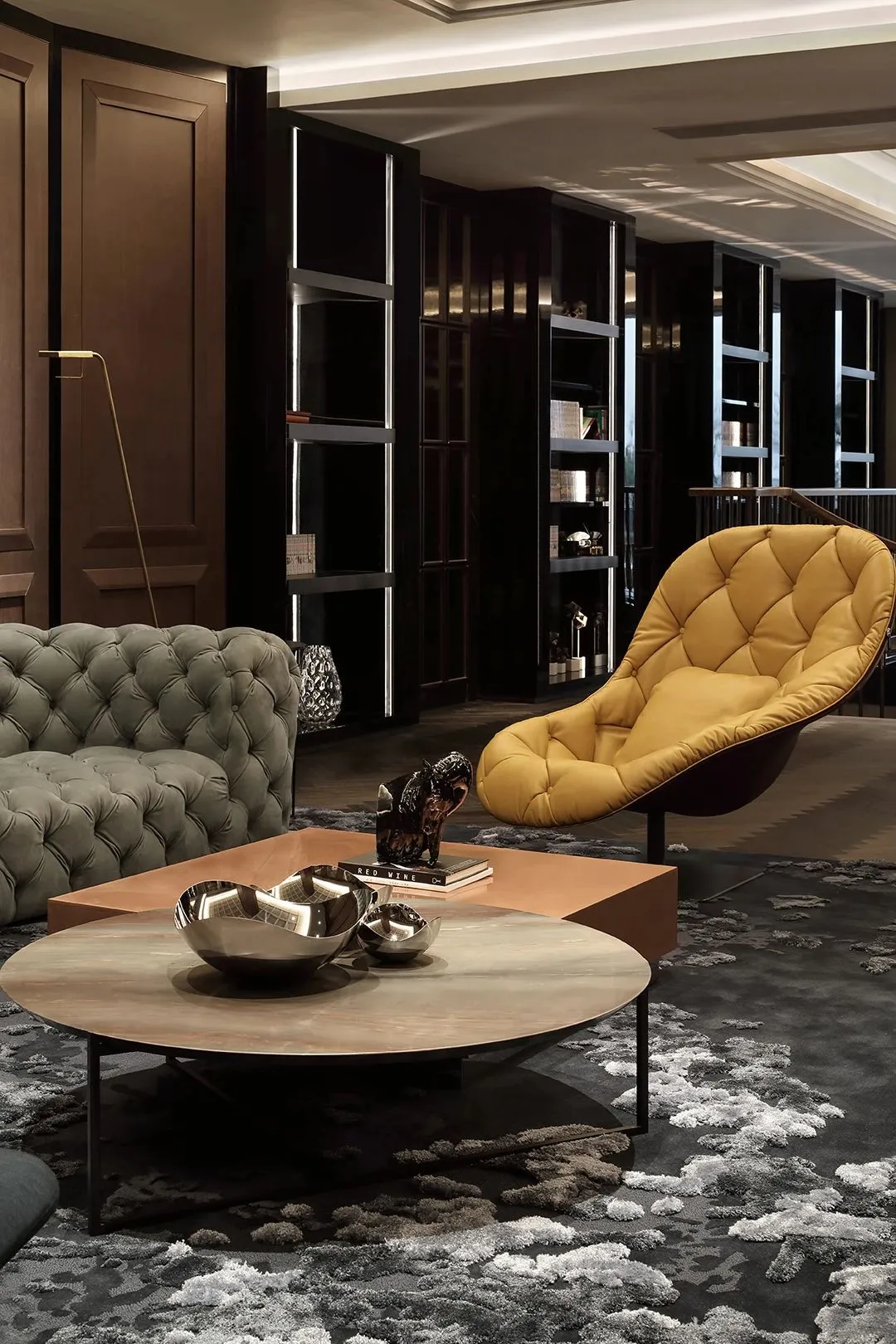
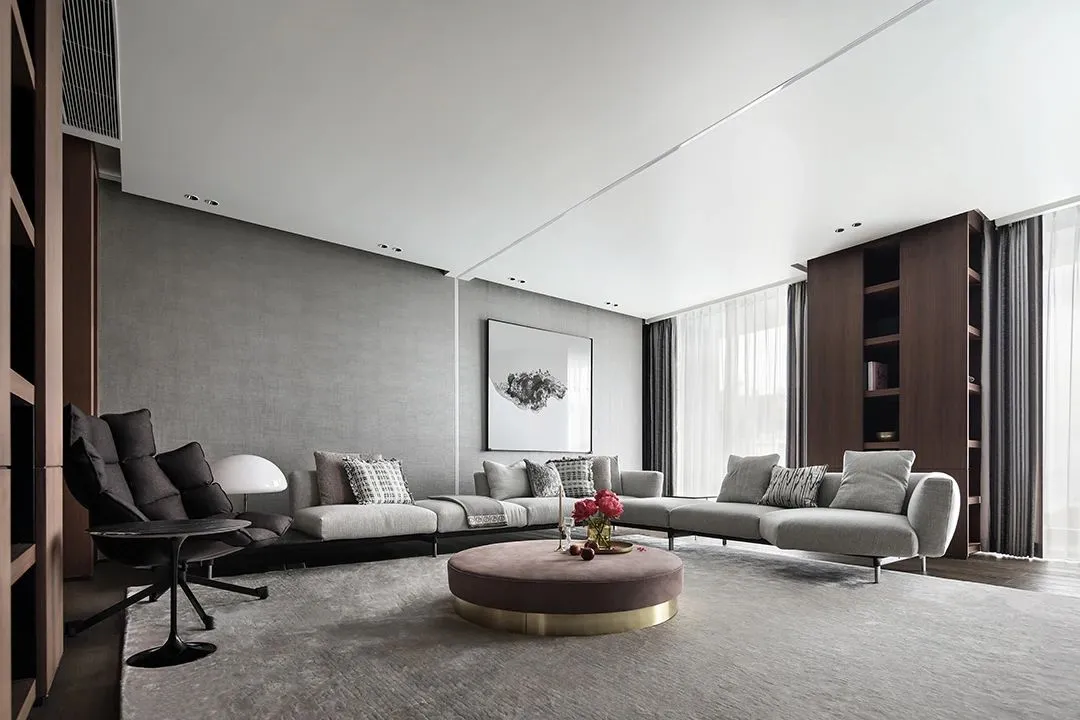
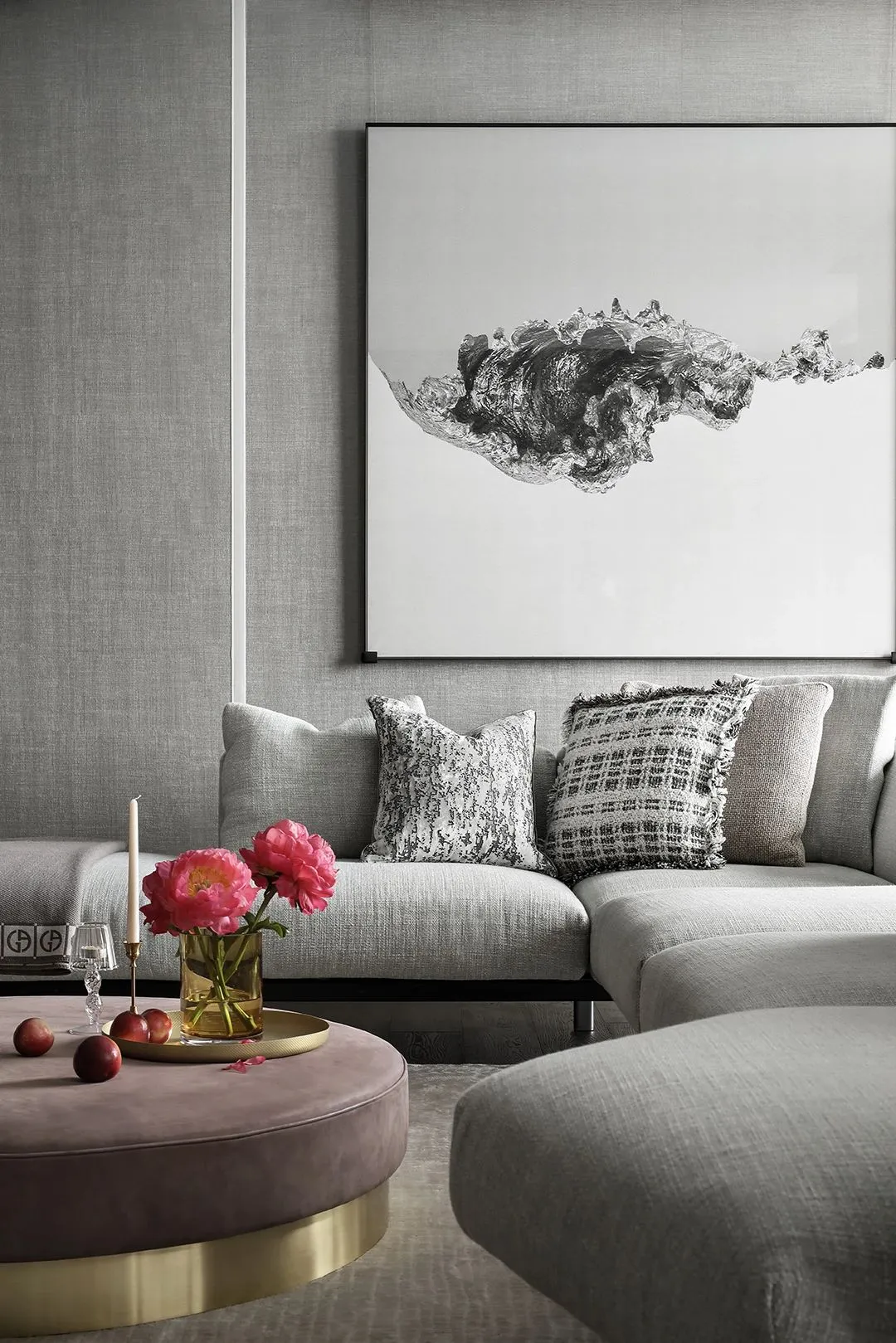
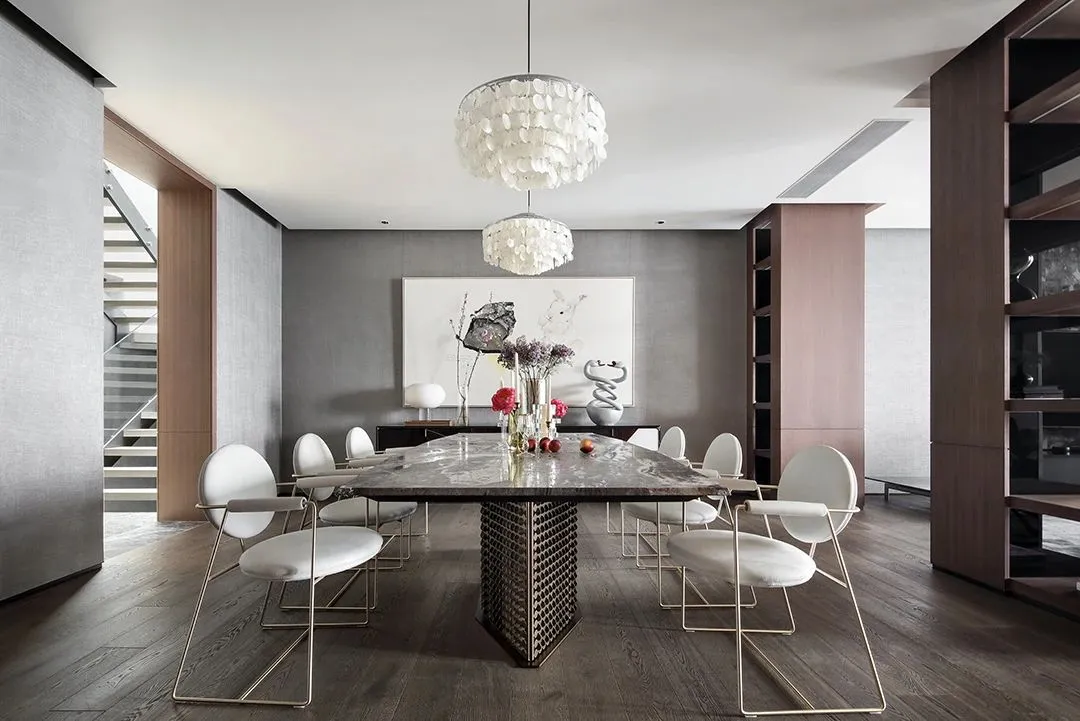
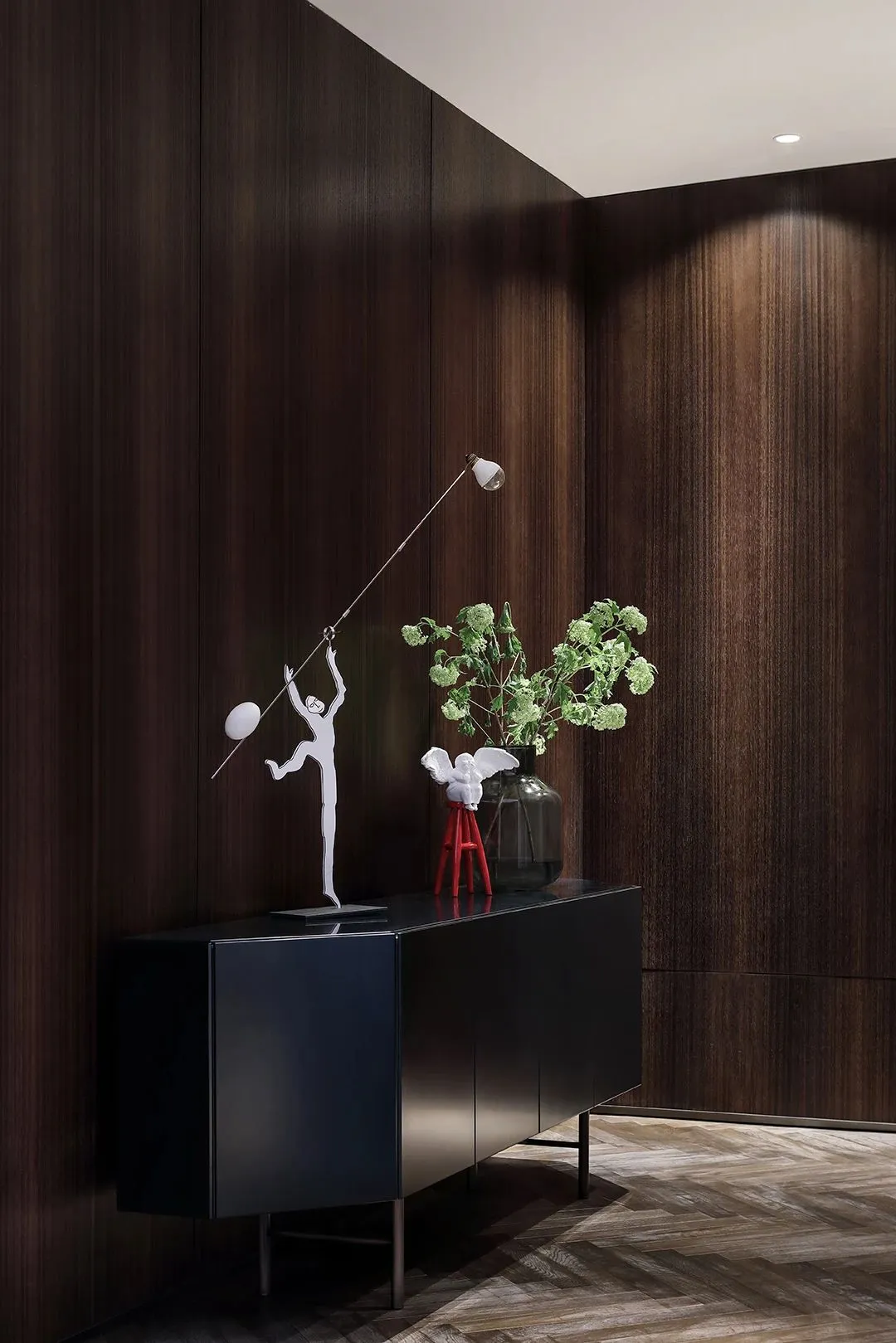
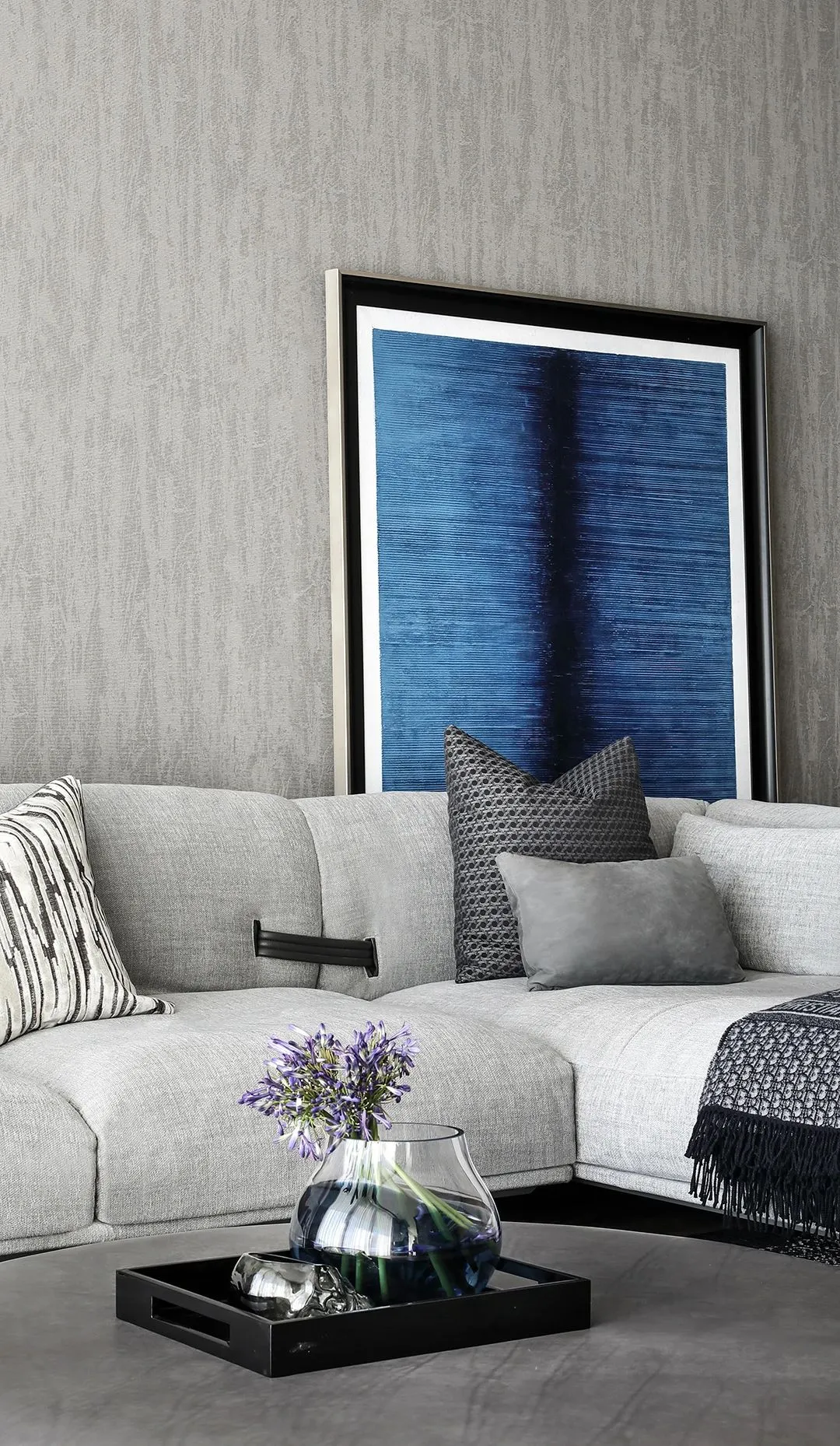
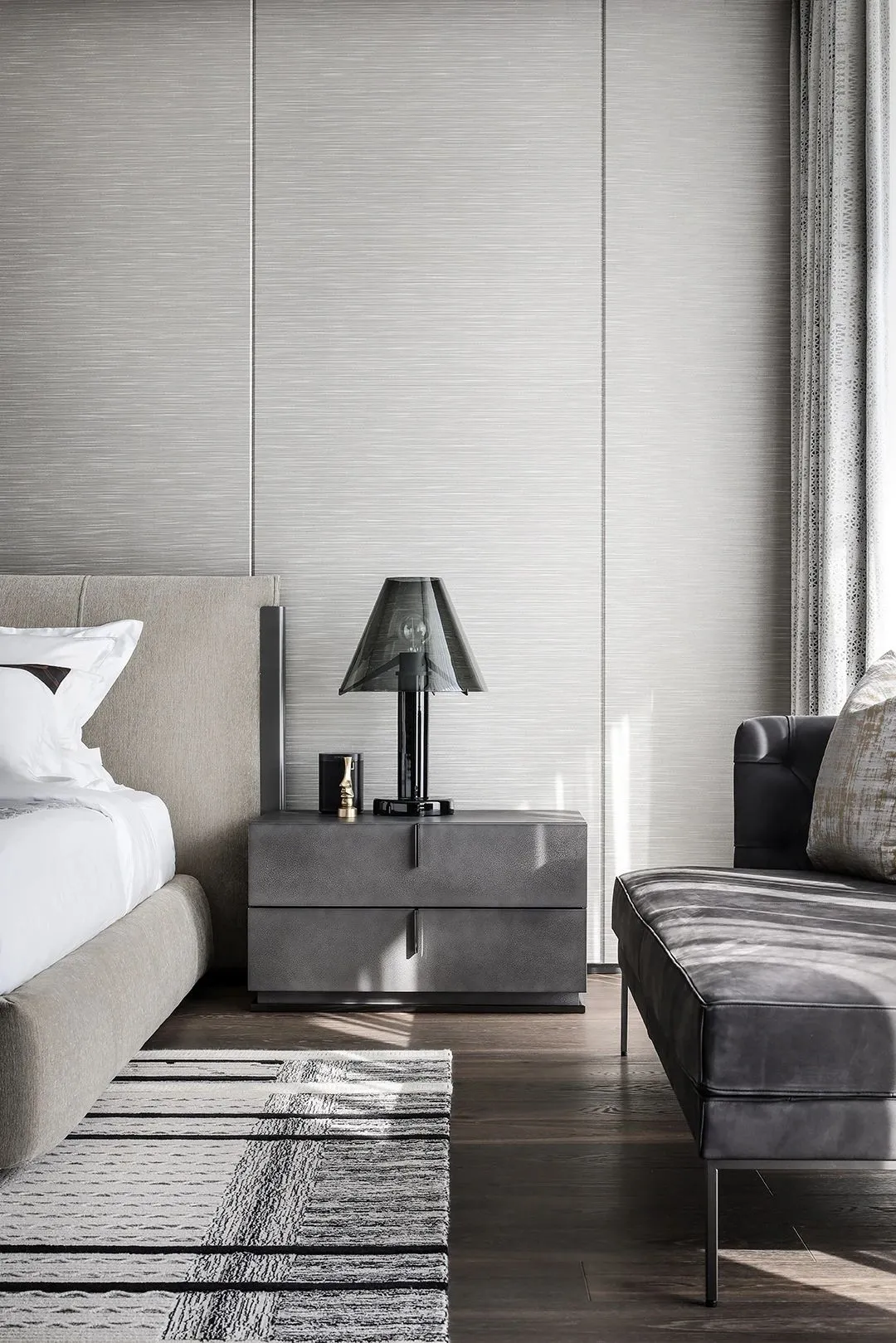
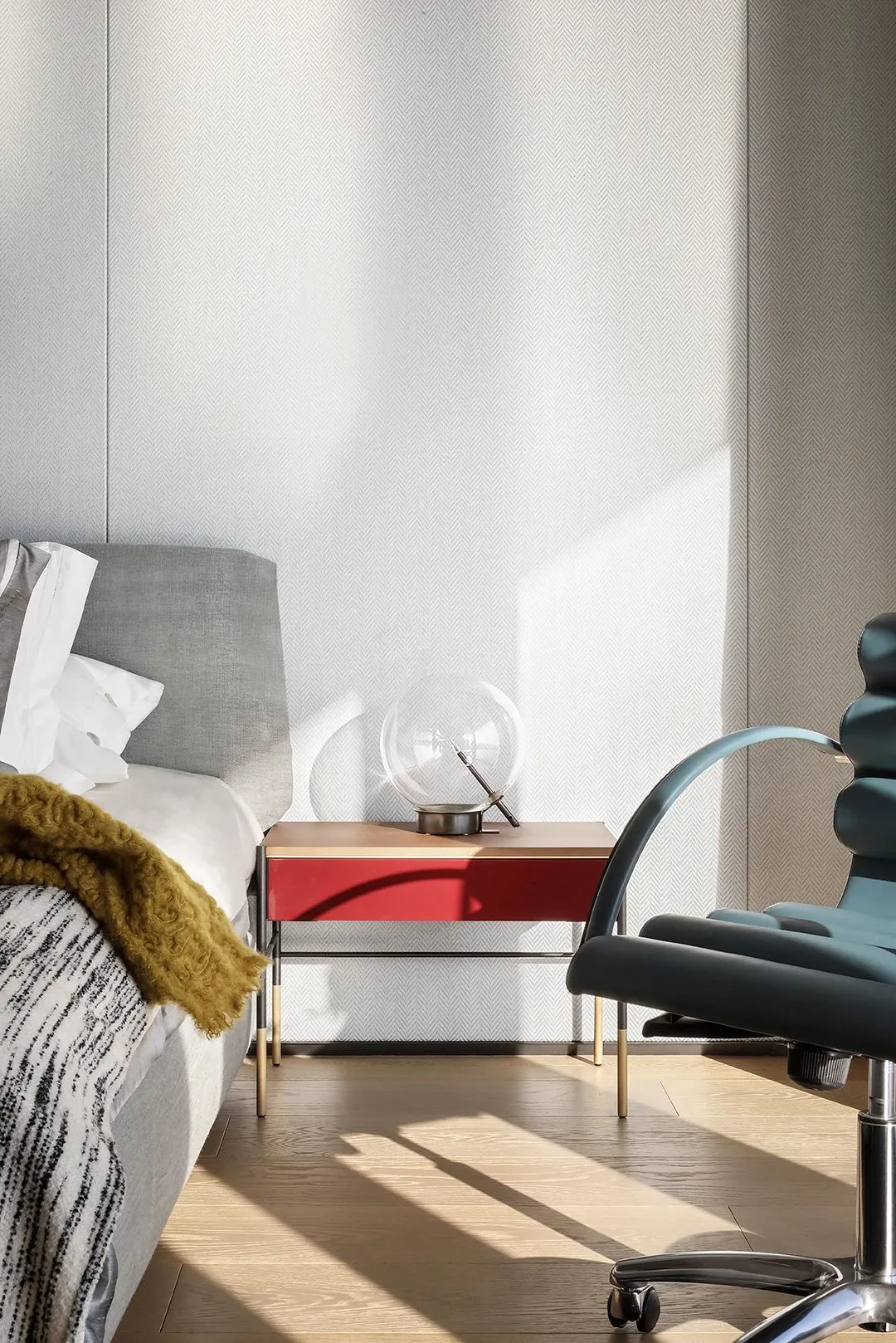
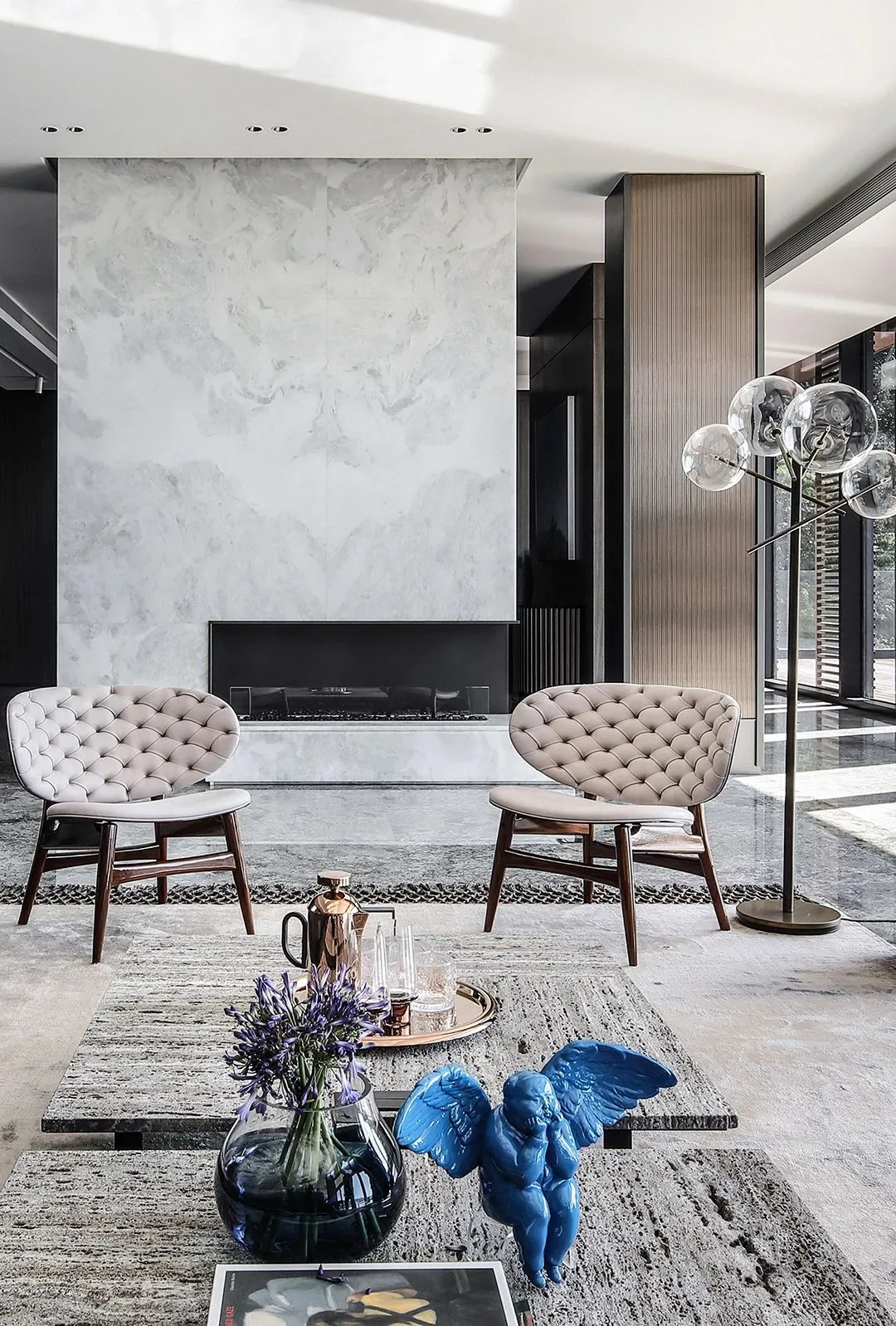
材质与色彩的配置策略,体现了对“雅奢”这一概念的实质性诠释。中性灰色调占据了主体视觉份额,从家具到墙面形成连续的低饱和度基底。大理石的使用集中在关键节点——休闲区、茶空间——而非大面积铺陈,这种节制避免了常见于高端住宅的“材料炫示”倾向。温暖深棕的木饰面与地板则提供了必要的温度调节,防止灰色体系滑向冷峻。暗色在藏书阁与藏品阁中被推至主导地位,这一处理并非出于风格化的戏剧需求,而是基于功能逻辑:收藏品需要低照度环境,而暗色背景恰恰能消解空间的边界感,使视线聚焦于艺术品本身。设计在这里展现了高度的自洽性:材料服务于对象,而非服务于表现。
The material and color strategy embodies a substantive interpretation of “elegant luxury.” Neutral gray tones dominate the visual field, forming a continuous low-saturation foundation from furniture to wall surfaces. Marble deployment is concentrated at key nodes—the lounge area, tea space—rather than sprawling across vast surfaces, a restraint that avoids the “material exhibitionism” tendency common in high-end residential design. Warm dark brown wood veneers and flooring provide necessary thermal modulation, preventing the gray palette from sliding into coldness. Dark tones dominate in the library and collection gallery, a treatment driven not by stylistic theatrical demands but by functional logic: collections require low-light environments, and dark backgrounds precisely dissolve spatial boundaries, focusing attention on the artworks themselves. The design demonstrates high self-consistency here: material serves object, not expression.
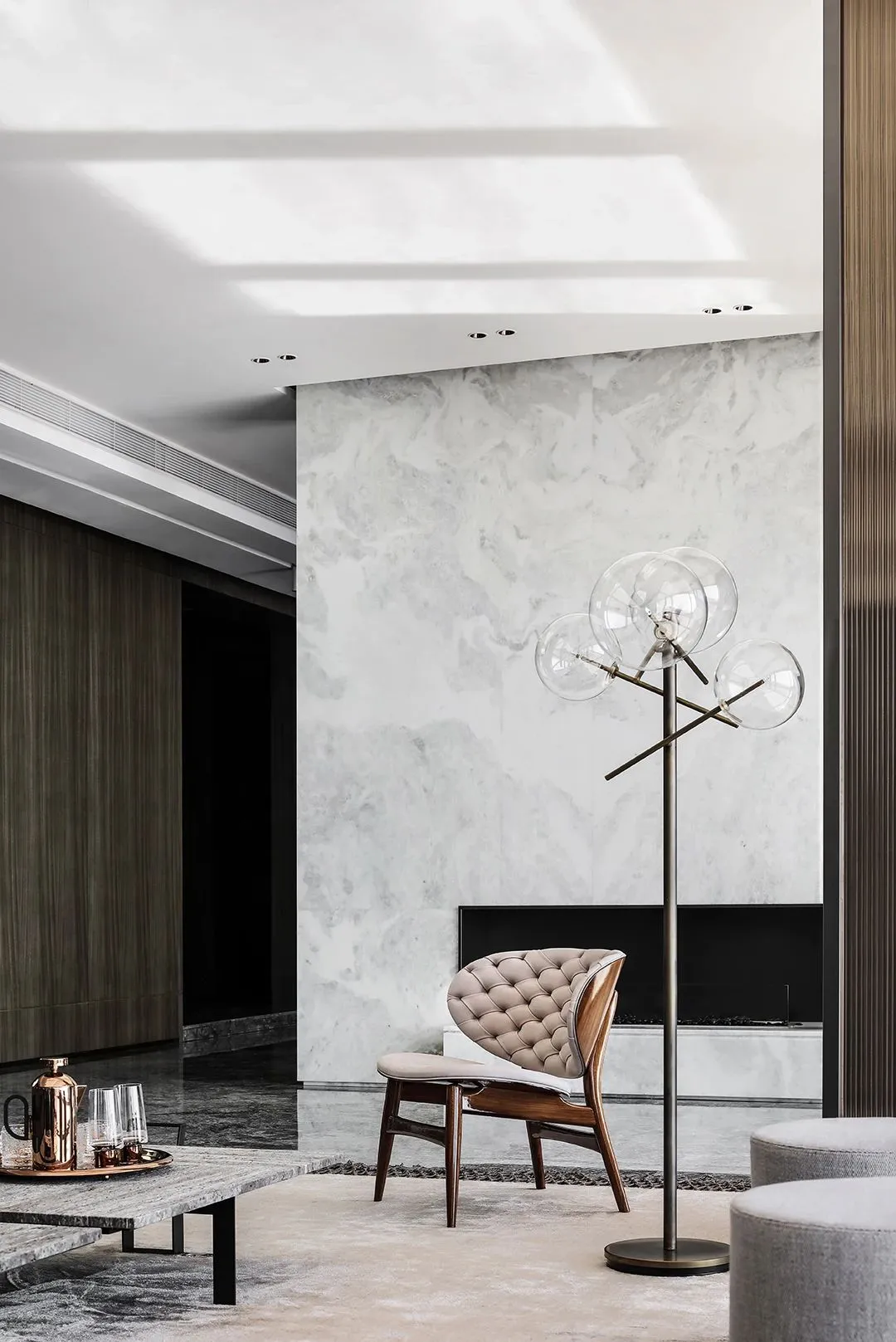
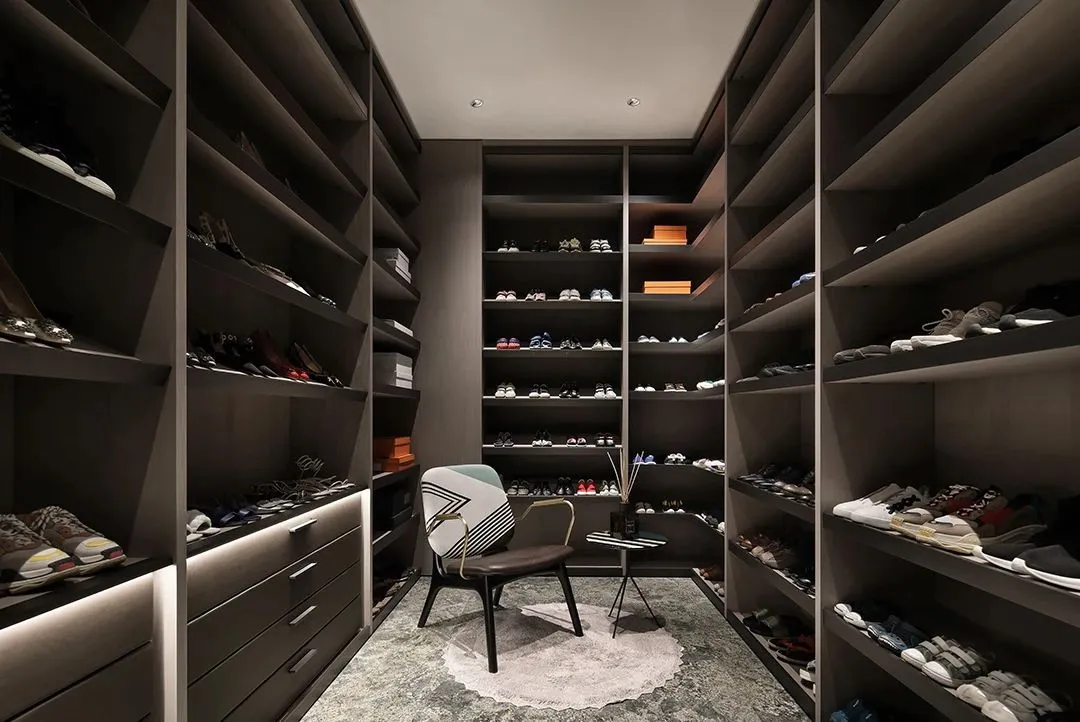
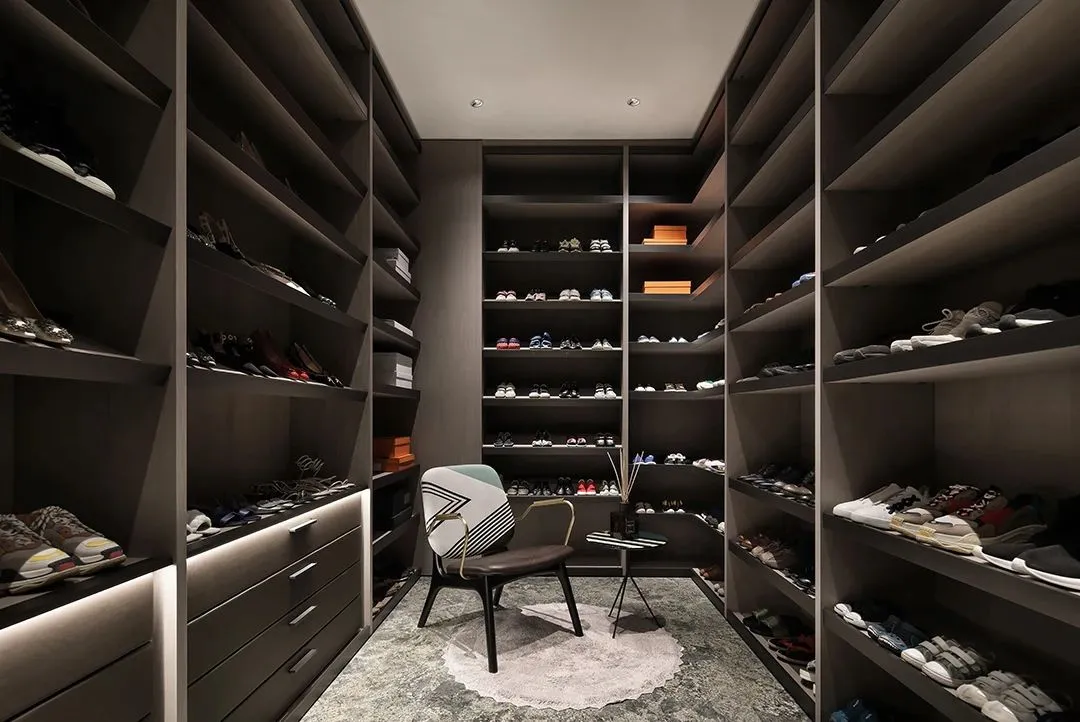
灯光系统的设计呈现出双轨逻辑。公共区域以自然光为主导,人工照明退居补充角色,这一决策直接源于景观优先的策略——在白昼,山海本身就是空间中最具表现力的元素,任何人工光源都无法与之竞争。夜间,间接照明成为主力,穹顶与墙面之间的光槽提供均匀的环境光,避免点光源造成的眩光干扰。私密区域则引入了更为细腻的层次:床头墙体内的暖黄灯带在低照度下营造出围合感,衣帽间的重点照明服务于功能精确性。这种昼夜分治的策略,反映出设计者对居住时间维度的深刻理解——空间不仅存在于空间坐标中,也存在于时间流变里。
The lighting design follows a dual-track logic. In public areas, natural light dominates, with artificial lighting receding to a supplementary role—a decision directly derived from the landscape-first strategy, as during daylight hours, mountain and sea themselves are the most expressive elements in the space, beyond any artificial light’s capacity to compete. At night, indirect lighting becomes primary, with light slots between vault and walls providing uniform ambient illumination, avoiding glare interference from point sources. Private areas introduce more nuanced layering: warm-toned LED strips within bedside walls create an enveloping quality at low illuminance, while accent lighting in the dressing room serves functional precision. This day-night separation reflects the designer’s deep understanding of the temporal dimension of inhabitation—space exists not only in spatial coordinates but also in the flow of time.
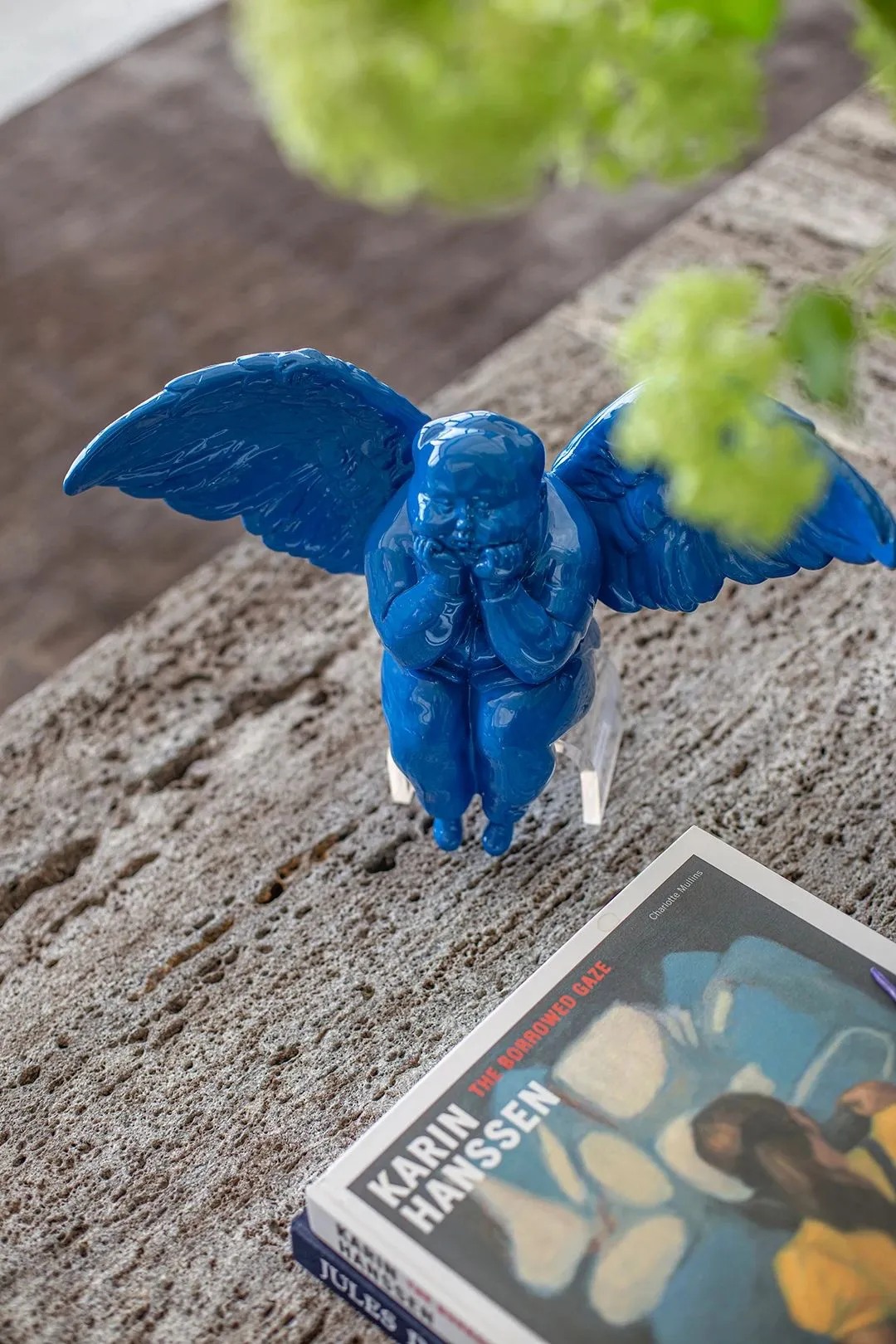
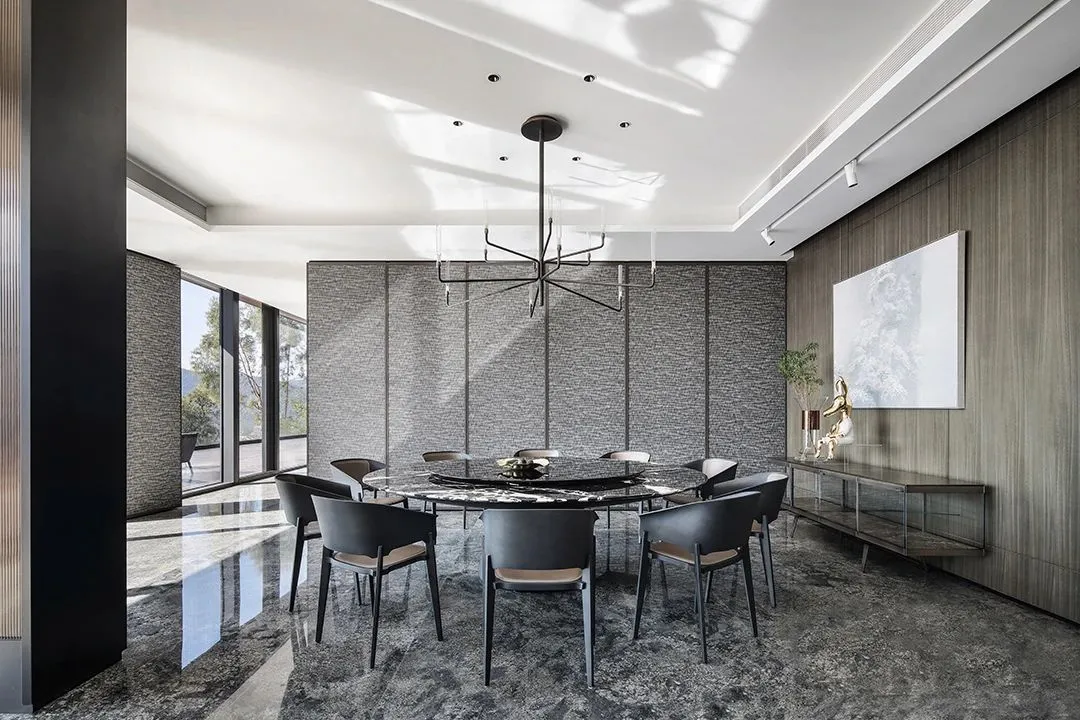
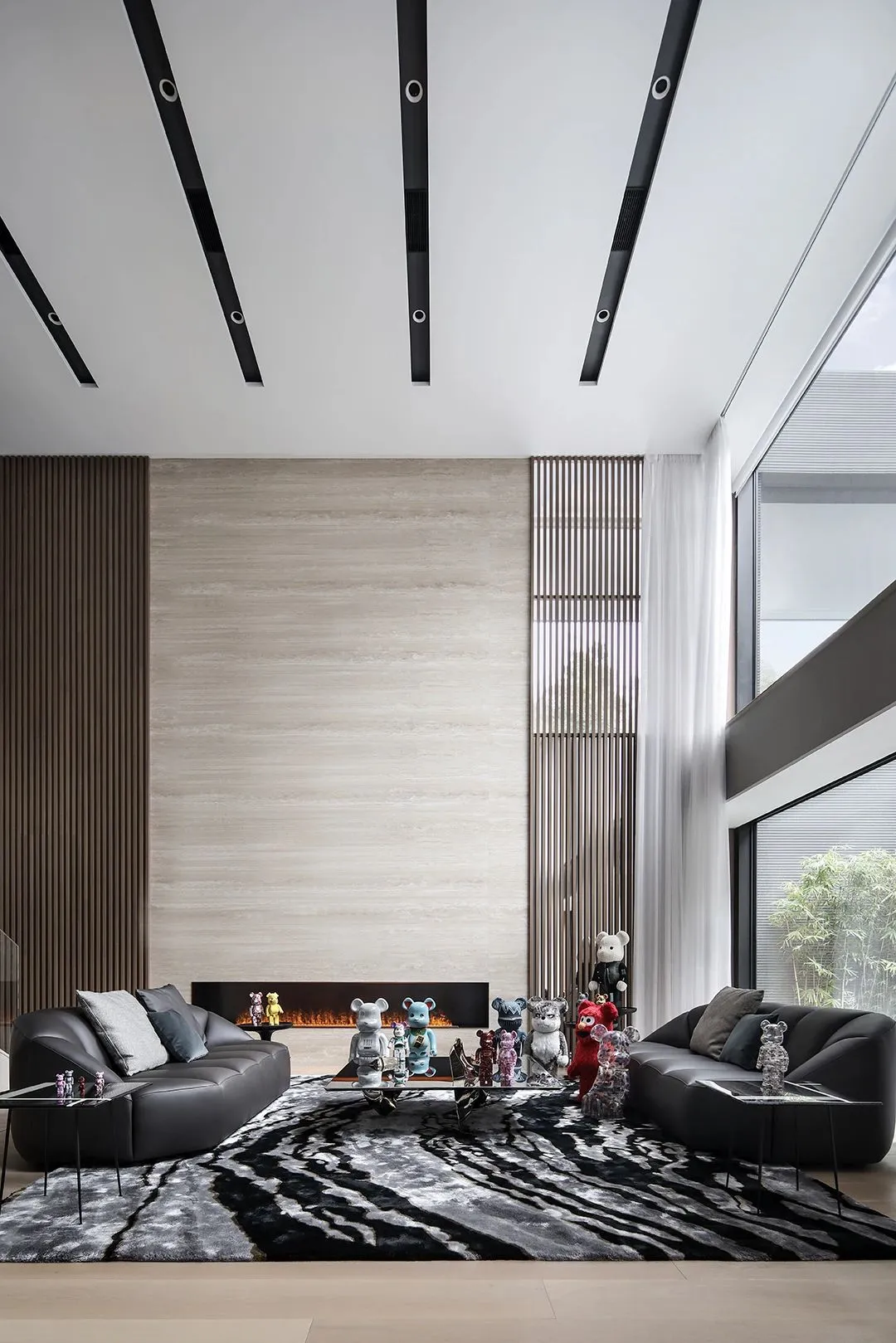
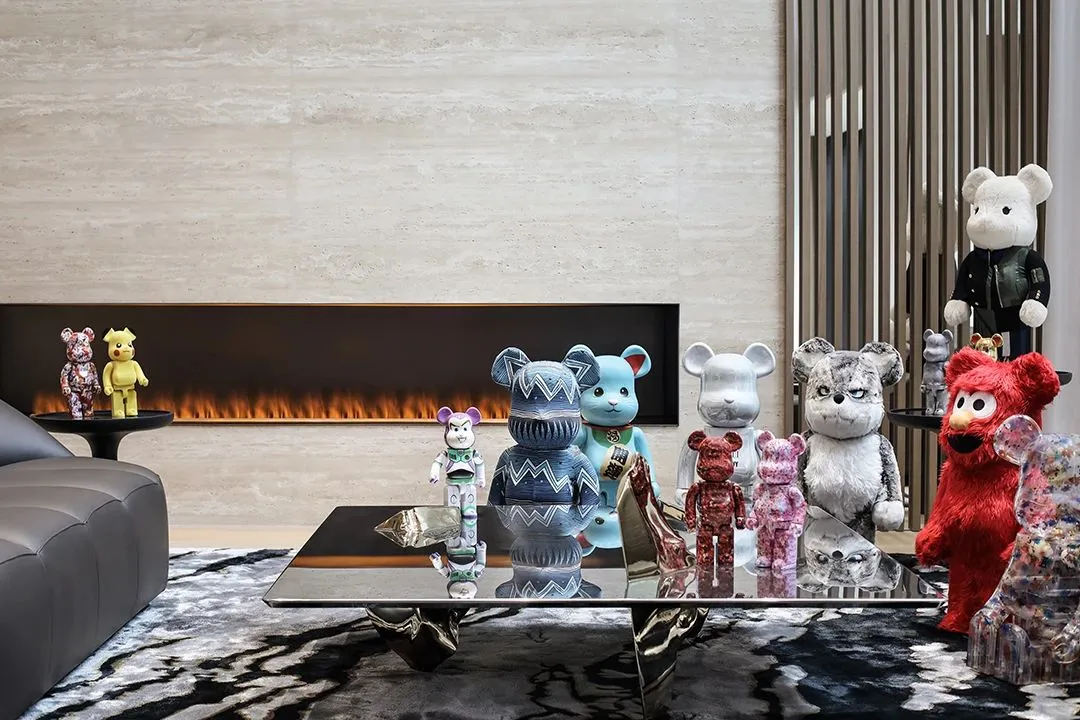
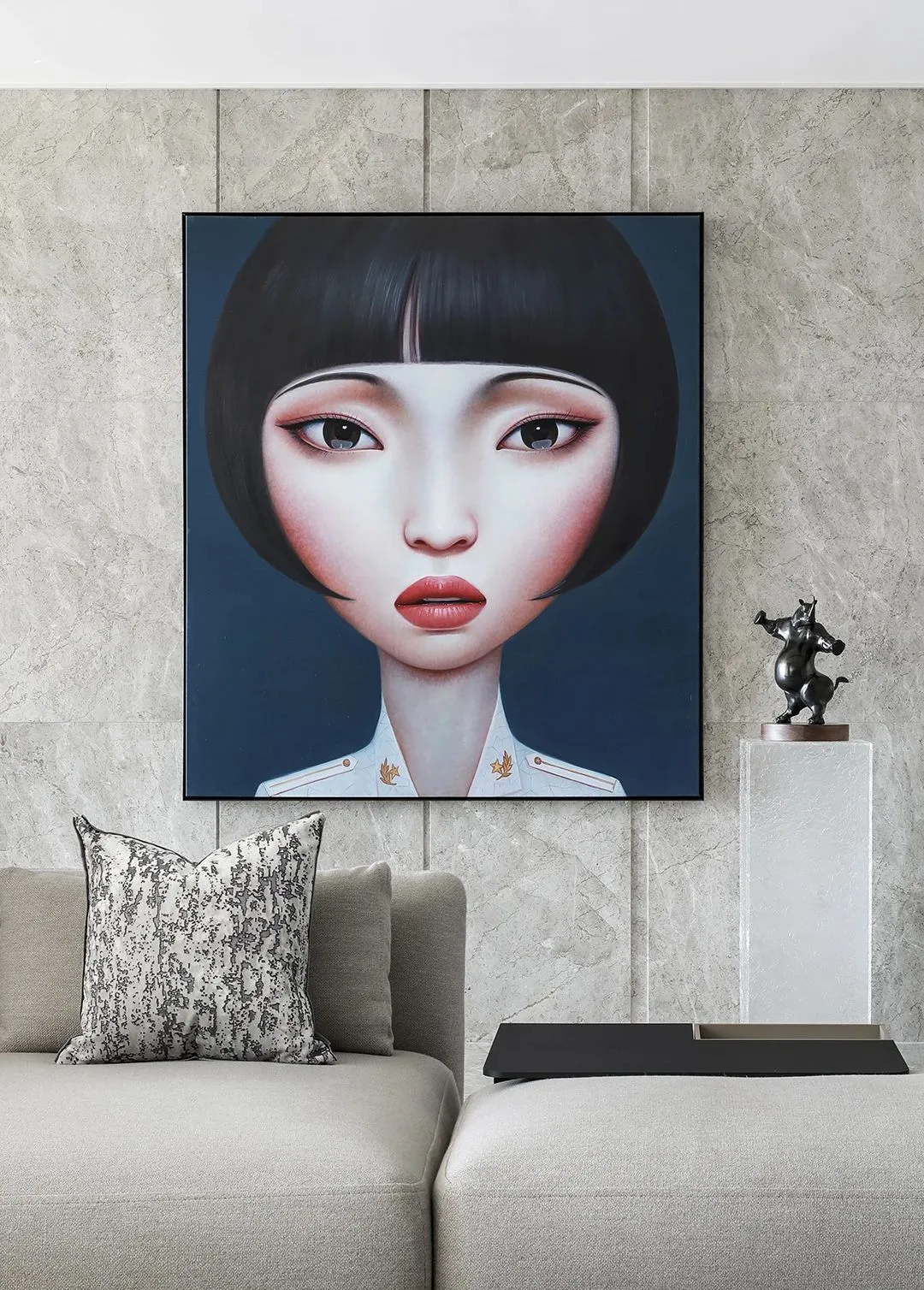
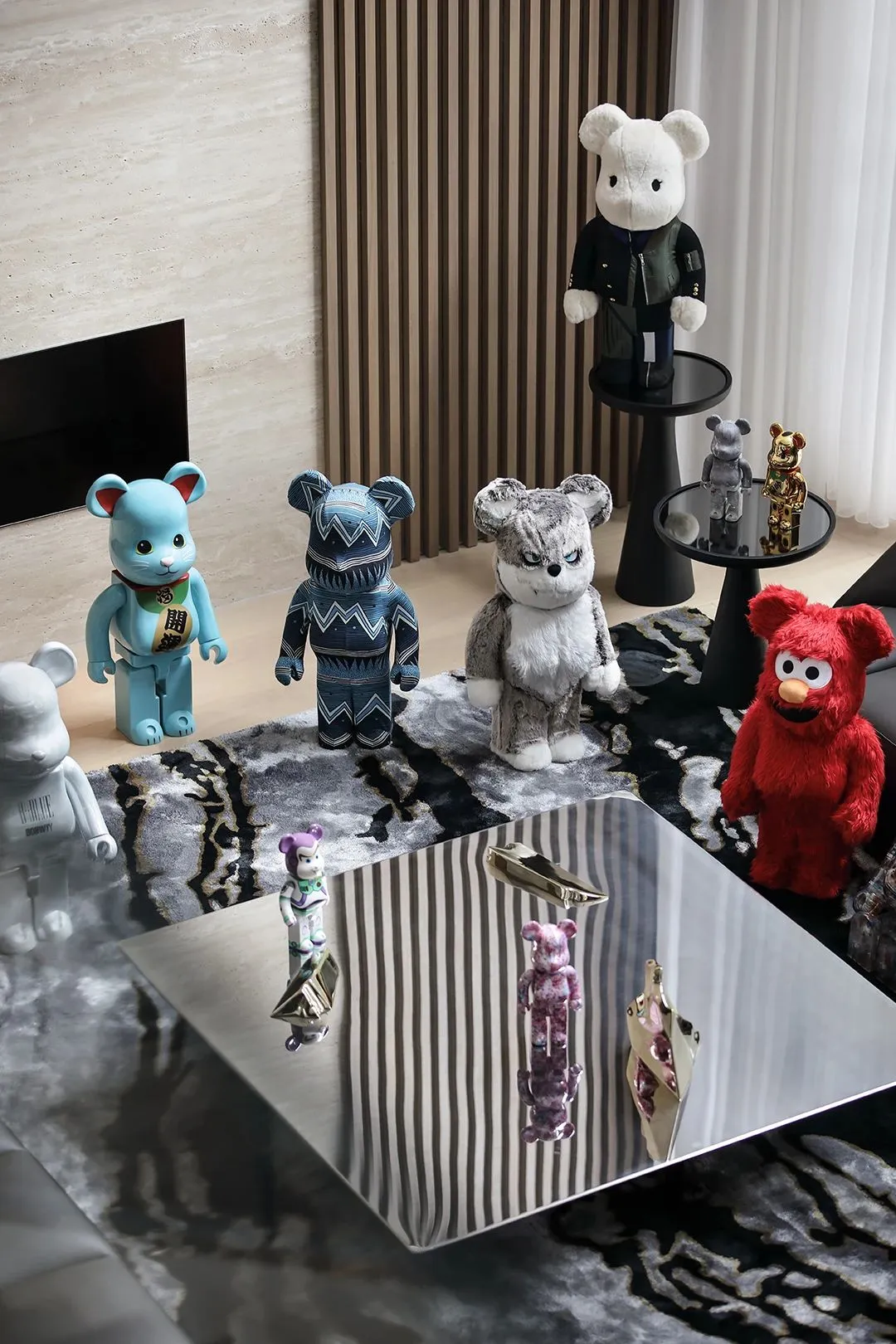
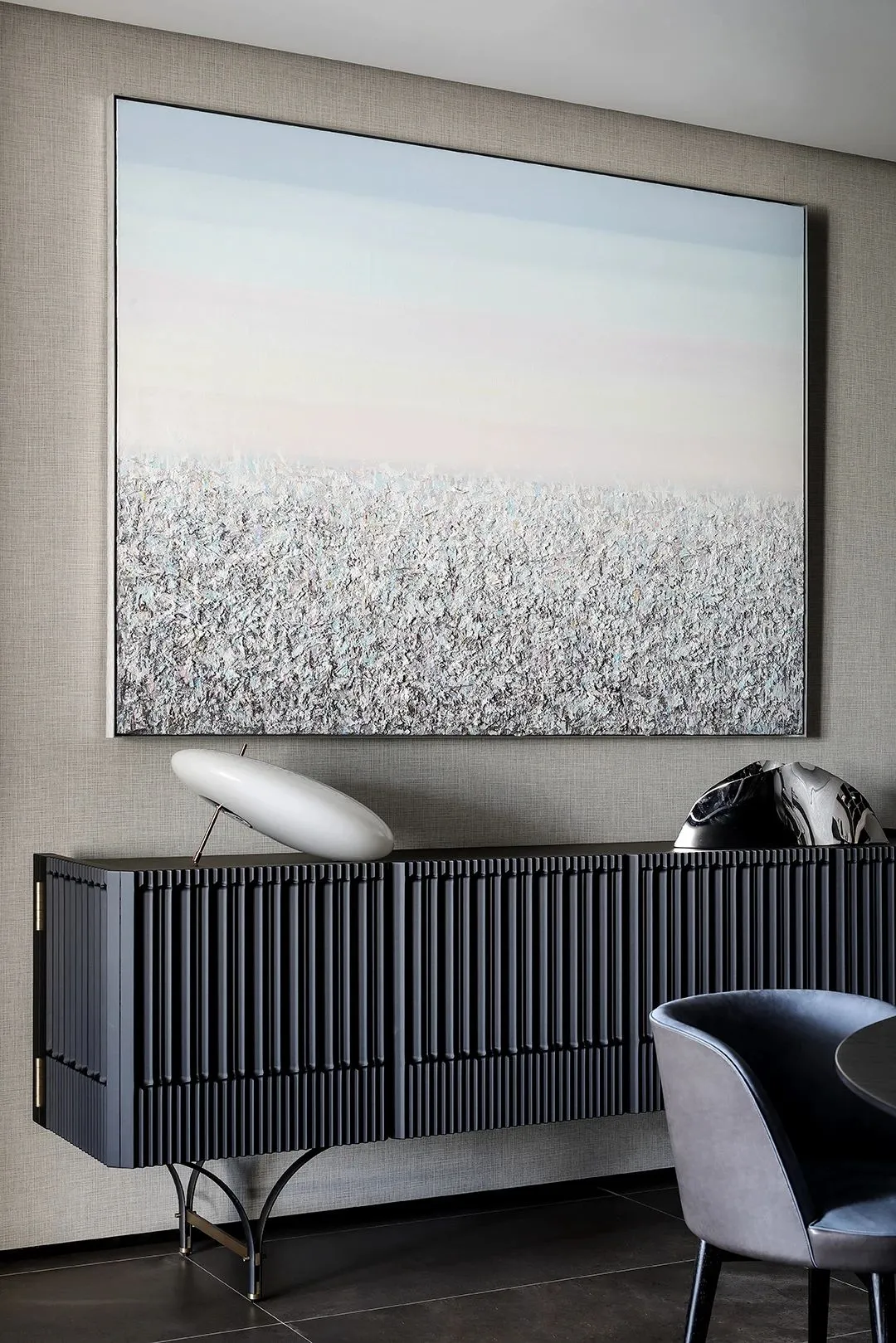
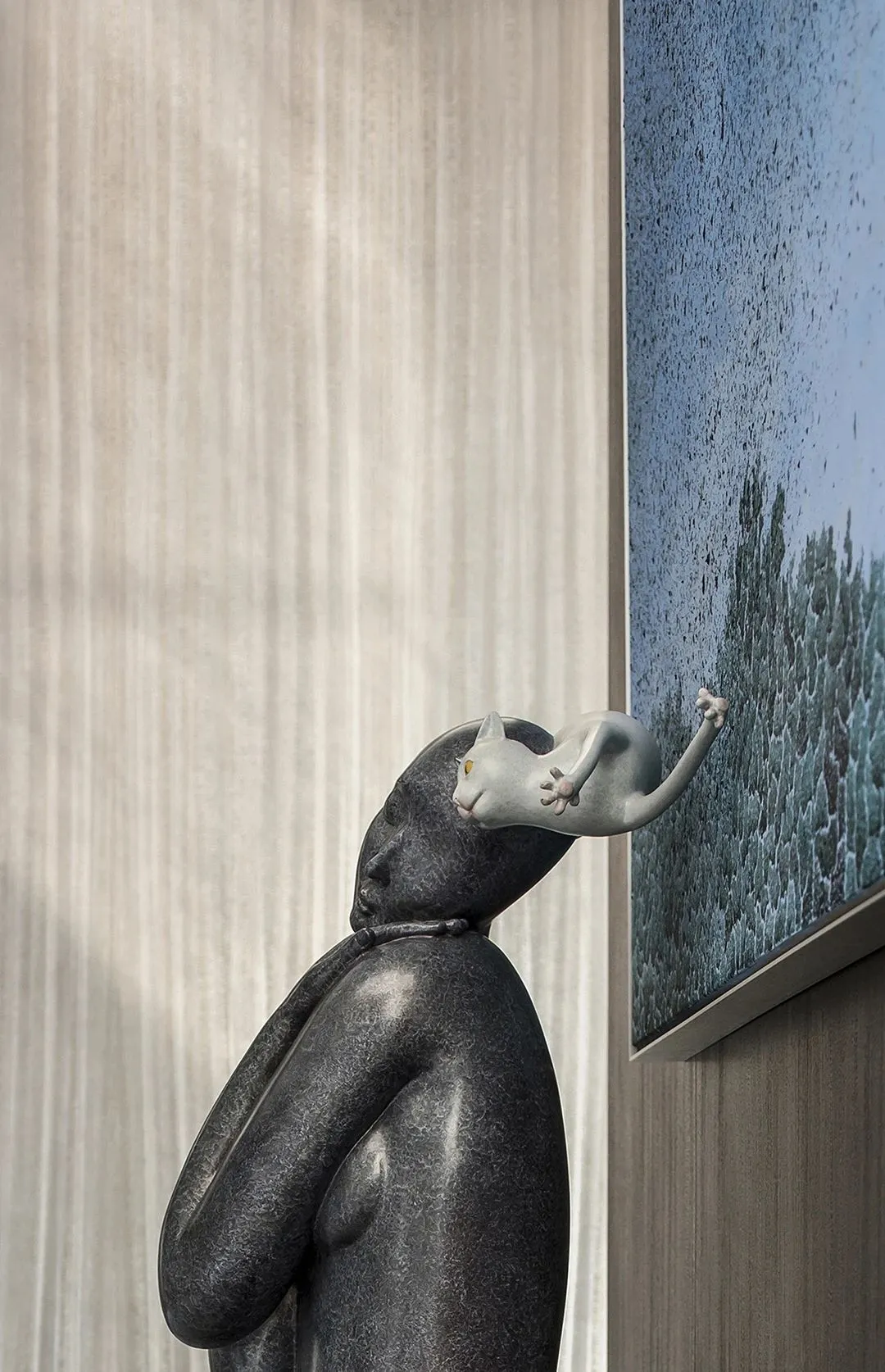
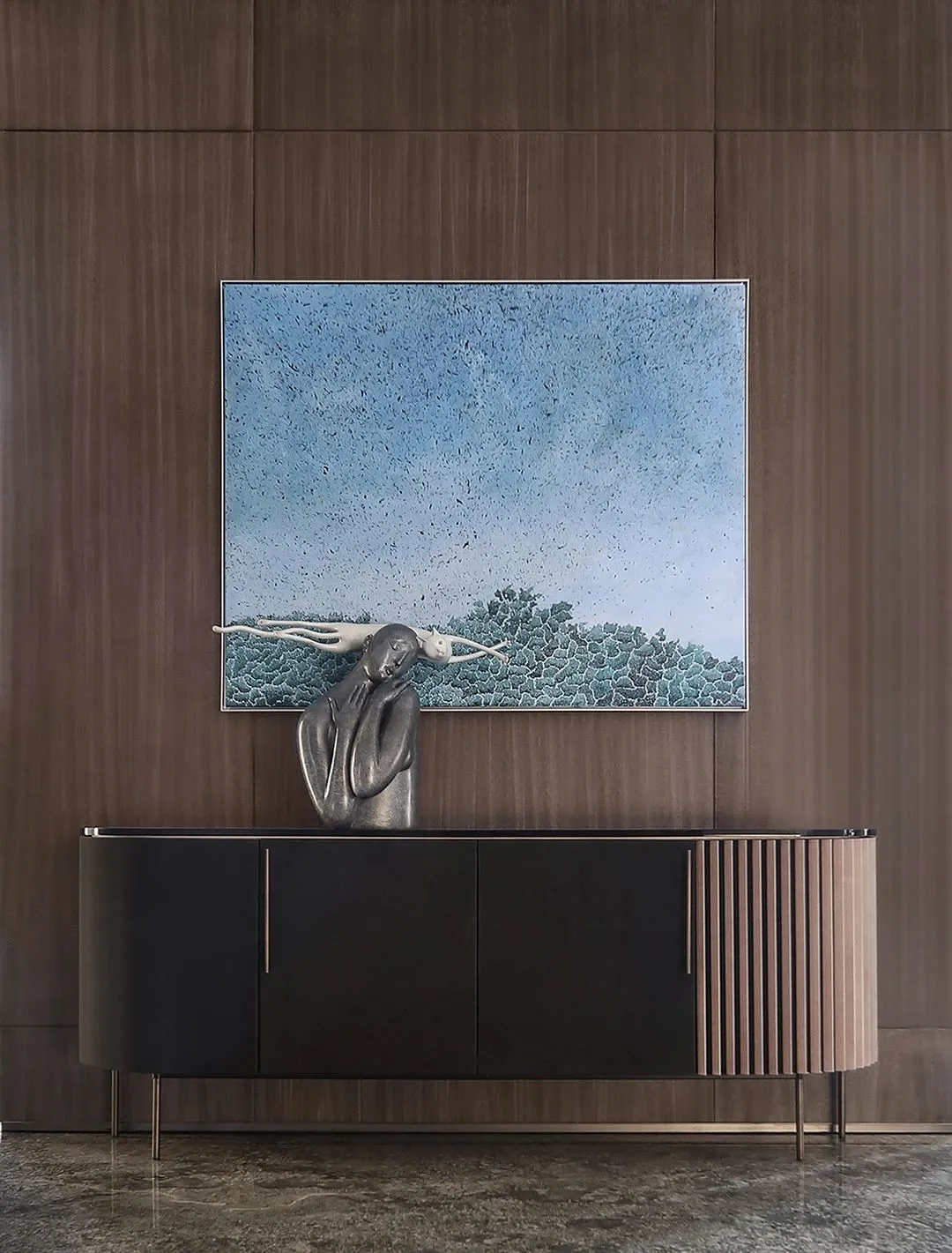
软装配置在这里超越了单纯的装饰功能,成为空间价值建构的核心手段。大量现当代艺术作品的介入——从架上绘画到雕塑装置——并非事后点缀,而是与空间同步规划的结果。这背后是一个明确的策略判断:对于这处居所的业主而言,艺术品不仅是审美载体,更是可传承的家族资产。设计所做的,是为这些资产提供恰当的“展示-保存”环境,同时让艺术介入日常生活。休闲区与藏品阁的区分便体现了这一双重目标:前者让艺术与社交共存,后者则偏向私密的凝视与珍藏。这种功能分化,回应了年轻一代藏家对艺术既希望日常亲近、又需要专业保管的矛盾心理。
The soft furnishing configuration transcends mere decorative function to become central to spatial value construction. The substantial integration of contemporary artworks—from easel paintings to sculptural installations—was not post-hoc embellishment but the result of synchronized planning with the space. Behind this lies a clear strategic judgment: for this residence’s owners, artworks are not merely aesthetic vehicles but inheritable family assets. The design’s role is to provide appropriate “display-preservation” environments for these assets while simultaneously bringing art into daily life. The distinction between lounge area and collection gallery embodies this dual objective: the former allows art to coexist with social interaction, while the latter leans toward private contemplation and safekeeping. This functional differentiation responds to the ambivalence of the younger generation of collectors—desiring both daily intimacy with art and its professional preservation.
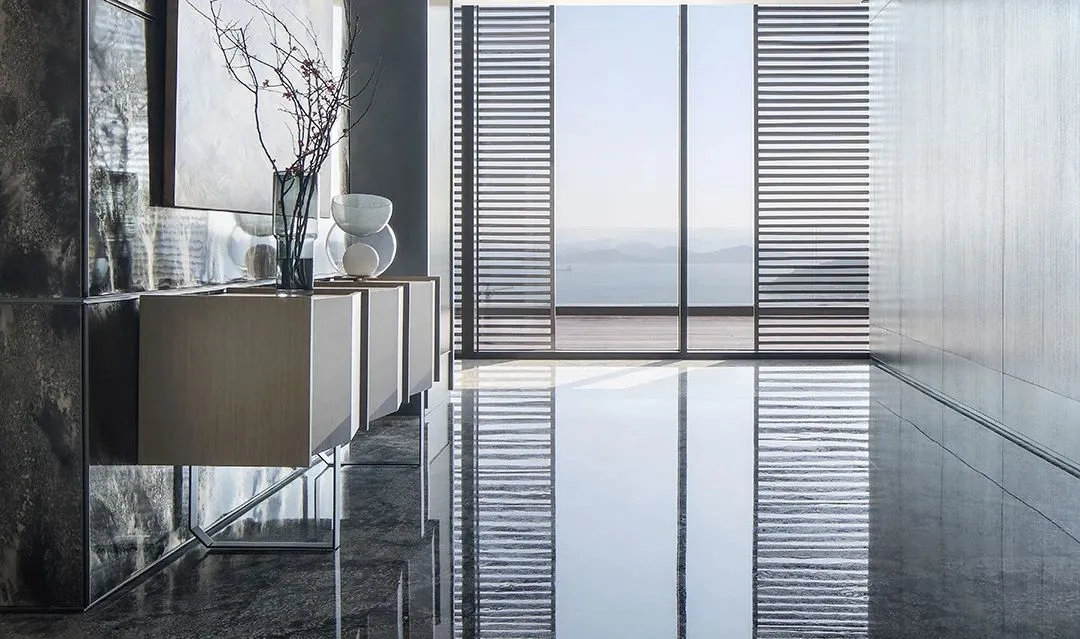
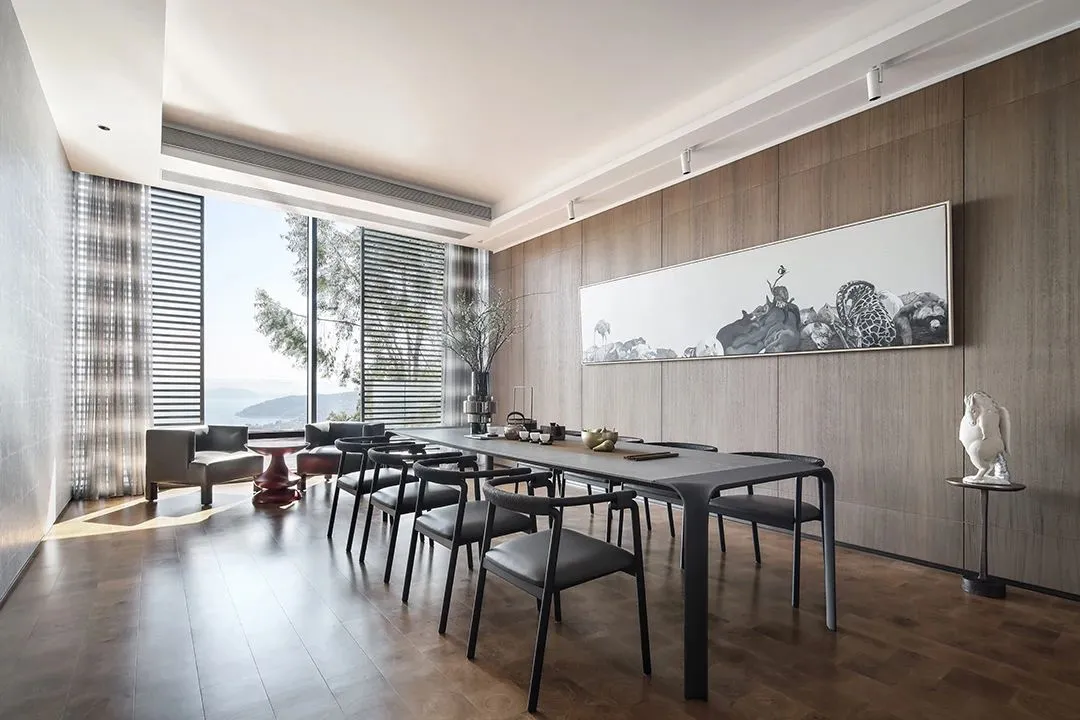
建筑设备系统的整合体现了成熟设计实践的技术自觉。大尺度落地窗在引入景观的同时,也带来了热工性能与眩光控制的挑战。设计通过深挑檐与建筑自身的形体进退,形成自遮阳机制,减少了人工遮阳设备的介入需求。中央空调系统被整合进顶面造型之中,出风口与回风口的位置选择避开了艺术品正上方,防止气流对画作表面造成温湿度冲击。这些技术决策在最终空间中几乎不可见,却恰恰是设计专业性的真正体现——好的技术整合,是不被看见的。
The integration of building service systems demonstrates the technical self-awareness of mature design practice. Large-scale floor-to-ceiling windows, while introducing landscape, also present challenges of thermal performance and glare control. The design creates self-shading mechanisms through deep eaves and the building’s own massing setbacks, reducing the need for artificial shading devices. The central air conditioning system is integrated into ceiling treatments, with supply and return registers positioned away from directly above artworks to prevent airflow from causing temperature and humidity shocks to painted surfaces. These technical decisions are nearly invisible in the final space, yet precisely demonstrate true design professionalism—good technical integration remains unseen.
这处居所的设计价值,不在于它完成了何种风格叙事,而在于它建立了一套清晰的决策逻辑:以山海为绝对主体,以艺术为价值核心,以“雅”为审美底线,以“奢”为克制表达。在这个过程中,设计者的角色不是创造者,而是协调者——在自然与建筑、公共与私密、展示与居住、保存与日常之间,寻找那个动态的平衡点。当大多数高端住宅项目沉迷于符号的堆砌与材料的竞赛时,这处空间提醒我们:真正的奢侈,是知道自己不必炫耀什么。
The design value of this residence lies not in the stylistic narrative it accomplishes, but in the clear decision-making logic it establishes: mountain and sea as absolute protagonists, art as the core of value, “elegance” as the aesthetic baseline, and “luxury” as restrained expression. In this process, the designer’s role is not creator but coordinator—seeking that dynamic equilibrium between nature and architecture, public and private, display and habitation, preservation and the everyday. While most high-end residential projects indulge in symbolic accumulation and material competition, this space reminds us: true luxury is knowing what one need not flaunt.