【深圳一模】一套因为设计独特而被“误解”的优质模考试题(深度分析+教考衔接的思考)
- 2026-09-26 18:54:19
2026年深圳市高三年级第一次调研考试
英语
试卷共8页,卷面满分120分,折算成130分计入总分。考试用时120分钟。
注意事项:
1. 答卷前,考生务必用黑色字迹钢笔或签字笔将自己的姓名、班级、准考证号填写在答题卡上。用2B铅笔将试卷类型 (A) 填涂在答题卡相应位置上。将条形码横贴在答题卡右上角“条形码粘贴处”。
2. 作答选择题时,选出每小题答案后,用2B铅笔把答题卡上对应题目选项的答案信息点涂黑;如需改动,用橡皮擦干净后,再选涂其他答案,答案不能答在试卷上。
3. 非选择题必须用黑色字迹钢笔或签字笔作答,答案必须写在答题卡各题目指定区域内相应位置上;如需改动,先划掉原来的答案,然后再写上新的答案;不准使用铅笔和涂改液。不按以上要求作答的答案无效。
4. 考生必须保持答题卡的整洁。考试结束后,留存试卷,交回答题卡。
第二部分 阅读 (共两节,满分50分)
第一节 (共15小题;每小题2.5分,满分37.5分)
阅读下列短文,从每题所给的A、B、C、D四个选项中选出最佳选项。
A
The International Linguistics Olympiad (IOL) is a competition for pre-university students, held in a different country each year since 2003. It challenges participants, both individually and in teams, to solve linguistic (语言学的) puzzles. To compete at the IOL, no special knowledge is required, only basic language concepts, logic, patience, and creative thinking. Try this beginner sample to see if the IOL is right for you.
A Puzzle The names of some South American countries are written in Georgian (格鲁吉亚语) with their English translations:
Q: What is the English name of this country “ | The Solution ●The Georgian forms of “Peru” and “Uruguay” have the same number of letters as their English names, showing a direct letter match. ●The repeated U in “Uruguay” further confirms Georgian is written left-to-right. ●“Brazil” has fewer letters than the Georgian version, but thanks to the two other names, we already know: ●With these letters, the pattern |


Contest Rules
● Each individual contestant or team must choose a working language for their problems and solutions, a choice that cannot be changed less than two weeks before the Olympiad begins.
● The individual contest involves solving five problems in six hours, whereas the team contest features one problem with two hours less.
● Unless instructed, giving multiple answers will receive zero marks. Besides, a detailed explanation is required for each answer; failure to provide one will result in a lower score.
Awards
The team contest will award up to one gold, two silver, and three bronze medals. In the individual contest, the number of gold, silver, and bronze medals awarded shall be in the ratio 1: 2: 3, with the total number of medals being between one quarter and one third of the contestants. Click here to find out other awards.
1. Which is essential to solve the sample puzzle?
A. Linguistic fluency.
B. Reasoning ability.
C. Geographic knowledge.
D. Mathematical calculation.
2. What is different about the rules for the individual and team contest?
A. The duration of the competition.
B. The deadline for language choice.
C. The result of giving multiple answers.
D. The requirement for answer explanations.
3. If there are 240 individual contestants, how many medals could be awarded in total?
A. 40. B. 54. C. 72. D. 84.
试题分析
A 篇(国际语言学奥林匹克竞赛)
- 主题语境
人与社会 —— 社会文化、国际竞赛与语言探索 - 对应教材
选择性必修 2 Unit 5 First Aid(学科竞赛类文本结构)、必修 1 Unit 2 Travelling Around(国际活动类话题) - 衔接点
均涉及国际活动规则解读、细节信息提取,与教材单元的阅读题型(细节理解、数字计算、推理判断)高度契合。
B
This summer I came face-to-face with three deep-rooted fears: heights, bears, and ageing.
Two friends joined me on a four-day wilderness getaway, and since we were all in our seventies, we decided we’d better go while we still could. Our adventure began with a scary drive up a winding mountain road.
On one hike, I found myself hanging onto a wire on a bridge made of two partly rotten (腐烂的) logs, suspended high above rushing rapids. I would never have attempted it without our guide ahead, mouthing encouraging words. Fixing my eyes on her boots, I inched along the shaky logs. Somehow, I made it across, flooded with a rush of intense excitement and huge relief.
Later, after spotting bear tracks, we were told to make loud noises, which soon became a game once the tension faded.
Until suddenly, time stood still.
We had just crossed a stream when the guide whispered, “There’s a bear.” I looked up in disbelief and saw not one, but two, about ten meters above us— the brown mother in front, her cub behind.
Though scared speechless, I couldn’t help noticing how beautiful they looked in their natural setting. I wondered if it would be my last memory. As they started towards us, we recovered enough to shout and wave our hiking poles. Taken aback, they stopped, and then slowly turned away. Another fear was overcome!
On our final morning, after a quiet, thoughtful walk through the forest, we were asked to bring back a “meaningful” stick, rock, and leaf to share what would “stick” with us, what “rocked,” and what we would “leaf” behind. The bond of friendship would stick with me. Women supporting one another truly rocked. And I hoped to leave some fears behind.
Our guide ended by expressing her admiration, praising not only our fitness but also our positive attitude, and saying she hoped to be like us in another thirty or forty years. Those unexpected words warmed my heart and eased my fear of being “over the hill.” Being valued for what we had accomplished felt like winning an Olympic medal — even if just for participation.
4. How did the author cross the bridge?
A. By taking mindful steps.
B. By rushing across it bravely.
C. By using her sense of direction.
D. By having the guide drag her over.
5. Why did the bears leave?
A. They were attracted by the natural setting. B. They were afraid of the noise of the rapids.
C. They were surprised at the group’s actions. D. They were threatened by the guide’s rocks.
6. Why did the guide ask them for a stick, rock, and leaf?
A. To pick up some souvenirs.
B. To reflect on the journey.
C. To symbolize their teamwork.
D. To check their observation skills.
7. What does the underlined phrase “over the hill” in the last paragraph mean?
A. Past the peak of youth.
B. Too high to go down.
C. Out of place in society.
D. Beyond physical limits.
B 篇(七十岁老人的野外探险)
- 主题语境
人与自我 —— 个人经历、挑战自我、人生感悟 - 对应教材
选择性必修 1 Unit 1 People of Achievement(人物经历与品质)、必修 3 Unit 1 Festivals and Celebrations(个人体验类叙事) - 衔接点
教材中大量叙事类文本均以 “个人经历 + 情感升华” 为结构,考点(词义猜测、细节理解、推理判断)与教材课后阅读题一致。
试题分析:
4.细节理解题;考点:定位作者过桥的动作描述;答案:A;分析:原文 “inched along the shaky logs” 对应 take mindful steps(缓步小心前行);B(勇敢冲过去)、C(靠方向感)、D(向导拖过去)均与原文不符。5.细节理解题;考点:定位熊离开的原因;答案:C;分析:原文 “Taken aback, they stopped, and then slowly turned away” 中 taken aback 对应 surprised at the group's actions;A、B、D 均为无中生有。C
Researchers from the University of Buenos Aires have successfully used a robotic tutor to teach the male chingolo, a kind of small bird in South America, a song that was once part of the species’ culture but had been lost for more than half a century.
Male chingolos learn their unique, two-second melody from adult males. “It is a distinctive song — like a fingerprint, but learned,” says one of the researchers. “It serves to attract females and protect territory. It is the bird’s way of saying, “This is me, and here I am.” However, urbanization and habitat loss have broken this learning chain, causing local song “dialects” to disappear.
Driven by this problem, researchers took on a pioneering task: bringing back a song that had disappeared from the wild — known only from a musical record made in the 1960s — to a population of chingolos.
Using physics-based modeling of the bird’s vocal tract (声道) , the team first created an accurate artificial version of the lost song. They then engineered this model into a physical device designed to broadcast the forgotten melody — a “robotic tutor.” This artificial song was introduced to the chingolos in the park during their critical learning period from October to February. The sessions took place during peak singing hours and were limited to a maximum of eight hours. There were random pauses (停顿) in between so that the birds interpreted the playback from the three devices placed in the area as a real exchange, as if these devices were responding to each other. This stimulated the birds’ vocal responses.
The results were impressive. Young chingolos learned and adopted the song, though they added their own population’s “accent” to the final trill (颤音) , which showed that their singing is shaped by learned behaviors and inborn characteristics.
“This is about preserving not just genetic, but cultural biodiversity,” says another researcher. The team is now developing AI systems to automatically identify individual bird songs and planning to study cultural spread in bird populations to ensure that bird culture is not lost again.
8. Why did the researchers teach the birds the song?
A. To save an endangered species.
B. To study the birds’ brain structure.
C. To develop new robotic devices.
D. To preserve the birds’ cultural heritage.
9. What is a role of chingolos’ song?
A.It keeps hunters away from them.
B. It helps them adapt to urban growth.
C. It functions as their social identity.
D. It makes them remember their habitat.
10. What is the purpose of the random pauses?
A. To protect the birds’ vocal tract.
B. To test the birds’ reaction speed.
C. To push the birds to catch the beat.
D. To trick the birds into interaction.
11. What can we learn from chingolos’ learning results?
A. The song has spread to other bird species.
B. Their singing shows special vocal features.
C. Their response to the song needs improving.
D. The effectiveness depends on their population.
C 篇(机器人导师教鸟类唱失传歌曲)
- 主题语境
人与自然 —— 生物多样性、科技保护自然;人与科技 —— 科技在生态保护中的应用 - 对应教材
选择性必修 2 Unit 2 Wildlife Protection(野生动物保护)、选择性必修 4 Unit 3 Science and Technology(科技应用) - 衔接点
贴合教材 “科技助力生态保护” 的核心话题,涉及实验过程、研究目的、结果分析,与教材阅读文本的说明性文体特征一致。
试题分析
8.细节理解题;考点:定位研究人员教鸟类鸣唱的目的;答案:D;分析:原文 “bringing back a song that had disappeared from the wild”“preserving not just genetic, but cultural biodiversity” 表明是为了保护鸟类的文化遗产;A(拯救濒危物种)、B(研究鸟类大脑结构)、C(研发新型机器人设备)均非研究目的。D
When you rub (摩擦) a balloon on your skin, it produces electricity — a familiar example of charge separation (电荷分离), a process in which opposite charges are separated, creating electric potential. Similarly, raindrops striking a narrow tube create a tiny yet significant burst of energy. Now, researchers from the National University of Singapore (NUS) have tapped into this effect to generate electricity using rain-like droplets.
Conventional hydropower (水力发电) relies on large water flows, which only work in places like rivers. For smaller, slower flows, researchers have explored charge separation. They use a tube to let water flow through it continuously. Charges gather on the surface that the water touches. In this way, researchers can collect charges, but it is far from effective.
To solve this problem, the NUS team built a special device. At both ends of the device — the top of the newly-designed tube (about 2 millimeters in width), and the water-collecting cup at the bottom — electrical wires were placed to harvest charges. First, water is released from a metal needle, forming rain-like droplets. When these droplets enter the tube, their impacts create “plug flow,” in which the water forms mini columns separated by air gaps. This flow is crucial because it allows more surface contact and more time for charges to build up, generating up to 100, 000times more charge separation than continuous flow. As charged droplets exit the tube and fall into the cup, charges build up in the water, creating an electric current. In tests, four tubes produced enough electricity to power 12 LED lights continuously for 20 seconds.
According to the study’s lead author, this model shows how rain can be used to generate clean electricity effectively and sustainably, especially in rainy places such as Singapore. Its potential is enormous, as it offers an alternative energy source even in cities. Imagine a rain collection device on your roof, producing small amounts of electricity whenever it rains — a small step for a raindrop, but a giant leap for sustainable energy technology.
12. What problem do the NUS researchers aim to solve?
A.The difficulty of separating charges.
B. The lack of clean electricity sources.
C. The inefficiency of charge harvesting.
D. The damage of traditional hydropower.
13. Which of the following best illustrates “plug flow”?

14. What is the last paragraph mainly about concerning the model?
A. Its potential cost in urban areas.
B. Its promising use in green energy.
C.Its complex design for rain power.
D. Its practical need for more devices.
15. What is a suitable title for the text?
A. Revolutionary Energy from Raindrops
B. Urgent Demand for Sustainable Energy
C. Capturing Raindrops through Innovation
D. Turning Charge Separation into Electricity
D 篇(雨滴发电的创新技术)
- 主题语境
人与科技 —— 新能源开发、科技创新与可持续发展 - 对应教材
选择性必修 4 Unit 3 Science and Technology(科技发明与创新)、必修 2 Unit 4 Wildlife Protection(可持续发展延伸) - 衔接点
教材重点讲解 “科技解决现实问题”,本文的发明原理、装置设计、应用前景与教材单元的说明性文本考点(主旨大意、细节理解、推理判断)完全匹配。
试题分析
12.细节理解题;考点:定位研究团队要解决的问题;答案:C;分析:原文 “it is far from effective” 表明传统电荷收集方式效率低,这是核心问题;A(电荷分离困难)、B(清洁能源短缺)、D(传统水力发电的破坏)均非研究的切入点。
13.推理判断题;考点:根据 “plug flow” 的定义(水形成由气隙分隔的微型水柱)判断图示;答案:(因无图示,核心为识别 “水段 + 气隙” 交替的流型);分析:关键抓住原文 “mini columns separated by air gaps” 的特征。
14.主旨大意题;考点:概括最后一段的核心内容;答案:B;分析:最后一段主要讲述该模型在清洁能源方面的应用潜力,尤其在多雨地区和城市的价值;A(城市成本)、C(复杂设计)、D(对更多设备的需求)均非重点。第二节 (共5小题;每小题2.5分,满分12.5分)
阅读下面短文,从短文后的选项中选出可以填入空白处的最佳选项。选项中有两项为多余选项。
I put on a headset, and within seconds I am somewhere else. Ice sheets float on dark water. Wind brushes past my ears, sharp and restless. In the distance, mountains glow (发光) under the moonlight. Moments later, I find myself inside a museum, leaning close to a painting I have never seen in real life. ___16___ This is the promise of virtual reality (VR): a world delivered to us without leaving home.
There is much to appreciate in this form of travel. ___17___ There is no need to consider weather conditions, health issues or financial pressure. You may enter distant places at any moment and leave just as freely. For those restricted by schedule, health, or income, VR quietly removes barriers that traditional travel often sets in place.
___18___ Travelers wander through unfamiliar streets, sample local dishes, and engage face-to-face with people shaped by different traditions. Such encounters awaken the senses and create lasting memories. More importantly, they change how places feel to us, not just how we understand them.
This distinction is clear, because learning about a destination is not the same as being there. Virtual travel offers designed scenes and programmed sensations, but it remains carefully controlled. Real travel, by contrast, is shaped by unpredictability. ___19___ In those unplanned moments, understanding becomes lived rather than recorded.
Virtual reality will undoubtedly continue to evolve, enriching how we preview journeys and imagine distant worlds. Still, it cannot replace actual presence. Travel is not simply about seeing farther; it is also about feeling where you stand. ___20___
A. I am not moving, yet I am traveling.
B. Yet real travel leaves a deeper mark.
C. My feet ache as my journey stretches across the day.
D. Virtual journeys are convenient, time-saving, and widely accessible.
E. Some knowledge, it seems, only arrives when your feet are on the ground.
F. It demands choices, adaptation, and constant awareness of the unexpected.
G. But the convenience may gradually weaken our desire to explore the real world.
阅读(第二节)(七选五:虚拟现实旅行与真实旅行)
- 主题语境
:人与社会 —— 现代科技、文化体验、旅行方式 - 对应教材
:选择性必修 3 Unit 2 Healthy Lifestyle(生活方式选择)、必修 1 Unit 2 Travelling Around(旅行话题)、选择性必修 4 Unit 1 Cultural Heritage(文化体验方式) - 衔接点
:教材中多次出现 “对比类” 七选五文本(如科技与传统、不同生活方式),考查逻辑衔接(转折、因果、总分),与本题的 “VR 旅行 vs 真实旅行” 对比结构高度契合。
第三部分 语言运用 (共两节,满分30分)
第一节 (共15小题;每小题1分,满分15分)
阅读下面短文,从每题所给的A、B、C、D四个选项中选出可以填入空白处的最佳选项。
I still remember the day I bought my “nice” notebook. It was a leather-bound journal with cream-colored pages. I was sure it would make me the type of person who journals regularly, and who ___21___ beautiful thoughts. But it didn’t work.
That gorgeous notebook sat ___22___ for months. When I finally opened it, I hesitated. The pages felt too delicate and too ___23___ to waste on my messy handwriting and ideas. So I ___24___ it. Instead, I grabbed an old, ugly composition notebook with a ___25___ cover and dog-eared corners. I started to ___26___ it with everything: morning pages, random thoughts and reminders. This is surprisingly ___27___. I actually wrote. Every day. Without exception.
The psychology is real. When we ___28___ something too much, we place limits around it, feeling it is “too good”. But the ugly notebook carries no such ___29___ . It has been used. It tells me, “This is a ____30____ for thinking and living, not a museum piece.”
Here’s the thing: ____31____ notebooks are idea incubators (孵化器) . With the pressure off, you experiment more. You try things that might ____32____ . And in that freedom, bad ideas I was ____33____ embarrassed about gradually evolved into work I’m proud of. And that’s where the real work of creation happens.
The best notebook is never the most beautiful one. It’s the one you’ll actually ____34____ . Because the magic happens in the ____35____ , not in perfect pages.
Your ugly notebook is waiting.
21. A. changes B. captures C. follows D. lacks
22. A. unfinished B. unclaimed C. undiscovered D. untouched
23. A. secret B. smart C. precious D. personal
24. A. closed B. decorated C. delivered D. fixed
25. A. torn B. hard C. hidden D. fancy
26. A. guard B. surround C. fill D. serve
27. A. annoying B. freeing C. demanding D. convincing
28. A. plan B. doubt C. control D. admire
29. A. luck B. warning C. promise D. pressure
30. A. tool B. test C. guide D. reason
31. A. incomplete B. impractical C. imperfect D. irregular
32. A. cheat B. fail C. hurt D. disappear
33. A. slightly B. initially C. hardly D. consequently
34. A. run into B. refer to C. look at D. reach for
35. A. preparing B. thinking C. writing D. reading
完形填空:丑笔记本的创作启示
- 主题语境
人与自我 —— 个人成长、创作思维、心理感悟 - 对应教材
必修 1 Unit 1 Teenage Life(个人成长与感悟)、选择性必修 3 Unit 1 Art(创作与表达) - 衔接点
教材完形填空多以 “个人经历 + 哲理感悟” 为主题,考查动词、名词、形容词的语境辨析,与本题的心理描写、动作描写类词汇考查一致。
第二节 (共10小题;每小题1.5分,满分15分)
阅读下面短文,在空白处填入1个适当的单词或括号内单词的正确形式。
When I first opened Where the Deer Hide in the Woods, I felt as if I were stepping into a world ____36____ the author’s words flow like gentle music. The Tang poems, ____37___ (translate) with the master touch of Xu Yuanchong, speak softly in two voices — one Chinese, one English — each echoing (回响) with calm, beauty, and quiet ____38____ (deep).
The book ____39____ (divide) into six chapters, each unfolding a distinct landscape of emotion— sorrow, peace, love, longing, solitude, and reflection. I was ____40____ (genuine) moved when I read “The monkeys on both banks are still calling; my light boat has sailed past a thousand hills.” I fully ____41____ (sense) Li Bai’s liberated soul — his joy at being pardoned by the emperor — flowing through the lines.
Each page of the book is enriched with thoughtful notes, vivid background stories, and traditional Chinese brush-style ____42____ (illustration). Xu’s artful work transforms the rhythm (节奏) of Chinese poems ____43____ English music, a recreation that honors both the original and its new form.
____44____ (read) this book feels like a journey through hearts and landscapes. For anyone who treasures poetry, painting, or the meeting of two cultures in perfect harmony, Where the Deer Hide in the Woods is ____45____ must-read that beautifully serves as the bridge.
语法填空:许渊冲译唐诗
- 主题语境
人与社会 —— 中华文化、文学翻译、跨文化交流 - 对应教材
选择性必修 4 Unit 1 Cultural Heritage(文化传承与传播)、必修 3 Unit 1 Festivals and Celebrations(中华文化表达) - 衔接点
教材语法填空多次涉及 “中华文化主题”,考查的非谓语动词、被动语态、名词单复数、冠词等语法点,均为新人教版各单元的核心语法要求。
试题分析
核心考点:定语从句、非谓语动词、名词、被动语态、副词、动词、名词复数、介词、动名词、冠词;整体分析:围绕 “阅读唐诗译著” 展开,需结合语法规则和上下文的词性、语态、句式要求解题,如 56 题先行词为 world,从句缺地点状语,用 where。第四部分 写作 (共两节,满分40分)
第一节 (满分15分)
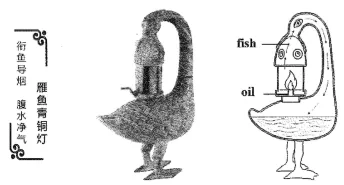
46. 假定你是李华。你的朋友Alex计划参观中国国家博物馆,他来信请你推荐一件你喜欢的展品。请你给他回复邮件,结合外观、功能等,推荐这盏汉代的雁鱼青铜灯 (Bronze Wild Goose-and-Fish Lamp)。
注意:
1. 词数80左右;
2. 请在答题卡的相应位置作答。
Dear Alex,
Glad to hear you’re visiting the National Museum of China!
____________________________________________________________________________________________________________________________________________________________________________________________________________________________________________________________________________________________________________________________________________________________________________________________________________________________________________________________________________________
Yours,
Li Hua
彩绘雁鱼铜灯
南昌汉代海昏侯国遗址博物馆
彩绘雁鱼铜灯
彩绘雁鱼铜灯
(文物介绍)
写作任务教材衔接 + 写作指导
第一节 应用文(邮件推荐汉代雁鱼青铜灯)
1. 教材精准衔接
- 对应分册
必修 2 Unit 1 Cultural Heritage(新人教版) - 单元主题
文化遗产的保护、介绍与传播,涉及 “推荐文化展品 / 景点” 的语用要求。 - 衔接点
本单元的写作任务为 “介绍一处文化遗产”,要求从外观、功能、文化价值三个维度展开,与本题 “推荐雁鱼青铜灯(外观 + 功能)” 的写作要求完全匹配;单元内的邮件模板、文化类词汇也可直接迁移使用。
写作指导(80 词左右,邮件格式)
(1)审题要点
文体:友好的咨询回复邮件,开头寒暄,结尾祝福,主体介绍展品; 核心要点:外观(雁鱼造型,青铜材质,造型精美)+功能(导烟腹水净气,环保设计,古代照明工具); 语气:亲切、简洁,符合朋友间的交流语境。
(2)教材词汇 / 句型迁移(直接使用)
核心词汇:cultural relic, bronze, unique design, environmental protection, artistic value, lighting tool 经典句型(选自教材 Unit 1):① I'd like to recommend... to you, which is a precious cultural relic of the Han Dynasty.② It is famous for its special appearance and practical function.③ With a clever design, it can... and is a perfect combination of art and technology.
高分范文框架(80 词)
Dear Alex,
Glad to hear you're visiting the National Museum of China! I'd like to recommend the Bronze Wild Goose-and-Fish Lamp of the Han Dynasty. It has a beautiful shape of a wild goose holding a fish, made of fine bronze. Its most amazing part is the eco-friendly function: it can guide smoke into water to clean air while lighting. It’s a great mix of art and ancient wisdom. You’ll surely love it!
Yours,
Li Hua
第二节 (满分25分)
47. 阅读下面材料,根据其内容和所给段落开头语续写两段,使之构成一篇完整的短文。
The community library was Megan’s peaceful kingdom, a place of quiet whispers and turning pages. Every summer vacation, she worked as a student volunteer, feeling responsible for protecting this quiet space.
Lately, a boy named Liam had become her challenge. Liam wasn’t rude — he just couldn’t sit still. Like clockwork, he would get up to “stretch his legs,” pacing between the bookshelves. Sometimes he’d accidentally knock over a chair. Once, absorbed in a picture book, he let out a loud “Whoa!” when he saw a giant dinosaur filled the page. In the silence, each sound drew looks from other readers.
Yesterday, when Megan walked over and reminded him gently again, Liam’s face turned red. “I’m really sorry,” he whispered sincerely. “I don’t mean to. I just... I really like being here.” She believed him. She had noticed that Liam was a curious explorer of books. He would pull out a book on dinosaurs, reading with intense focus for a few minutes, then move on to another about volcanoes or space rockets. He just loved the library.
Megan went back to her office. A note on the head librarian’s desk caught her eye. It read, “More Lively Reading Activities? Book sharing? Acting?” Seeing this, Megan suddenly remembered the librarian had mentioned she could feel free to use the garden at the back of the library. It was a place where some unused items were stored — some old chairs, folding tables, all piled up gathering dust under a large tree. At the time, Megan hadn’t thought much about it. But now, the thoughts of directing Liam’s energy and making use of the garden connected in her mind. Perhaps the solution wasn’t to quiet Liam down, but to give his energy and love for books a positive stage, right here in their own library.
An idea for a “Garden Reading Corner” project, aimed at young readers, began to take shape. The next morning, she found Liam among the bookshelves. “Want to do something really cool?” she said, her voice low but excited. Liam did not answer at once, but the eager light in his eyes said everything.
注意:
1. 续写词数应为150左右;
2. 请按如下格式在答题卡的相应位置作答。
For the next week, Megan and Liam busied themselves with the project.
____________________________________________________________________________________________________________________________________________________________________________________________________________________________________________________________________________________________________________________________________________________________________________________________________________________________________________________________________________
On the opening day of the project, they waited nervously in the garden.
____________________________________________________________________________________________________________________________________________________________________________________________________________________________________________________________________________________________________________________________________________________________________________________________________________________________________________________________________________
教材精准衔接
- 对应教材分册
必修 1 Unit 1 Teenage Life+选择性必修 3 Unit 1 Art(新人教版) - 单元主题
必修 1 Unit 1 聚焦 “青少年的校园 / 社区活动、团队合作”,选择性必修 3 Unit 1 涉及 “创意活动设计与实施”;两单元均要求运用动作、心理、环境描写丰富叙事,与续写要求高度契合。 - 衔接点
教材的读后续写素材多以 “团队合作完成任务” 为主题,强调情节连贯、人物性格贴合、线索呼应,与本题 “梅根 + 利亚姆打造花园阅读角” 的核心情节一致。
写作指导(150 词左右,两段续写,给定开头)
(1)审题核心原则(教考衔接,匹配教材要求)
情节连贯:紧扣 “打造阅读角→开放阅读角” 的线索,无逻辑断层; 人物贴合:梅根(细心、有想法、善于引导)、利亚姆(活泼、有创造力、热爱读书); 描写融合:必须运用动作描写(布置、打扫、接待)、心理描写(紧张、开心、自豪)、环境描写(花园的布置、孩子们的场景),为教材单元核心要求。
(2)两段核心情节定位(贴合原文线索)
- 第一段(For the next week...)
聚焦合作筹备—— 打扫花园、清理旧家具、布置桌椅、整理书籍,突出两人的分工与配合,加入动作和心理描写(如利亚姆的积极、梅根的细致); - 第二段(On the opening day...)
聚焦开放场景—— 孩子们的到来、利亚姆组织读书活动(分享故事、扮演角色)、花园的热闹氛围,呼应原文 “给利亚姆的活力一个积极舞台” 的核心线索,加入环境和心理描写(如紧张变开心、自豪)。
(3)教材描写素材迁移(直接使用)
动作描写词汇(教材 Unit 1):sweep the floor, clean up the garden, arrange the chairs, sort out the books, hang the pictures 心理 / 副词(教材 Unit 1):nervously, excitedly, proudly, joyfully, be full of enthusiasm, be amazed at 环境描写句型(教材 Unit 1):① The garden turned into a warm and lovely space with colorful flowers and neat bookshelves.② Laughter and reading sounds filled the small garden, making it a lively world for young readers.
高分续写框架(150 词)
For the next week, Megan and Liam busied themselves with the project. Liam swept the garden and moved the old chairs with great enthusiasm, while Megan carefully cleaned the tables and sorted out children’s books by topic. They painted the chairs bright colors and hung some cartoon pictures on the tree. Liam even made a small sign that read “Garden Reading Corner” with his creative ideas. Tired but happy, they looked at their work, full of expectation for the opening day.
On the opening day of the project, they waited nervously in the garden. Soon, many kids came running over, amazed at the lovely corner. Liam took the lead to share interesting dinosaur stories, his voice loud and clear. The kids listened carefully and asked questions actively. Megan smiled as she watched Liam shine, his energy finally used in a great way. The garden was filled with laughter and reading sounds, becoming the most lively place in the library. Liam looked at Megan proudly, knowing this was just the start of their wonderful reading journey.
阅读理解
21-23 BAC
24-27 ACBA
28-31 DCDB
32-35 CDBA
7选5阅读
36-40 ADBFE
完形填空
41-45 BDCAA
46-50 CBDDA
51-55 CBBDC
语法填空
56.where
57.translated
58.depth
59. is divided
60.genuinely
61.sensed
62.illustrations
63.into
64.Reading
65.a
Dear Alex,
Glad to hear you're visiting the National Museum of China! My top recommendation is the Han Dynasty Bronze Wild Goose-and-Fish Lamp.
This lamp is designed as a wild goose with a fish in itsmouth.What's special is how it works.When the lamp is lit, smoke rises through its neck and into its body, which is filled with water. There, the smoke is purified by the water,greatly reducing indoor air pollution.
I find its design clever and eco-friendly. It truly reflects the wisdom of the ancient Chinese people. I'm sure you'll like it!
Best regards,
Li Hua
For the next week, Megan and Liam busied themselves with the project. They spent a day cleaning the dusty chairs and tables, arranging them to create two areas: one for reading and one for acting. They carefully selected children's books for the reading cornerwhere kids could read and share stories. Megan brought an old carpet from home to serve as a "stage" for acting.With everything ready, they decided to hold the opening on the coming Saturday and made colorful posters inviting everyone."Liam, you can be the first to act out your dinosaur story,"Megan suggested.Liam agreed,already looking forward to the big day.
On the opening day of the project, they waited nervously in the garden. When the first few children arrived, Liam eagerly showed them the readingarea. As more kids gathered, Megan invited some to sit around the acting area and nodded for Liam to begin."Did you know I'm a dinosaur that can fly?" Liam, now in a simple dinosaur costume, began his performance with aclear, excited voice. The children watched,laughed, and were completely drawn into the story.The head librarianstopped by,smiling warmly. Megan's heart was full. She understood that a library could also be a place where young readers discovered the pure joy of reading.
【优质卷】2026届广州市高三年级调研测试(零模:试题+分析+词句语料)
2026年广州一模英语卷全解(试题分析+教考衔接的思考)可下载
【优质卷】2026届广东省大湾区普通高中毕业年级联合模拟考试(一) 英语试题
【优质卷】 2026佛山市一模英语试题(高中教学质量检测)word版(可下载)
【优质卷 】2025届 佛山市高三上学期普通高中教学质量检测(一模)英语试卷
【优质卷】2026届第一次全国T8联考英语试题+参考答案+答案多维细目详解
【优质卷】2024届大湾区普通高中毕业年级联合模拟考试(附参考答案+评分标准)
【优质卷】T8联考)八省八校2024届高三第一次学业质量评价英语试题(可下载)
【优质卷】2024届“皖南八校”高三第二次大联考英语试题+答案
【优质卷】2024届Z20联盟第二次联考英语试题+答案+听力
【优质卷】2024届重庆市拔尖强基联盟高三十二月联合考试英语试题+答案
【优质卷】2024 汕头市普通高中毕业班期中调研测试英语(试题+参考答案)可下载
【优质卷】长郡中学2023-2024学年高三上学期月考(四)英语试题
【优质卷】广东省2024届普通高中毕业班第一次调研考试英语试题
【优质卷】惠州市2024届第二次调研考试英语试题+答案(word)
【优质卷】2024届湛江市普通高中毕业班调研测试+答案+评分原则
【优质卷】衡水金卷2023-2024学年高三上学期10月联考试题+答案解析
【优质卷】2024届湛江市普通高中毕业班调研测试+答案+评分原则
更多精彩请在号内搜索.....
因为公众号平台更改了推送规则。 如果你不想错过内容,记得点下“赞”和“在看”,这样,每次新文章推送,就会第一时间出现在你的订阅号列表里了~

声明:本文由爱V高中英语首发+整理, 素材部分来源自公开网络资源,部分是本公众号原创资源,
版权归属原创者所有, 感谢所有原作者的辛勤付出, 分享为公益如有侵权请联系删除,转载请完整备注。
随机文章
-
 10个月宝宝每天需要喝多少奶粉?
- 遇见山海【深圳东西涌穿越1天】 跟着《中国国家地理》走进“中国最美八大海岸”之一打卡网红天文台,穿越最美海岸线东西冲1天
- 暴雨+10级大风,深圳天气橙色、黄色双预警
- 深圳办公室出租丨水电全包丨注册公司丨申请补贴丨可红本发票!
- 载誉而归!深圳青医在第十三届海峡两岸全科医学大会斩获佳绩
- 2026年深圳落户方式汇总,16种入深户方式,符合条件抓紧办
- 深圳这座山很漂亮啊
- 征服深圳第十险峰,在718米的雾境里与国旗
- 深圳小户型办公室出租,真实场地可地址托管,卡位500元/起,托管月均180元/月可解工商税务异常,有水电账单 租金账单!带红本!
- 守护平安夕阳红,筑牢消防安全防,深圳市龙岗区任达爱心护理院消防科普活动
- 「新鲜事er」腾讯系做美术馆?|深圳这座“会呼吸”的文化地标

