深圳理工大学生命健康学院Helmut Kettenmann、中国科学院脑认知与脑疾病研究所Schaefke Bernhard联合招聘
BioArt人才
深圳理工大学生命健康学院
中国科学院脑认知与脑疾病研究所
Ph.D.Student or Postdoctoral Researcher Position:Automated Behaviour Analysis and Multimodal Data Integration for Embodied Systems NeuroscienceA Ph.D.or Postdoc position is available for a highly motivated and collaborative candidate who is interested in computer-based analysis of animal behaviour and the interplay between peripheral organ systems, brain function, and neuropsychiatric phenotypes. The researchwork will focus on two key areas: 1. The development and improvement of machine learning-based methods for automated motion tracking and unbiased characterization ofsocial interactions, 2. the integrated analysis of behavioural phenotypes with multi-level data, including genetic information,gene expression levels and isoform patterns, microbiome composition, metabolomics, physiological measurements, cellular and subcellular morphology, and neural activity. Under this project, we investigate the complex interactions between genetics, environment, the gut microbiome, hormones, metabolism, gene expression regulation and behavioural phenotype. We currently focus on behavioural and multi-omics analysis of autism spectrum disorders (ASD) and neuroinflammation-related disorders in mouse models.We closely collaborate with different groups in the Greater Bay Area and internationally to establish rigorous standards of reproducibility and cross-species validity in behaviour research.The selected candidate will take part inthe comparison, cross-validation and improvement of machine-learning based behaviour analysis tools and in multi-omics data integration within an interdisciplinary and international collaborative team. Other core responsibilities include data management, visualization, and statistical analysis. Within the two key areas (automated behaviour analysis and multi-level data integration)the research focus will be flexible and may comprise one or more of the following areas according to the candidate’s research skills and interests:Evaluating and comparing the effects ofdifferent diets and nutrients on the behavioural level (e.g., cognitive function, social behaviour, anxiety and/or repetitive stereotyped behaviours) as well as on the cellular and molecular level (e.g., neural activity, immune system and gene regulation) in mouse models of neurodevelopmental or neuropsychiatric disordersDissecting the genetic basis and neural circuitry underlying social engagement, aggression, and/or social avoidanceInvestigating the role of sex chromosomes, gonadal hormones, and neuron-glia interactions in the emergence of ASD-like phenotypesDeveloping computational tools for unbiased cross-species ethogram mapping and phylogenetic comparisons of behaviour repertoires Application Requirements1. Degree in bioinformatics, computer science, applied statistics, or a related field; applicants with an academic background in neuroscience, biology, medicine, or psychology can be considered if good knowledge and hands-on experience in statistical data analysis and advanced coding can be shown;2. Demonstrable skills in at least two of the following areas: data base design, shell programming, data analysis using R and/or Matlab, object-oriented programming (ideally using Python), machine learning-based video or image analysis;3. Strong enthusiasm for biomedical and behavioural research and good English communication ability.Prof. Helmut Kettenmann, Chair Professorhttps://lhs.suat-sz.edu.cn/en/info/1055/1058.htmhttps://kettenmann-xianglab.lhs.suat-sz.edu.cn/xxy/col184/listCo-mentor:Bernhard Schaefke, Ph.D, Associate Investigatorhttps://bcbdi.siat.ac.cn/siat/2025-02/12/article_2025021201154662104.htmlThe Kettenmann labhas studied the functions of all the three major types of glial cells in the brain, the astrocytes, oligodendrocytes and microglial cells. It has become evident in the last decades that brain activity is a concerted action of neurons and glial cells which are similarly abundant in the human brain. Only by understanding the complex interactions between these cell populations, the functions and dysfunctions of the nervous system can be deciphered.A major recent focus of the lab is on the role of microglial cells in the normal and in the pathologic brain. The Kettenmann team found that microglial cells can express classical neurotransmitter receptors formerly considered to be a hallmark of neurons. Activation of these receptors influences microglial functions. The interaction of microglial cells with their brain environment is studied in vivo, in live mice by 2-photon microscopy. One read-out parameter of microglia activity is Ca2+signaling by using specific mouse lines with microglia-specific indicators. Another approach of the lab to get closer to the human system is the use of induced pluripotent stem cell-derived human microglial cells also in a tissue context.Within the context of pathology, they are currently studying the importance of microglial cells in stroke, Alzheimer’s disease and psychiatric diseases.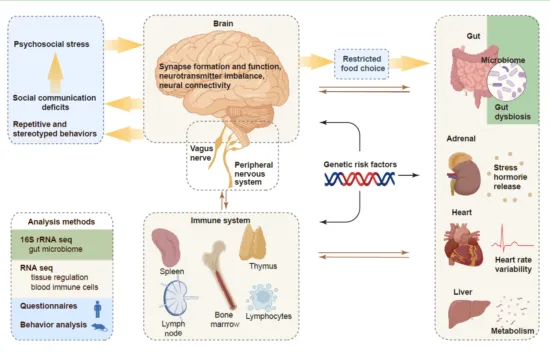 Dr. Schaefkeinvestigates brain-body interactions in neurodevelopmental and neuropsychiatric disorders and the evolutionary dynamics of gene regulatory differences underlying various social behaviour phenotypes. A major focus of his research are the effects of nutrition on metabolism, mitochondrial function, microbiome composition, hormones, inflammation and ultimately nervous system function and behaviour, especially social behaviour, utilizing two complementary approaches:1) using mouse models to study gene-gene and gene-environment interactions in neuropsychiatric disorders, and to analyze and predict the gene expression patterns in complex behavioral traits and their relationship with symptom severity inhealth and disease2) comprehensive analysis of behavioral and nutritional data, clinical outcomes, gene expression in peripheral blood, and fecal microbiome composition in children with neurodevelopmental and/or inflammatory disorders, aiming at providing clinical big data support and a scientific research basis for precision intervention strategies.Prof. Liping Wanghttps://people.ucas.edu.cn/~lipingwanglab?language=enhttps://bcbdi.siat.ac.cn/siat/2025-02/13/article_2025021301251517480.htmlProf. Susanne Wolfhttps://www.mdc-berlin.de/s-wolfProf. Yuting Tsenghttps://people.ucas.ac.cn/~Yuting.Tseng?language=enProf. Xianyuan Xianghttps://suat-sz.edu.cn/info/1175/1797.htmShenzhen University of Advanced Technology (SUAT) is a full-time higher education institution with legal status, established by the Shenzhen Municipal Government. In May 2024, approved by the Ministry of Education, SUAT was established as a new research university, characterized by a high starting point, research orientation, compact scale, and global openness, focusing on fundamental and cutting-edge scientific research and cultivating top innovative talent. Drawing on the models of world-class science and technology universities, SUAT leverages the rich resources of top-tier research institutions like the Shenzhen Institutes of Advanced Technology (SIAT) to build a high-standard, high-quality university. With a focus on integrating industry and education, fostering interdisciplinary programs, and cultivating talent through the "Three Academies as One" model, SUAT promotes the synergistic development of education, technology, and talent, recruiting high-caliber global faculty and nurturing outstanding scientists, exceptional engineers, and innovative entrepreneurs through tailored education.The Brain Cognition and Brain Disease Institute pursues cutting-edge research on cognition, neurodevelopmental, psychiatric, and neurodegenerative diseases, includingMechanisms underlying brain disordersNeural basis of cognition and behaviourNew tools and technology for brain researchTranslational research: brain disease models for drug discoveryEnjoy internationally leading scientific research conditions, including a pleasant working environment, generous research funds, state-of-the-art experimental instruments, and research platform.Additional requirements:1. Not more than 3 years past obtainment of latest degree and not older than 35 years when starting the position2. Must be able to complete research at Shenzhen Institutes of Advanced Technology (SIAT) and/or Shenzhen University of Advanced Technology (SUAT) on a full-time basis. 3. Candidates with proven strong scientific research ability and experience in computational neuroscience and/or multi-omics analyses are preferred.Application Materials1. English CV with academic outcomes (a Chinese version is optional)2. Certificates of academic and high school degrees (electronic version)3. Supporting documents for academic outcomes within last 3 years (electronic version)4. Contacts of at least 2 academic refereesAcademic reference letters will be an added bonus.Contacts for receiving CVs and other supporting documents:Interested applicants should send a complete application and CV in English language (a Chinese version is optional).Interviews will start in January 2026. Applications will be accepted untilposition is filled.
投递简历请选择:深圳理工大学生命健康学院Helmut Kettenmann、中国科学院脑认知与脑疾病研究所Schaefke Bernhard
简历投递方式(可选任一):
1. 扫描二维码投递简历;
2. 点击【阅读原文】投递简历;
3. 点击链接投递简历:https://data.bioart.com.cn/f/Ce510J(复制链接至浏览器投递简历)
课题组招聘广告请发送至:bioarthr@bioart.com.cn





 10个月宝宝每天需要喝多少奶粉?

