Why Guangzhou Is Called the “City of Rams”?
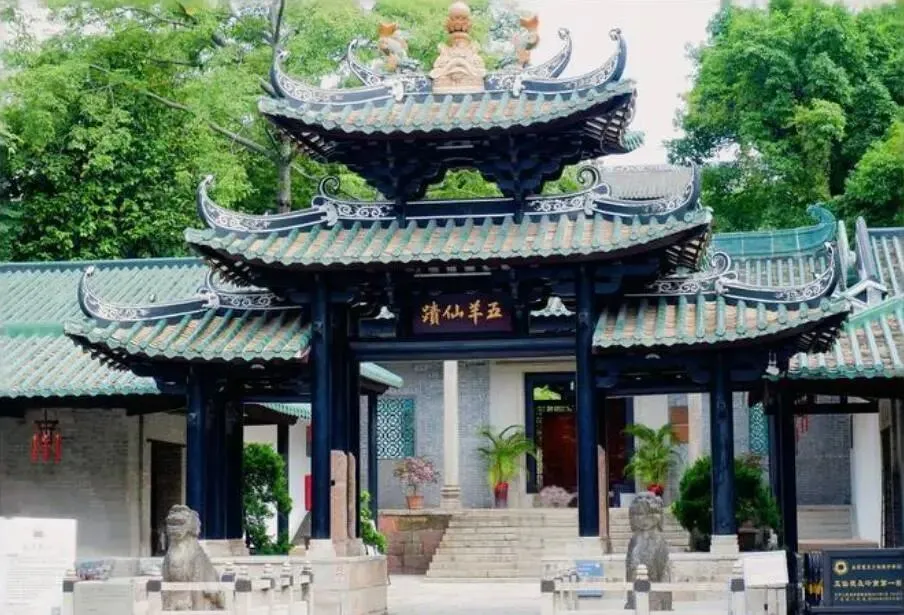
Located on Huifu West Road in Yuexiu District, the Five Immortals Temple is one of the most important historical and cultural sites in Guangzhou. Hidden among modern buildings and busy streets, this ancient Taoist temple has quietly witnessed the city’s development for more than one thousand years. It is not only a protected cultural heritage site of Guangdong Province, but also a key symbol behind Guangzhou’s famous nicknames, the “City of Rams” and the “City of Rice Ears.”
The origin of the Five Immortals Temple is closely connected with the well-known legend of the Five Rams. According to the story, about 2,800 years ago, during the Western Zhou Dynasty, Guangzhou was called “Chuting.” At that time, people suffered greatly from famine, and life was extremely hard. One day, five immortals dressed in colorful clothes rode five rams down from the sky. Each ram carried a full rice ear in its mouth. The immortals gave the rice to the people and wished them a peaceful life without hunger.
After the immortals left, the rams turned into stone to guard the land forever. As a result, Guangzhou became a rich and fertile place in southern China. From then on, the names “City of Rams” and “City of Rice Ears” were passed down from generation to generation. This legend not only expresses people’s hope for a better life, but also reflects the importance of agriculture in ancient Chinese society.
It is worth noting that this legend did not appear overnight. Historical records from different dynasties gradually shaped the story we know today. In the Jin Dynasty, early texts mentioned rams carrying grain as a sign of good luck. Later, during the Tang and Song dynasties, the story became closely linked with Guangzhou, and a temple was built to honor the five immortals. Over time, the legend became an important part of the city’s cultural identity.
The history of the Five Immortals Temple itself is a story of rise, fall, and rebirth. The temple was first built in the Northern Song Dynasty and later rebuilt several times due to wars and fires. In the Ming Dynasty, it was reconstructed at its present location, which laid the foundation for what we see today. During the Ming and Qing dynasties, the temple reached its golden age and was once listed among the “Eight Famous Sights of Guangzhou.”
Although only part of the original buildings remains today, the temple still has great cultural value. Its architecture reflects traditional Lingnan style and Taoist beliefs, while its peaceful atmosphere offers visitors a break from the fast pace of modern city life.
In conclusion, the Five Immortals Temple is more than just an ancient building. It is a living connection between legend and history, past and present. For visitors to Guangzhou, it provides a valuable chance to understand the city’s roots, cultural spirit, and long-standing traditions. Walking through the temple, one can truly feel how history continues to influence modern life.
在广州越秀区惠福西路的繁华街巷中,藏着一座承载城市灵魂的古老建筑——五羊仙观。作为广州最古老的道教庙宇之一,它不仅是广东省文物保护单位,更是“羊城”“穗城”别称的鲜活见证,每块砖瓦都诉说着千年传奇。
一、起源:仙人赠穗的千年传说
五羊仙观的起源,离不开广州人引以为傲的五羊传说。约2800年前的西周,广州古称“楚庭”,百姓饱受饥荒之苦。某日,南海飘来五彩祥云,五位身着彩衣的仙人骑五色山羊降临,羊衔饱满稻穗赠予百姓,祝愿“永无饥荒,安居乐业”。仙人腾云而去后,山羊化为巨石守护此地,广州自此成为岭南富庶之地,“羊城”“穗城”美名代代相传。
这则传说并非一蹴而就:晋代《广州记》最早记载楚地五羊衔谷祥瑞;唐代李群玉将地点移至广州并加入“五仙”元素;北宋建五仙祠祭祀,传说定型为“仙人骑羊赠穗”;清代屈大均《广东新语》完善细节,1960年五羊石像建成,让传说成为广州城市标志。
二、变迁:兴衰中坚守的千年古观
五羊仙观的历史,是一部兴衰重生史。北宋始建五仙祠,南宋嘉定年间迁至西湖路,后毁于火灾。明洪武十年(1377年),在现址重建并定名“五羊仙观”,奠定如今雏形。
明清为鼎盛时期,观宇规模宏大、香火鼎盛,两度入选“羊城八景”——明代“穗石洞天”、清代“五仙霞洞”,成为广州文化地标。近代以来,古观备受呵护:1989年列为省级文保单位,1999年设越秀区博物馆,2002年重修东西斋,2024年最新修缮后与南粤先贤馆联动开放。
三、建筑:藏巧思与传说的明代瑰宝
走近五羊仙观,便踏入明代建筑艺术的浓缩宝库,建筑兼具道教庄重与岭南园林精巧。头门“五仙古观”匾额为清同治十年(1871年)文渊阁大学士、两广总督瑞麟亲笔所题,笔力苍劲;仪门配有罕见红砂岩麒麟石雕,姿态生动、刻画入微,堪称石雕精品。
后殿是五羊仙观“镇观之宝”,也是广州现存最完整的明代木构建筑。绿琉璃瓦在阳光下熠熠生辉,重檐歇山顶大气磅礴,木构架玲珑新巧且无钉稳固千年。殿内东侧红砂岩上的“仙人拇迹”凹穴,相传为仙人所留,实则是古珠江水长期冲蚀的天然印记,为古观增添了神秘色彩。
观内岭南第一楼始建于明洪武七年(1374年),比镇海楼早7年,楼基以厚重红砂岩砌筑,楼高7米、中通如城门,栋宇巨檐层层叠叠,庄严雄伟。楼上悬挂洪武十一年铸青铜巨钟,高3米余、口径2米余、重5吨,是广东现存最大最完整的古铜钟,钟声可传十里。关于此钟还有趣闻:古时一官轿路过绳断,轿夫遇仙人指点取山岩细短葛藤扎轿,葛藤竟随需变长;后建钟楼,此藤又稳稳吊起巨钟,相传藤与吕洞宾相关,为古钟添传奇。
如今五羊仙观虽仅存头门、后殿和东西斋房部分旧建筑,却依旧魅力独特。它如沉默老者伫立城心,守护广州记忆。若你来广州,不妨放慢脚步走进这里,聆听千年传说、触摸古老砂岩,在香火与古木间感受城市深厚底蕴,说不定能在转角邂逅属于自己的“仙人印记”。重点短语
- be located on
- be closely connected with
- suffer from
- as a result
- pass down
- from generation to generation
- it is worth noting that
- link with
- lay the foundation for
- a break from
重点句型:
非谓语动词作状语句型公式:V-ed/ V-ing + 主句文中原句:Located on Huifu West Road in Yuexiu District, the Five Immortals Temple is one of the most important historical and cultural sites in Guangzhou.核心用法:表地点 / 状态 / 伴随,替代简单句,让句式更高级,开篇首句专用,提分效果显著。
According to... 根据……句型公式:According to + 名词 / 代词,主句文中原句:According to the story, about 2,800 years ago, during the Western Zhou Dynasty, Guangzhou was called “Chuting.”核心用法:引出故事 / 资料 / 依据,说明文、记叙文衔接必备,后只接名词 / 代词,不接完整句子。
As a result... 因此;结果句型公式:As a result, 主句文中原句:As a result, Guangzhou became a rich and fertile place in southern China.核心用法:表因果关系,衔接前后句,放句首后加逗号,替代简单连词 so,书面表达更正式。
Although... 虽然……(让步状语从句)句型公式:Although + 从句,主句(不可与 but 连用)文中原句:Although only part of the original buildings remains today, the temple still has great cultural value.核心用法:表转折让步,中考必背连词,可替换 though,写作中表转折的高分句型。
It is worth noting that... 值得注意的是……句型公式:It is worth noting that + 从句文中原句:It is worth noting that this legend did not appear overnight.核心用法:引出重点信息,it 作形式主语,替代简单陈述句,适合文中细节衔接、突出重点。
Over time 久而久之;随着时间的推移
主句文中原句:Over time, the legend became an important part of the city’s cultural identity.核心用法:表时间推移,衔接历史 / 故 事发展时间线。