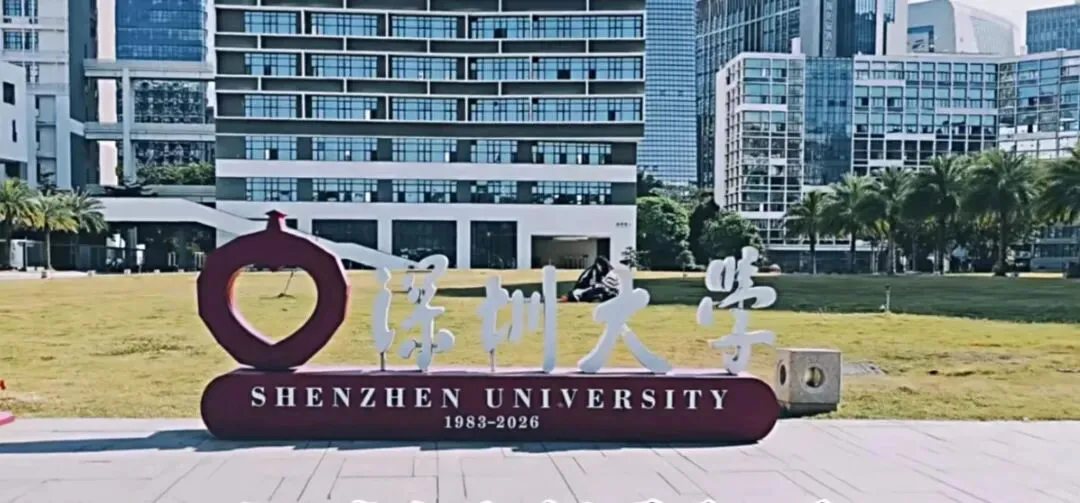
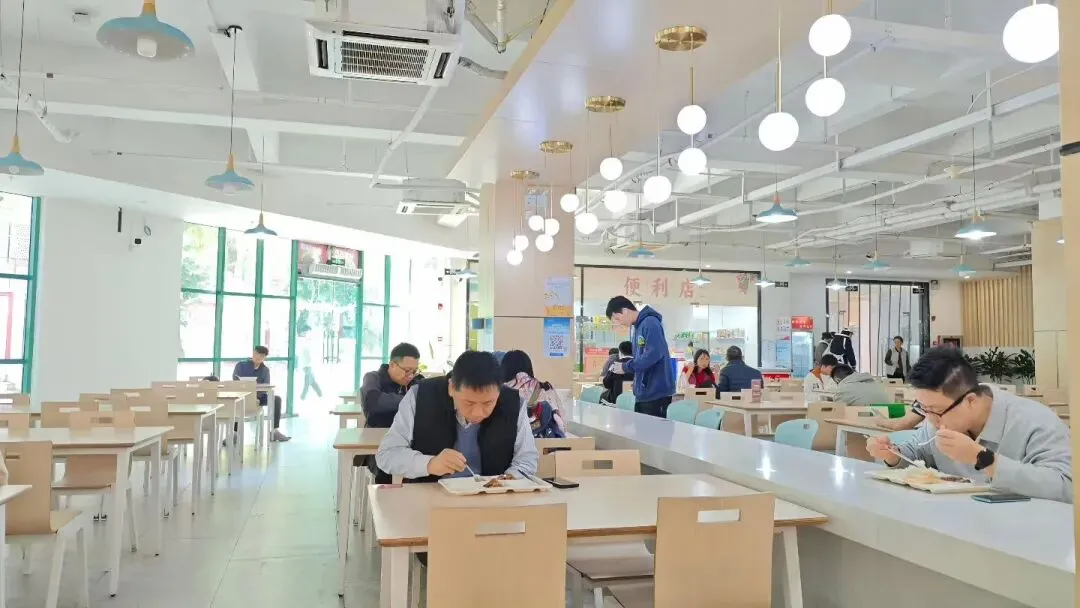
从南头古镇的青石板路走出,耳畔还萦绕着老深圳的市井余温。本是乘公交往人才公园而去,听闻那边风光独好,公交站牌上“深圳大学”四字却猝不及防撞入眼帘,便匆匆下了车。前一日同学李中贵还念叨着,邀我去深大看看,说校园景致极美,彼时只当闲话,此刻到了校门口,索性改了行程,循着指引大步流星,踏入这座藏于都市核心的学府。入校不远,食堂的烟火气便扑面而来。隔着玻璃窗,见学子们三三两两往来,腹中顿生饥意,彼时已过正午十二点。既来之则安之,便想尝尝学生食堂的滋味,冒昧请一位同学帮忙刷卡打了份饭菜,入口竟是意料之外的熨帖。小炒肉的鲜辣、西红柿炒鸡蛋的酸甜、红烧鱼的鲜香,混着白米饭的清甜在舌尖化开,窗口的菜品丰富到让人眼花缭乱。难怪都说深大食堂是“吃货天堂”,就连小龙虾,也能在饭点凑上热闹。
我离开校园已三十五载,漫长光阴隔在人大餐厅与深大食堂之间。记忆里人大食堂的普通窗口,熙攘的长队、回族窗口独有的饭菜香气,早已在岁月里淡去,可此刻岭南的暖阳下,餐盘里的热气氤氲升腾,竟与年少时的滋味奇妙呼应。我自北京大雪后的11月13日出发,彼时京城北风蚀骨,此间南风轻软,北方的凛冽与南方的温润,竟在舌尖悄然交汇。莫非是燕山的霜雪,催白了我的鬓角?若此生一直守在南方工作生活,是否依旧能留得一头黑发?
望着食堂里一张张朝气蓬勃的脸庞,忽然觉得少年意气从未走远。校园食堂从来都不只是果腹之地,它是青春的容器,是时光的驿站。北京远在千里之外,可这一箪一食里的人间烟火,竟一把将我拽回了1989年,中国人民大学的食堂里。
依稀记得那年,清晨去食堂排队买早餐,前面的女生忽然转过身,许是我靠得太近,她一手端着稀饭,另一只手上的馒头竟碰到我,滚落在地。寻常光景里,重买一个便是,可这女孩却让我帮忙端着稀饭,自己躬身捡起馒头,没有丢进垃圾桶,反倒细细剥去外层的皮,轻声说剥了皮便干净了,还能吃。我彼时目瞪口呆,心底只剩一个念头:谁若娶了这样的姑娘为妻,定是此生最大的福气,她定是聚财的福星。我知这清秀的女孩是社会学系的本科生,土生土长的北京人,只因周末少见,竟不知她的名字。此事本如过眼云烟,转瞬便忘,直到一年后我申请提前毕业,在系行政老师的办公室里再遇她,才知晓她的名字——邱永青。
吃完午餐,恍若大梦初醒,只想好好逛逛这所深圳大学。深大的温柔与友好,在1块钱就能乘坐的“荔园小巴”上体现得淋漓尽致。这小巴,更是深大学子踩点上课的救命星。学生们上车便用手机刷卡,我依样学样,司机师傅却笑着提醒,我需扫微信交费,因学生的手机里都绑定了校园公交卡。南方的树木高大茂密,枝繁叶茂,深大的校园便似藏在葱郁的森林里,这般景致让我满心欢喜,忍不住坐了一圈又一圈。沿途的风光,越看越着迷:南区的致艺楼素有“白色洞洞楼”之称,纯白墙面上错落着不规则的方块格子,随手一拍,皆是氛围感大片;隔壁的致理楼里,旋转楼梯的灰色栏杆,在米白色的阶梯上勾勒出错落的几何纹路,恰似灵动的线条在轻歌;几栋教学楼之间,原子结构的雕塑静静伫立,似在时光里缓缓游动。穿过跨越公路的空中走廊,北区又是另一番天地:文山湖的湖水波光粼粼,上文山湖与下文山湖相依相偎,隐在浓荫绿树间,黑天鹅在水面悠闲游弋,湖畔的三角梅开得热烈奔放。我偏有几分运气,竟遇上花圃里十年一遇的禾雀花,一串串簇拥在枝头,形似灵动的小雀鸟,振翅欲飞。这偌大的校园,竟如一座藏着千余种植物的植物园,处处是惊喜。
待我第三次抬手要扫微信付款码时,司机师傅笑着按住我的手,说要免费载我逛校园。他一边平稳地开着车,一边给我这位唯一的乘客细细讲解:“这边是计算机系,那边是文学院,前面那片红楼,便是法学院。”当他说起“深大法学院,是在人民大学法学院的帮扶下建立的”,我忽然心头一热,忙说自己正是人大毕业的,又忆起1990年,在人大学五楼三层的时光。彼时我正攻读硕士学位,后来曾任人大法学院院长、副校长的王利明教授,恰是同楼校友,那一年,他正攻读博士学位。师傅接着道,深大的“出身”本就不一般:当年北大援建中文、外语学科,清华援建电子、建筑学科,人大则搭起了经济、法律学科的骨架,才有了如今这涵盖13个学科门类、105个本科专业的综合性大学。电动车轮缓缓碾过校园的柏油路,阳光透过枝叶的缝隙,洒下满地斑驳光影,两所学府的深厚渊源,竟以这样温暖的方式相遇,跨越千里山河,一脉相承,生生不息。
车行其间,我愈发感受到这所大学的“硬核实力”。师傅指着路边的现代化实验室介绍,这里有20个学科跻身ESI全球前1%,其中工程学、计算机科学等专业,更是冲进了全球前千分之一。更令人惊叹的是谢和平院士团队,竟攻克了海水直接电解制氢这一困扰世界半个世纪的难题,还建成了全球首个海上风电海水制氢平台,这项技术更是入选了中国十大科技进展新闻。校园里的射频异质异构集成全国重点实验室,是深圳本土高校的首个全国重点实验室,专啃产业“卡脖子”的硬骨头。最让人佩服的,是深大的创新机制:将科研成果100%的所有权交给研发团队,学校分文不占,还全力帮着对接企业做成果转化,校内设创业孵化区,这些年已成功孵化出38家创新企业,成果转化的合同金额近5000万,真正让实验室里的技术,变成了能落地、能盈利的产品。看着校园里步履匆匆的学子,心中满是艳羡:他们不仅能在34个国家级一流本科专业里自由选课,还能跟着院士做科研;学校大力推行“本博联动”,本科生年均能参与2.3个科研项目,不少人还能发表高水平论文。深大的三大校门,也藏着育人的深意:西门立德门、北门立功门、南门立言门,寄寓着对学子“德艺兼备、立言立功立德”的美好期盼。时光广场上的日晷静静转动,刻写着岁月的痕迹;汇星楼的现代轮廓映着澄澈蓝天,远处便是深圳鳞次栉比的科创企业集群。校园的淡淡书香,与城市的蓬勃活力无缝衔接,这大抵就是深大独有的气质。
而这一切,都离不开深圳这座城市的深厚底气。我第一次到深圳出差,是1990年的秋天,因负责外事工作,暂住福田区的丽晶酒店,那是深圳最早的一批五星级酒店。第二次来,是1991年的冬天,主要陪领导来南方考察,从广东各地到深圳,无论走到哪里,耳边听到的都是同一句话:我们不要中央给钱、给资金,只要中央给政策,允许我们干,允许我们闯,闯出一条市场经济的新路。我至今清晰记得,彼时的北京,乃至全国,人们还停留在讨论如何搞商品经济的阶段,人民大学也仍叫商品学系,无人敢直言要搞市场经济。
如今的深圳,早已是中国经济发展的核心引擎,更是全国财政收入最高的城市之一。丰厚的资金,源源不断地投入教育与科研:给实验室配备最顶尖的设备,给师资提供极具竞争力的待遇,给学生创造多元化的实践平台。更难得的是,这里有着生动活泼、思想开放的社会环境,没有僵化的束缚,鼓励创新,宽容失败,这样的氛围,对全球精英有着天然的吸引力。我坚信,用不了20年,来自中国乃至全世界的顶尖学者,会扎堆来此执教;怀揣梦想的优秀学子,会慕名而来求学;潜心科研的人才,会在这里找到实现人生价值的沃土。就像美国加州大学系列分校,借着加州经济的东风赶超老牌名校一般,深大也必将乘着深圳的发展浪潮,在教学、科研、人才培养上全面突破,超越清华、北大这些传统名校,成为中国最好的大学。
走出校园时,夕阳西下,为教学楼镀上了一层温暖的金边。回望这座被都市繁华环绕,却依旧守着书香与初心的学府,我忽然明白它的魅力所在:不仅在于优美的校园、友善的氛围、硬核的实力,更在于它背后,有一座永远向前、永不停歇的城市撑腰,有一片开放包容、孕育希望的土壤滋养。
三十五载光阴流转,白驹过隙。从人大的学五楼,到深大的林荫道;从北方的燕园,到南方的鹏城;从燕山的霜雪,到岭南的暖阳。改变的,是地域与岁月,是鬓角的华发;不变的,是学府传承的治学初心,是藏在一箪一食里的人文温度,是跨越千里的一脉相承。
校园食堂
数载辞园意未平,食堂烟火总牵魂。
餐盘曾盛青春味,鼎沸犹萦旧岁声。
窗畔晨光凝记忆,檐边晚风唤归程。
莫言此景非吾处,一饭相思满故城。
三十五载别校园,人大餐厅渐淡颜。
今品深园烟火味,北风蚀骨南风绵。
燕山霜雪催华发,岭上晴岚唤少年。
莫道乡关千万里,一笺云影引归船。
Wandering in Shenzhen University
lStepping off the bluestone paths of Nantou Ancient Town, the lingering warmth of old Shenzhen’s market life still hummed in my ears. I had originally taken the bus to Talent Park, lured by tales of its unrivaled scenery, but the four characters "Shenzhen University" on a bus stop sign caught my eye unexpectedly, and I hurried off the vehicle. Just the day before, my classmate Li Zhonggui had rambled on, inviting me to visit Shenzhen University and praising its exquisite campus scenery—I’d brushed it off as casual talk then. But now that I stood at the school gate, I simply changed my plans, followed the signs with big strides, and stepped into this university nestled in the heart of the city.
A short walk into the campus, the rich, homely smoke of the canteen wrapped around me at once. Through the glass windows, I saw students coming and going in small groups, and a sudden hunger stirred in my stomach—it was well past twelve noon. Since I was here, I decided to make the most of it and wanted to taste the food at the student canteen. I ventured to ask a student to swipe their card and get me a meal, and the first bite was an unexpectedly comforting delight. The spicy kick of stir-fried pork, the sweet and sour tang of scrambled eggs with tomatoes, the savory aroma of braised fish, all blending with the delicate sweetness of white rice on my tongue. The array of dishes at the food counters was dazzlingly diverse. No wonder Shenzhen University’s canteen is known as a "food lover’s paradise"—even crayfish makes an appearance during meal times.
Thirty-five years have passed since I left campus, a long stretch of time standing between the canteen of Renmin University and this one in Shenzhen University. The bustling queues at the ordinary counters of Renmin University’s canteen, the unique fragrance of food at the Muslim counter—these memories have long faded with the years. Yet here, in the warm southern sun of Lingnan, the steam curling up from my plate echoed the tastes of my youth in a magical way. I had left Beijing on November 13, the day after a heavy snowfall, when the northern wind cut to the bone in the capital; here, the southern breeze was soft and mild. The bitter chill of the north and the gentle warmth of the south met quietly on my tongue. Could it be the frost and snow of the Yanshan Mountains that have turned my sideburns white? If I had worked and lived in the south all my life, would I still have a head of black hair?
Gazing at the vibrant, youthful faces in the canteen, I suddenly felt that the spirit of youth had never faded away. A university canteen is never merely a place to fill one’s stomach—it is a vessel for youth, a stop on the journey of time. Beijing is thousands of miles away, yet the mortal smoke of this simple meal pulled me straight back to the canteen of Renmin University of China in 1989.
I vaguely remember that year, queuing for breakfast at the canteen early in the morning. The girl in front of me turned around suddenly, and perhaps I was standing too close—she held a bowl of congee in one hand, and a steamed bun in the other brushed against me, falling to the ground. Normally, one would just buy another bun, but this girl asked me to hold her congee for her, bent down to pick up the bun, and instead of throwing it into the trash can, she carefully peeled off its outer skin, murmuring that it would be clean enough to eat after peeling. I was dumbfounded then, and only one thought crossed my mind: whoever marries such a girl will be the luckiest person in the world, for she is a beacon of good fortune and prosperity. I knew this delicate girl was an undergraduate in the Department of Sociology, a native Beijinger, but I never learned her name, for I seldom saw her on weekends. The incident was like a wisp of smoke, forgotten in an instant—until a year later, when I applied for early graduation and met her again in the department administrator’s office, I finally learned her name: Qiu Yongqing.
After finishing lunch, I felt as if I had woken up from a long dream, eager to explore Shenzhen University properly. The gentleness and hospitality of the university are fully embodied in the "Liyuan Mini Bus", which costs just one yuan to ride. This little bus is a lifesaver for Shenzhen University students rushing to make it to class on time. Students swiped their phones to pay as they got on, and I followed suit, but the driver smiled and reminded me that I needed to pay via WeChat, for the students had campus bus cards bound to their phones. The trees in the south are tall and luxuriant, their branches thick with leaves, so the campus of Shenzhen University is like a hidden forest—and this sight filled me with joy, making me ride the bus round and round. The scenery along the way grew more and more enchanting: the Zhiyi Building in the South Campus is known as the "White Perforated Building", with irregular square grids scattered across its pure white walls, every casual snapshot a striking photo; next door, in the Zhili Building, the gray railings of the spiral staircase trace intricate geometric patterns on the off-white steps, like lively lines singing a soft tune; between several teaching buildings, a sculpture of an atomic structure stands quietly, as if moving slowly through time. Crossing the overpass that spans the road, the North Campus unfolds a completely different scene: the waters of Wenshan Lake shimmer, the Upper and Lower Wenshan Lakes nestle side by side among dense green trees, black swans glide leisurely on the water, and bougainvillea blooms in a fiery profusion by the lake. I was lucky enough to catch a glimpse of the bird’s nest ferns in the flower bed, which bloom only once every ten years—clusters hanging from the branches, shaped like lively little birds about to spread their wings and fly. This vast campus is like a botanical garden housing more than a thousand species of plants, with pleasant surprises at every turn.
When I raised my hand to scan the WeChat payment code for the third time, the driver smiled and held my hand, saying he would take me around the campus for free. He drove steadily while explaining everything in detail to me, his only passenger: "This is the Department of Computer Science, that’s the School of Liberal Arts, and those red buildings ahead are the Law School." When he said, "The Shenzhen University Law School was founded with the support of the Renmin University of China Law School," a warm surge suddenly rose in my heart. I hastened to tell him I was an alumnus of Renmin University, and recalled the days in 1990 on the third floor of Xuewu Building at RUC. I was pursuing my master’s degree then, and Professor Wang Liming, who later served as Dean of the Law School and Vice President of RUC, was an alumnus of the same building—he was working on his doctorate that very year. The driver went on to say that Shenzhen University has an extraordinary "origin": back then, Peking University assisted in establishing the Chinese and Foreign Languages departments, Tsinghua University the Electronic and Architecture departments, and Renmin University laid the foundation for the Economics and Law departments. It is from this that the university has grown into a comprehensive institution today, covering 13 academic disciplines and 105 undergraduate majors. The wheels of the electric bus rolled slowly over the asphalt roads of the campus, sunlight filtering through the leaves to cast dappled shadows on the ground. The profound bond between the two universities met in such a warm way, spanning thousands of miles of mountains and rivers, a heritage passed down in an unbroken line.
As the bus moved on, I felt more and more the "core strength" of this university. The driver pointed to the modern laboratories by the road and explained that 20 of its disciplines rank in the top 1% of ESI globally, with engineering, computer science and other majors even breaking into the top 0.1%. Even more astounding is the team led by Academician Xie Heping, which has cracked the half-century-old global puzzle of direct seawater electrolysis for hydrogen production and built the world’s first offshore wind power seawater hydrogen production platform—a technology selected as one of China’s Top 10 Scientific and Technological Advances. The National Key Laboratory of RF Heterogeneous Integration on the campus is the first national key laboratory established by a local university in Shenzhen, dedicated to tackling the "bottleneck" problems plaguing industries. What impresses me most is Shenzhen University’s innovative mechanism: it grants 100% ownership of research results to the R&D teams, with the university holding no shares at all. It also fully assists in connecting teams with enterprises for achievement transformation and has a business incubation zone on campus. Over the years, it has successfully incubated 38 innovative enterprises, with the contract value of achievement transformation approaching 50 million yuan—truly turning laboratory technology into marketable, profitable products. Watching the hurried students on campus, I felt a surge of admiration: they can not only choose courses freely among 34 national first-class undergraduate majors, but also conduct research under the guidance of academicians. The university vigorously promotes the "undergraduate-PhD linkage" program, with undergraduates participating in an average of 2.3 research projects per year, and many even publishing high-level academic papers. The three main gates of Shenzhen University also hold profound educational meanings: the West Gate is the Gate of Virtue, the North Gate the Gate of Merit, and the South Gate the Gate of Words, embodying the sincere hope that students will "possess both moral integrity and academic excellence, and establish oneself through words, merit and virtue". The sundial on Time Square turns quietly, engraving the traces of years; the modern outline of Huixing Building is reflected in the clear blue sky, and in the distance stand the dense clusters of Shenzhen’s sci-tech innovation enterprises. The faint fragrance of books on campus blends seamlessly with the vibrant energy of the city—this is perhaps the unique charm of Shenzhen University.
And none of this would be possible without the profound strength of the city of Shenzhen. I first came to Shenzhen on a business trip in the autumn of 1990. Working in foreign affairs, I stayed at the Regent Hotel in Futian District, one of Shenzhen’s earliest five-star hotels. My second visit was in the winter of 1991, mainly accompanying leaders on an inspection tour of the south. From various parts of Guangdong to Shenzhen, the same sentence echoed everywhere I went: "We don’t ask the central government for money or funding—we only ask for policies, for the permission to act, to dare to forge ahead, and to blaze a new trail for the market economy." I still remember clearly that back then, in Beijing and across the country, people were still debating how to develop a commodity economy; the Department of Commodity Science at Renmin University still bore that name, and no one dared to speak openly about building a market economy.
Today’s Shenzhen is already a core engine of China’s economic development and one of the cities with the highest fiscal revenue in the country. Abundant funds are continuously invested in education and scientific research: top-tier equipment is equipped for laboratories, competitive salaries are provided for teachers, and diverse practical platforms are created for students. What’s more precious is the lively, open-minded social environment here—free from rigid constraints, it encourages innovation and tolerates failure, an atmosphere that exerts a natural appeal to global elites. I firmly believe that in less than 20 years, top scholars from China and around the world will gather here to teach; outstanding students with dreams will come to study here in admiration; and researchers dedicated to scientific inquiry will find a fertile ground to realize their life values here. Just as the University of California system surpassed traditional prestigious universities by riding the tide of California’s economic development, Shenzhen University will also seize the opportunity of Shenzhen’s development to make all-round breakthroughs in teaching, scientific research and talent cultivation, surpassing traditional renowned universities such as Tsinghua University and Peking University to become China’s best university.
As I walked out of the campus, the setting sun painted the teaching buildings with a warm golden glow. Looking back at this university, surrounded by the bustle of the city yet still guarding the fragrance of books and its original aspiration, I suddenly understood where its charm lies: not only in its beautiful campus, friendly atmosphere and strong core strength, but more in the fact that it is backed by a city that marches forward endlessly, and nurtured by a land of openness and inclusiveness that breeds hope.
Thirty-five years have slipped by like a white pony galloping through a crevice. From Xuewu Building at Renmin University to the tree-lined paths of Shenzhen University; from the Yan Garden in the north to the Peng City in the south; from the frost and snow of the Yanshan Mountains to the warm sun of Lingnan. What has changed is the place, the years, and the white hair on my sideburns; what remains unchanged is the original aspiration of academic pursuit passed down by the universities, the human warmth hidden in every simple meal, and the unbroken heritage spanning thousands of miles.
The Campus Canteen
Years after leaving campus, my heart still lingers,
The smoke of the canteen always tugs at my soul.
My plate once held the taste of youth,
The noisy bustle still lingers as the sound of old days.
Morning light by the window freezes memories,
Evening breeze by the eave calls me home.
Do not say this place is not mine,
A single meal fills the old city with longing.
Thirty-five years since I bid the campus farewell,
The canteen of RUC fades in my memory.
Today I taste the mortal smoke of Shenzhen University’s canteen,
The northern wind cuts to the bone, the southern breeze is soft and mild.
Frost and snow of Yanshan turn my sideburns white,
Clear mist on the mountains calls back the young boy in me.
Do not say my hometown is thousands of miles away,
A wisp of cloud leads the way home like a boat.
翻译说明
1. 文化专有名词:采用通用译法并兼顾辨识度,如“南头古镇”Nantou Ancient Town、“荔园小巴”Liyuan Mini Bus、“立德门/立功门/立言门”Gate of Virtue/Gate of Merit/Gate of Words,“卡脖子问题”译为bottleneck problems(行业通用译法);
2. 诗词/抒情句:保留原诗韵律与意境,采用英诗经典的抑扬格节奏,如“白驹过隙”译为like a white pony galloping through a crevice,“一箪一食里的人间烟火”译为the mortal smoke of this simple meal;
3. 专有名称:人名(李中贵、邱永青、王利明、谢和平)采用拼音直译,院校/建筑名(中国人民大学、深圳大学、致艺楼、文山湖)按官方英译/意译结合;
4. 数字/专业表述:科技类数据(ESI前1%、38家创新企业、5000万)直接直译,“本博联动”译为undergraduate-PhD linkage,“海水直接电解制氢”为direct seawater electrolysis for hydrogen production(专业术语);
5. 语气贴合:原文的怀旧、感慨与赞叹通过词汇(lingering, hummed, comforting, dazzlingly, astounding, profound)与句式节奏体现,口语化表达(“救命星”“吃货天堂”)译为贴合英文日常的lifesaver/food lover’s paradise。
马顺军 2026年1月2日
 10个月宝宝每天需要喝多少奶粉?

