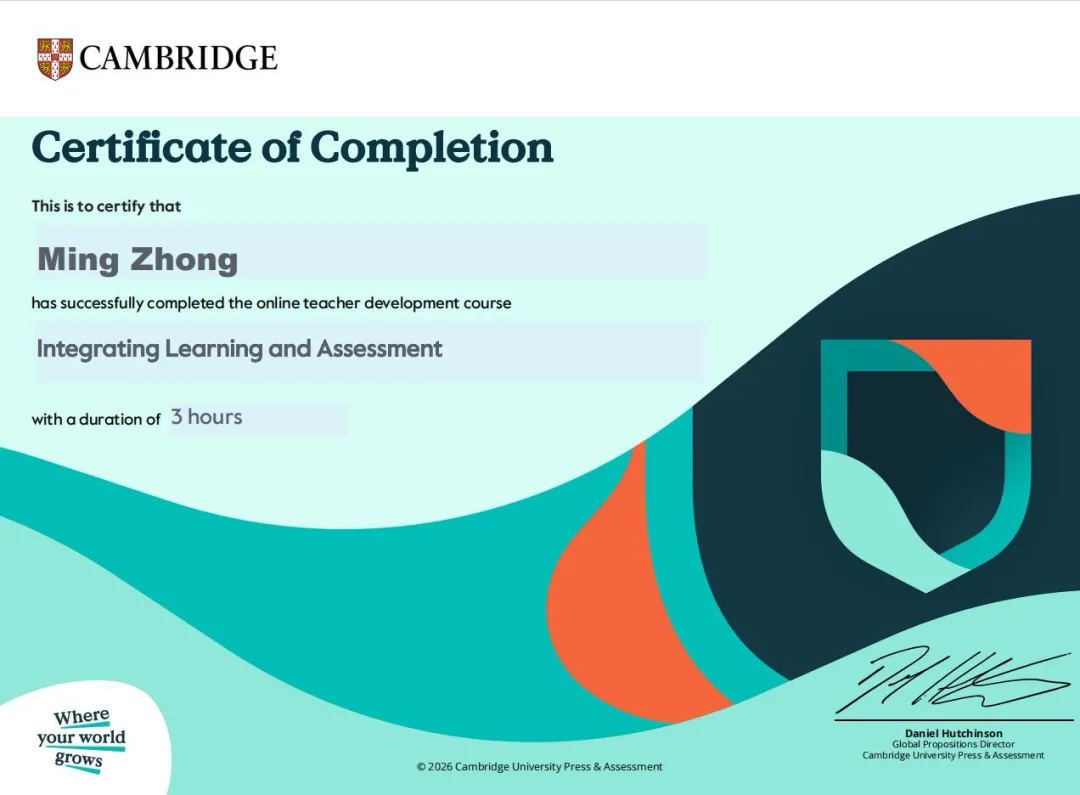
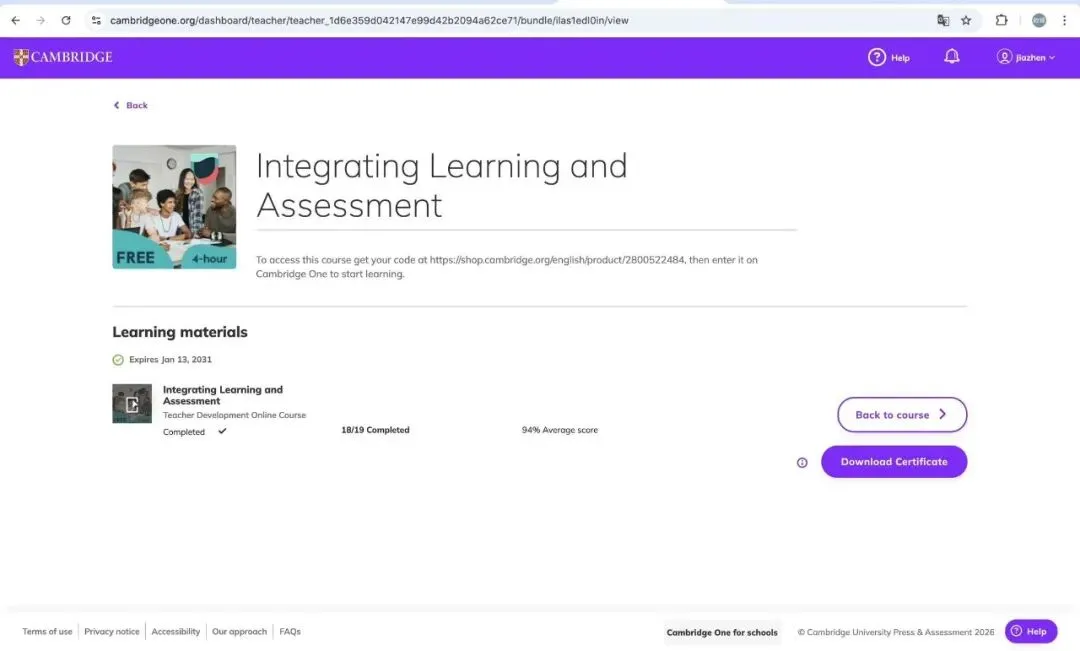
(备注:深圳名师苑教育集团 - 钟铭总校校长 剑桥综合学习与评估(ILA)策略证书)Are you familiar with the benefits of integrated learning and assessment (ILA)?
Perhaps you use it every day with your learners? Or you’re just starting out with an ILA approach to the classroom? Or maybe you’re already using it successfully and you didn’t realise!
Whatever your experience of integrating teaching, learning and assessment, we’re here to help you get the most from every moment of learning. In this article, we’ll take a closer look at what ILA is, and share the key findings from our research paper, including four pillars you can follow for success in the classroom.
What is ILA?
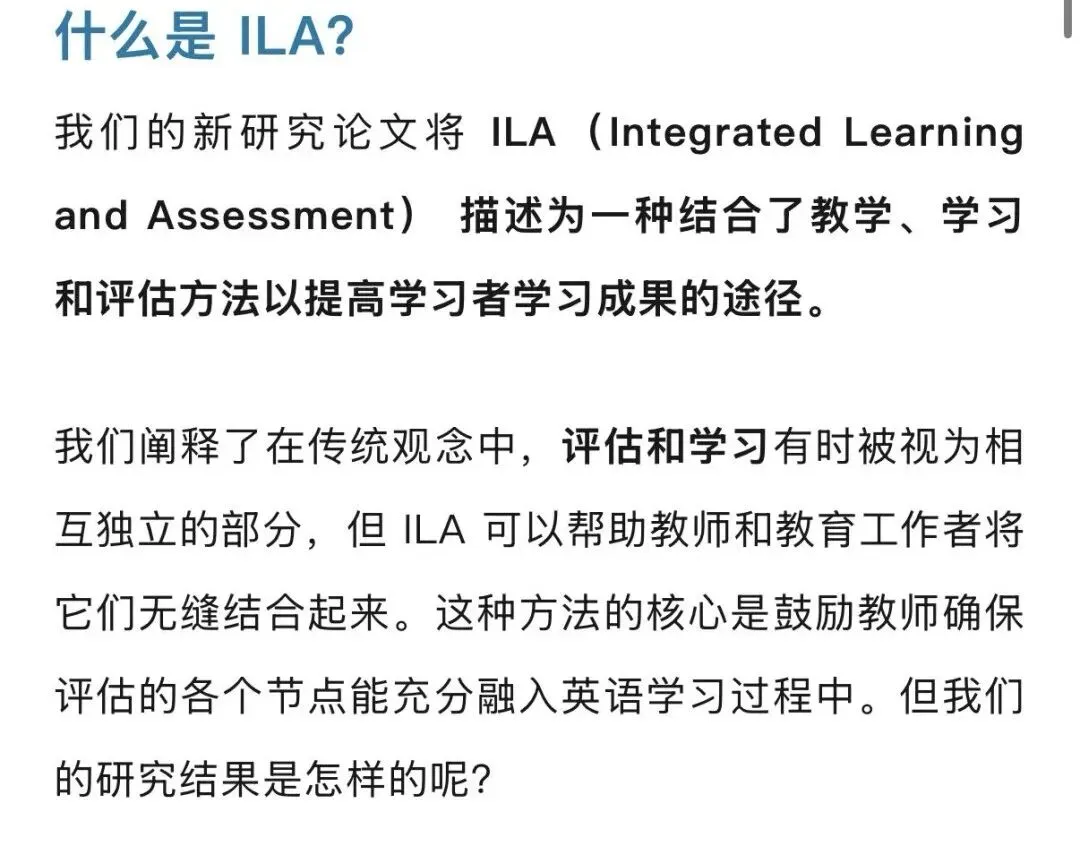
Our new research paper (full paper here, and research paper headlines here) describes integrated learning and assessment as an approach that combines teaching, learning and assessment methods to improve outcomes for learners.
We explain how traditionally assessment and learning have sometimes been seen as separate, but an integrated learning and assessment approach can help teachers and educators to combine them seamlessly. At the heart of this approach is encouraging you as teachers to make sure that assessment touchpoints are fully integrated into the English learning process. But what did our research say?
Watch this one minute video from Director of Research Evelina Galaczi for your top three insights and practical steps.
What our research says
We’ve summarised decades of research. Here are some of the key findings.
Teachers who get the best results from integrating learning and assessment:
Look for evidence of student learning in every lesson
Use the evidence of learning they collect to build a clear, ongoing picture of student ability and most importantly look at this to inform the next steps for the classroom.
Involve students in the process of planning and evaluating their own learning
Provide feedback to students that helps move their learning forward
Cambridge’s approach to ILA: four pillars for success
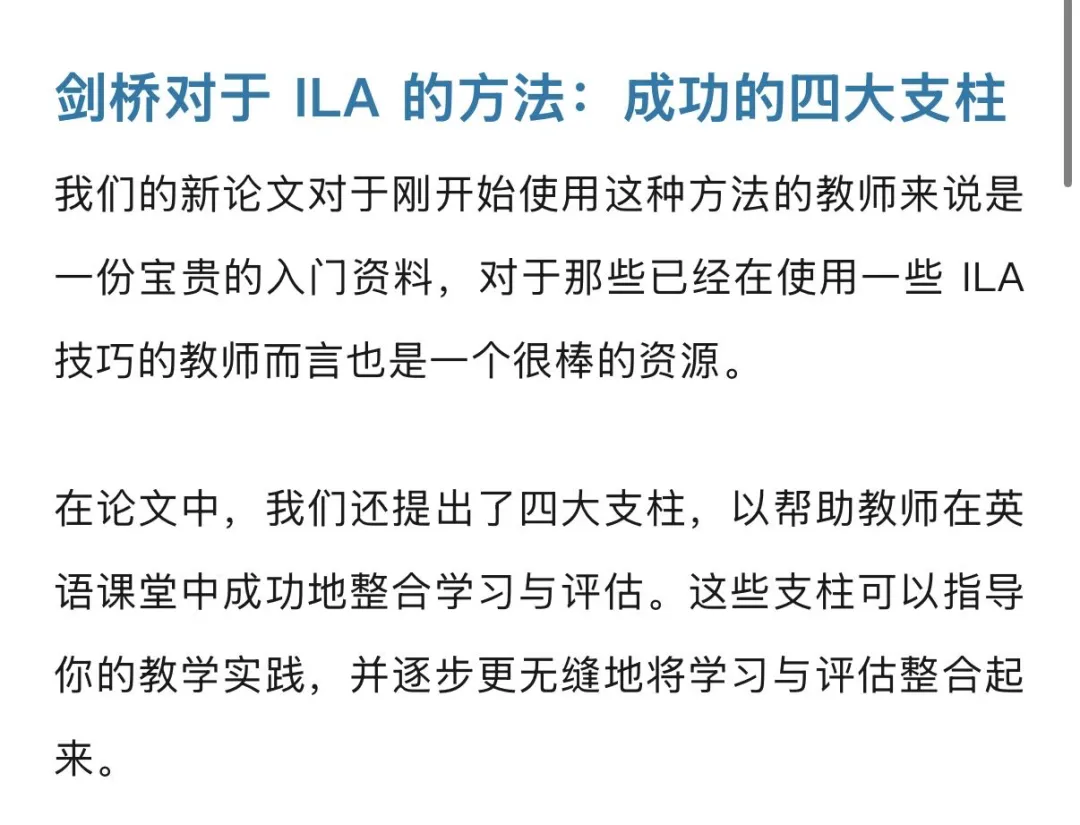
Our new paper is a valuable introduction for teachers starting to use this approach, and a great resource for those already using some ILA techniques.
In the paper we also set out four pillars to help teachers successfully integrate learning and assessment in the English classroom. These can help to guide your teaching practice and progressively integrate learning and assessment more seamlessly.
Four pillars for success
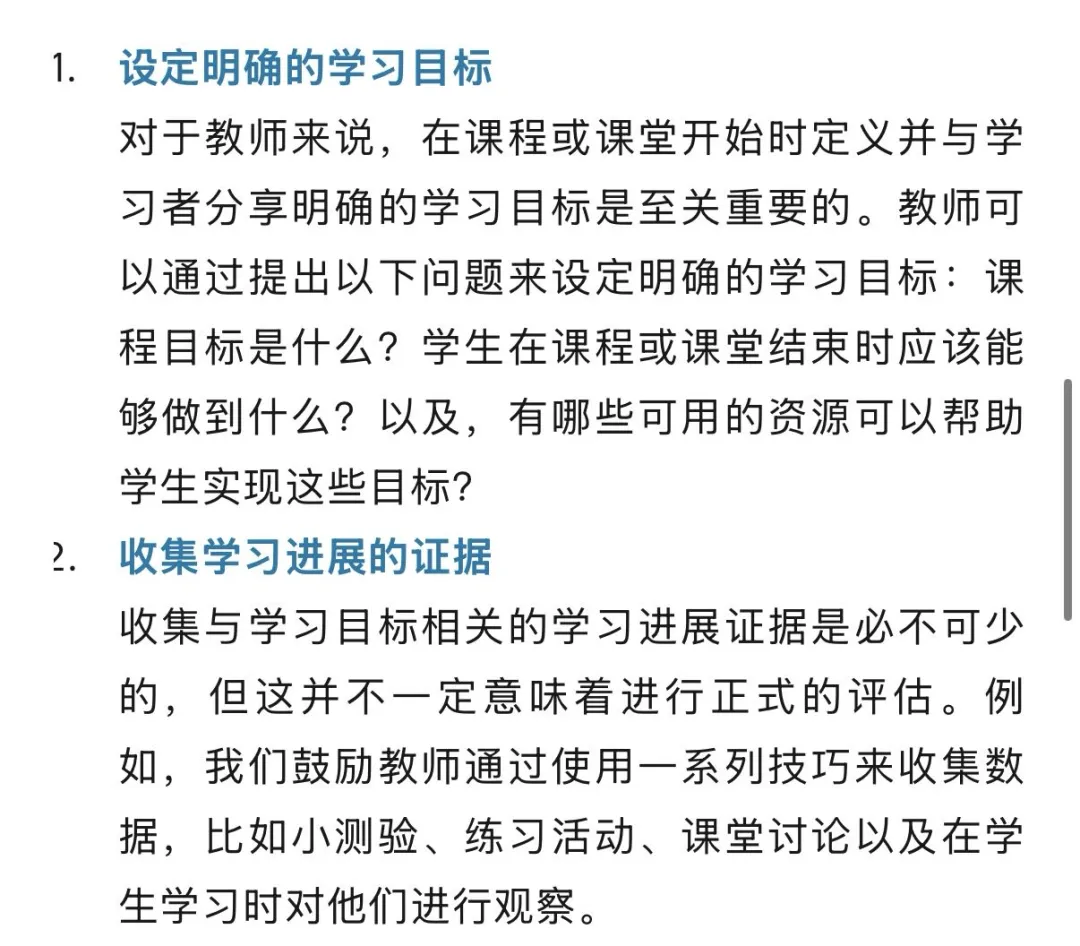
Set clear learning objectives
It’s essential for teachers to define and share with learners clear learning objectives at the outset of a course or lesson. Teachers can set clear learning objectives by asking questions such as: what are the curriculum goals? What should students be able to do by the end of the course or lesson? And, what resources are available to help students meet these goals?
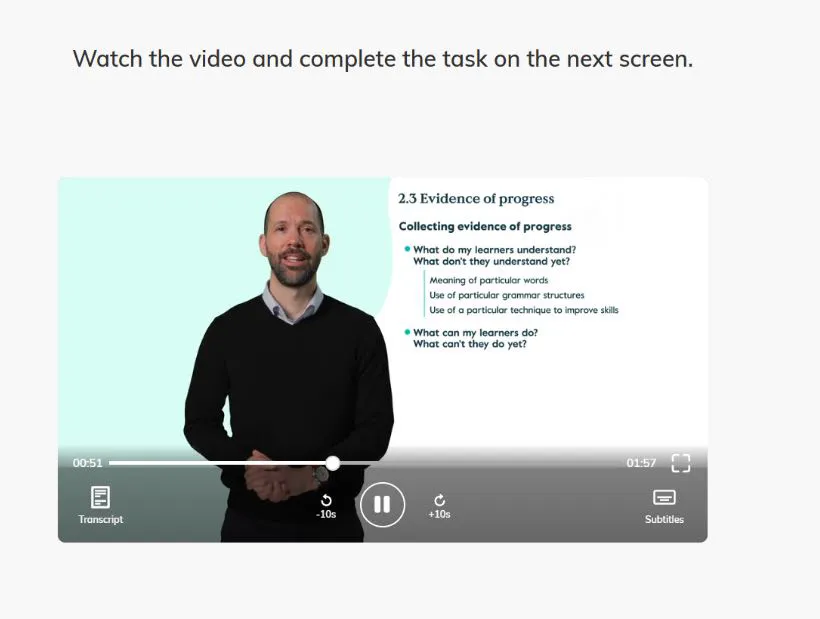
Collect evidence of progress
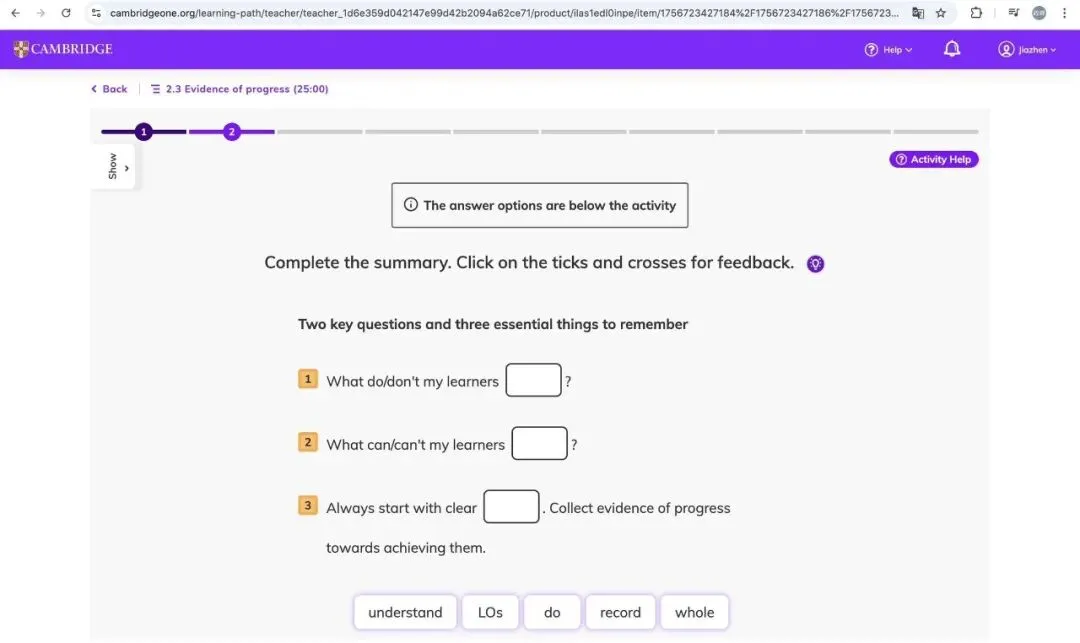
Collecting evidence of progress against the learning objectives is essential, but it does not necessarily mean formal assessments. For example, teachers are encouraged to collect data by using a range of techniques such as quizzes, practice activities, classroom discussion and monitoring learners while they work.
Provide actionable feedback
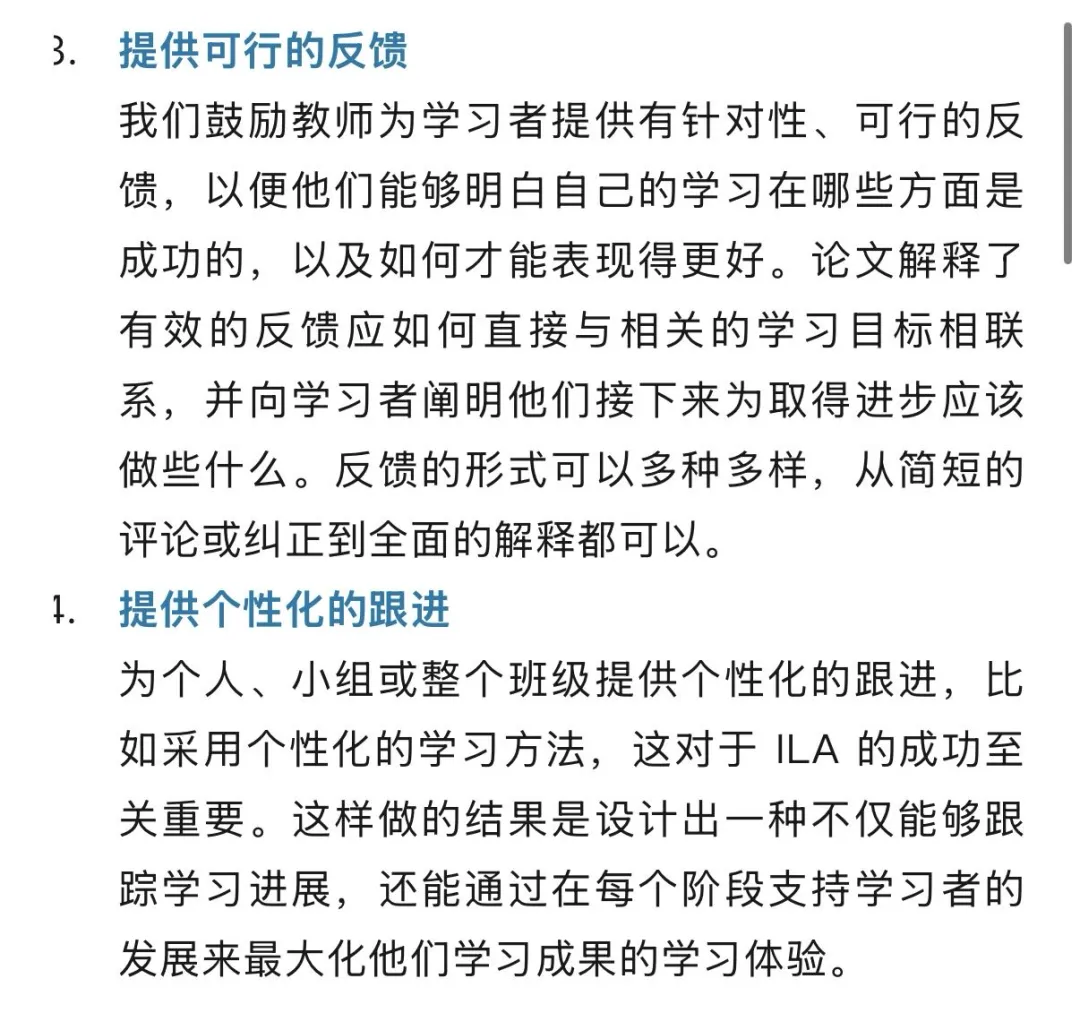
Teachers are encouraged to provide targeted, actionable feedback to learners so they can understand where their learning was successful, and how they can perform better. The paper explains how effective feedback should link directly to the relevant learning objectives and clarify for learners what they should do next to progress. This can range from a minimal comment or correction to a full explanation.
Provide tailored follow up
Tailored follow up such as personalised learning approaches for groups of individuals or for whole classes is essential to successful ILA. The result is an experience designed not only to track progress but also to maximise learners’ outcomes by supporting their development at every stage.
This is where technology can help. In recent years, AI-assisted technologies have opened opportunities for personalised learning approaches, with tailored content, individualised practice and targeted tutoring. Cambridge, for example, are creating digital tools to enable teachers to personalise their students’ learning more effectively. Such digital tools will ‘assess’ skill gaps and offer personalised practice for reading and listening skills.
与您共创智能教育新未来